AI Email Tools Are Failing B2B Sales Teams—Here’s Why
New York, Thursday, 18 June 2026.
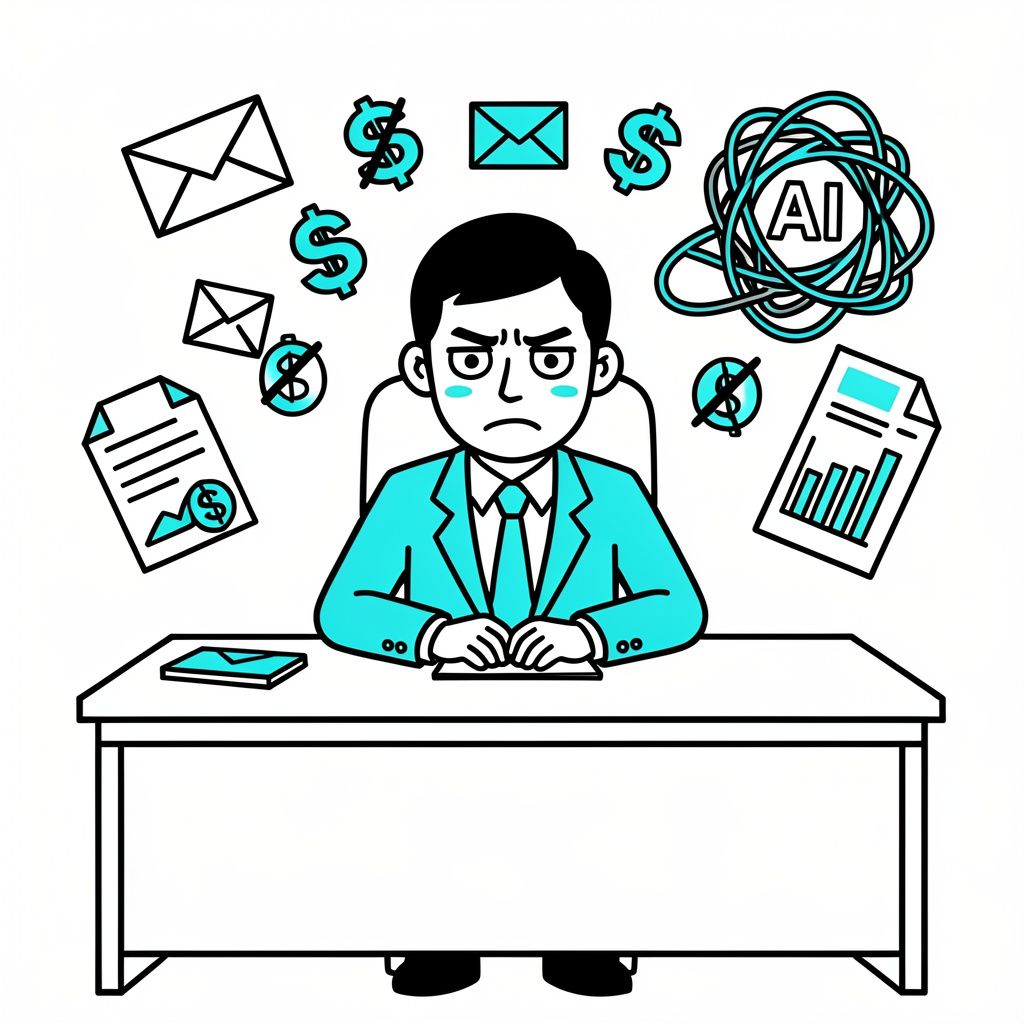
A shocking 79% of B2B sales professionals report their AI-crafted emails never reach prospects, despite 70% relying on automation. The paradox? Teams using AI the most see the steepest drop in deliverability. As spam filters tighten and buyers grow wary of generic messages, AI’s promise of efficiency is backfiring—leaving critical sales touchpoints lost in the void. The fix isn’t more automation, but smarter integration.
The AI Email Paradox: More Automation, Worse Results
The numbers paint a stark picture: 70% of B2B sales professionals now use AI tools to craft outbound emails, yet 79% report their messages never reach prospects [1]. This isn’t just a minor hiccup—it’s a full-blown deliverability crisis. Teams that have embraced AI most aggressively are experiencing the steepest declines in email performance, with 65% seeing their cold email sequences suddenly stop receiving replies altogether [1]. The irony is palpable: the very tools designed to streamline outreach are now actively sabotaging it.
Spam Filters Evolve Faster Than AI Adapts
The root of the problem lies in a fundamental mismatch between AI capabilities and inbox provider defenses. Gmail and Microsoft have spent 2025-2026 aggressively tightening spam filters, deploying new machine learning models that specifically target AI-generated content patterns [1]. These systems now analyze not just content but sending behavior, domain reputation, and even subtle linguistic cues that distinguish human-written from AI-generated text. The result? A perfect storm where increased AI adoption triggers more aggressive filtering, creating a negative feedback loop that Folderly CEO Anastasiia Ivannikov describes as ‘flooding inboxes and triggering new filtering heuristics’ [1].
The Human Touch Gap in AI-Generated Outreach
The survey reveals a troubling perception gap: 82% of sales professionals believe recipients can detect AI-written emails, yet only 7% think recipients can’t tell the difference [1]. This suggests AI tools are failing at their core mission—mimicking human communication effectively. The issue extends beyond mere detection; prospects appear to be actively disengaging from AI-generated content. While the report doesn’t provide direct response rate data, the fact that 95% of respondents agree inbox placement impacts sales success underscores the severity of the problem [1]. When emails don’t reach inboxes, they can’t generate responses—regardless of their content quality.
Organizational Blind Spots in Deliverability
The crisis is compounded by widespread organizational neglect of email deliverability. Only 11% of companies have dedicated deliverability functions, with responsibility typically falling to sales teams (38%) or IT departments (22%) [1]. This fragmented approach creates accountability gaps, as 16% of organizations don’t know who owns deliverability at all [1]. The problem is particularly acute in B2B SaaS, where high-performing teams achieve 99.0% median inbox deliverability—nearly triple the 2026 industry average of 27.7% [2]. The disparity suggests that deliverability isn’t just a technical issue but a strategic one requiring cross-functional attention.
Recovery Is Possible—But Requires Structural Change
The data offers a glimmer of hope: teams that address deliverability issues see an average improvement of 70.5 percentage points within 6-8 weeks [2]. Case studies like Adhesive Media demonstrate what’s possible, achieving a 25% reply rate—more than four times the 5.8% elite benchmark [2]. These success stories share common elements: dedicated deliverability ownership, continuous monitoring, and a shift from volume-based to quality-focused outreach. Ivannikov emphasizes the need for a fundamental mindset shift: ‘Stop thinking about email health as something you fix once and forget. If you want your outbound to scale, treat deliverability as infrastructure’ [1].
The Thought Leadership Alternative Gaining Traction
As cold outreach becomes less effective, alternative strategies are emerging. LinkedIn data reveals that 73% of buyers now make decisions based on thought leadership content before engaging with sales teams [3]. Companies achieving success are shifting their focus upstream, engaging prospects during the ‘invisible’ 70% of the buying journey that occurs before traditional outreach begins [3]. This approach yields tangible results: 3x more leads at 62% lower cost, with 10x better conversion rates [3]. The data suggests that AI’s role in sales may need to evolve from direct outreach to content creation and early-stage engagement.
The Path Forward: Smarter AI Integration
The solution isn’t to abandon AI but to deploy it more strategically. Successful teams are using AI for: 1) Personalization at scale, 2) Content ideation rather than full automation, 3) Deliverability monitoring and optimization, and 4) Behavioral analysis to identify optimal sending times [2]. The key insight from the Folderly report is that deliverability improvements don’t require massive technical overhauls—just consistent attention to authentication, content quality, and sending patterns [2]. As Ivannikov notes, ‘Monitor it, fix the root causes, and make sure someone is genuinely accountable for the outcome’ [1]. The future of B2B outreach may lie in hybrid approaches that combine AI efficiency with human judgment.