Trump Administration Cuts Off Small Business Loans for Green Card Holders
Washington D.C., Thursday, 18 June 2026.
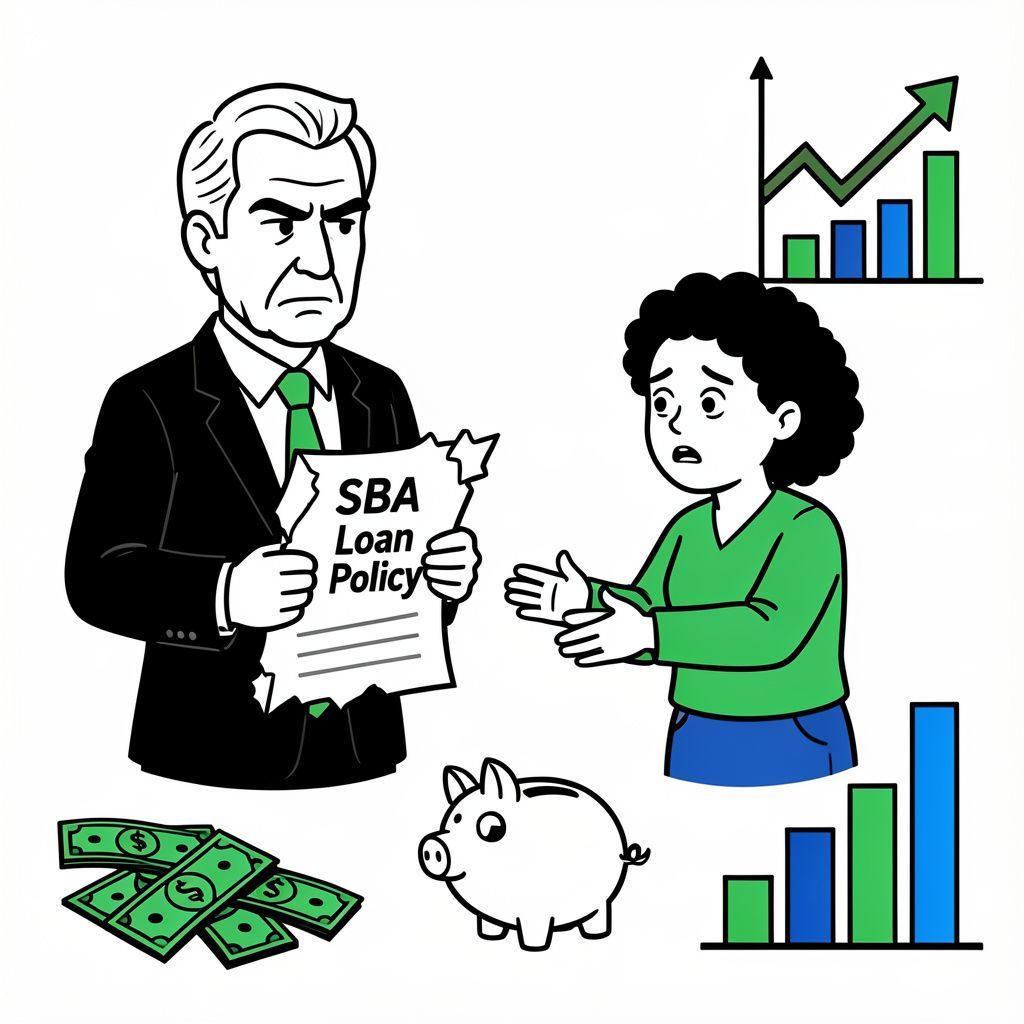
A new SBA policy bars lawful permanent residents from accessing critical small business loans, sparking bipartisan outrage. Over 60 legislators and advocacy groups warn the move could cost jobs, stifle innovation, and disproportionately harm minority-owned businesses—despite immigrants driving nearly $100 million in economic activity in Massachusetts alone last year.
Policy Change Implemented Without Congressional Approval
The Small Business Administration (SBA), under the Trump administration, has quietly implemented a policy change that effectively bars lawful permanent residents—commonly known as green card holders—from accessing SBA-backed loans. The policy, which took effect in March 2026, expands on earlier restrictions introduced in March 2025 that initially excluded non-citizens who were not green card holders from SBA financing programs [1]. The latest change now extends this exclusion to green card holders, who were previously eligible for critical small business loans, including the popular 7(a) and 504 loan programs [1]. The SBA has not publicly announced the policy shift, and it appears to have been enacted without congressional approval or formal rulemaking, raising questions about its legality and transparency [1].
Economic Impact: Jobs and Capital at Stake
The policy change has immediate and measurable consequences for local economies. In Massachusetts alone, green card holders received 237 SBA loans in fiscal year 2025, totaling nearly $100 million in capital and supporting approximately 1,100 jobs, according to an analysis by the Senate Committee on Small Business and Entrepreneurship [1]. The economic ripple effects extend beyond individual businesses. A 2025 survey by MassINC and the Coalition for an Equitable Economy found that 68% of Black business owners and 70% of Latino business owners—many of whom are green card holders—reported needing access to capital, compared to just 32% of white business owners [2]. The SBA’s policy effectively cuts off a vital financial lifeline for these entrepreneurs, who are often key drivers of job creation and innovation in their communities [1][2].
Bipartisan Backlash and Legislative Pushback
The policy has sparked bipartisan outrage among lawmakers, with over 60 state legislators formally urging the SBA to rescind the restrictions [1]. Leading the charge are Massachusetts lawmakers, including Rep. Andy Vargas (D-Haverhill) and Sen. Adam Gomez (D-Springfield), who co-chair the state’s Small Business and Community Development Committee [1]. In a joint letter to SBA Administrator Kelly Loeffler, the legislators warned that the policy “stunts the growth of our economy” by denying capital to some of the most entrepreneurial members of their communities [1]. The backlash is not limited to Democrats. While the letter does not specify Republican signatories, the issue has drawn attention from conservative lawmakers who recognize the economic contributions of immigrant entrepreneurs [1].
Voices from the Ground: Small Business Owners Speak Out
For small business owners like Sergio Espinoza, the policy is more than a bureaucratic hurdle—it is a direct threat to their livelihoods. Espinoza, the owner of Lynn-based Manka Inc. and former president of the Massachusetts Latino Restaurant Association, has seen firsthand how the SBA’s restrictions are crippling his clients [1][2]. “Access to capital is one of the big things,” Espinoza said. “It allows us to be able to grow, hire more, and also buy the building that we operate in” [1]. The policy’s impact is particularly acute for businesses with even a single non-citizen partner or employee. Espinoza noted that one visa-holding employee disqualified his plan to offer ownership rights to his staff, a move that could have stabilized his business and expanded his workforce [2].
A Policy Rooted in Controversy
The Trump administration’s move to bar green card holders from SBA loans is the latest in a series of immigration-related policy shifts that have drawn criticism for their economic and humanitarian impacts. Sen. Ed Markey (D-MA) has been a vocal opponent of the policy, filing the Investing in the American Dream Act in April 2026 to restore the SBA’s previous citizenship rules [2]. The bill, which has garnered 20 co-sponsors in the Senate, seeks to codify the eligibility of lawful permanent residents for SBA programs [2]. Markey did not mince words in his criticism of the administration’s approach, calling the policy “racist” and accusing the SBA of undermining hardworking entrepreneurs [2]. The SBA, for its part, has not provided a public justification for the policy change, leaving lawmakers and advocates to speculate about its motives [1].
What Comes Next? Legislative and Legal Battles Loom
The fate of the SBA’s policy remains uncertain, but the bipartisan backlash suggests that the fight is far from over. Lawmakers are exploring multiple avenues to challenge the restrictions, including legislative action, legal challenges, and public pressure campaigns [1][2]. The Investing in the American Dream Act, if passed, would restore eligibility for green card holders and other lawful immigrants, but its prospects in a divided Congress remain unclear [2]. In the meantime, small business owners like Espinoza are left in limbo, their growth plans stalled and their dreams of expansion deferred [1]. For communities that rely on immigrant entrepreneurship, the stakes could not be higher. As Rep. Vargas put it, “So many small businesses are struggling to get by, and in particular residents that are doing everything the right way, pursuing the American dream, now being shut off by a source of capital that’s really important for our small businesses here” [1].