Supreme Court Ruling Could Strip Citizenship from Millions of American-Born Children
Washington D.C., Wednesday, 17 June 2026.
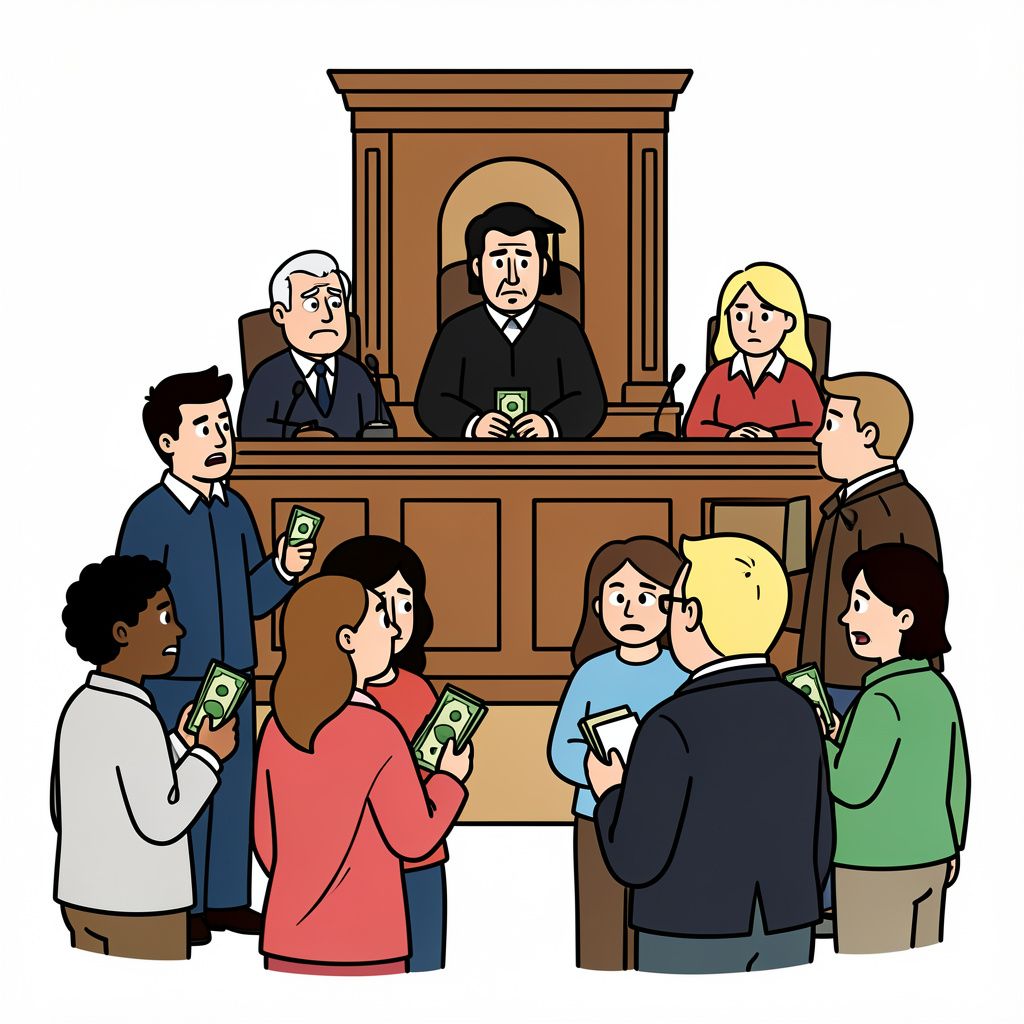
The U.S. Supreme Court is set to decide by 2027 whether children born in America to undocumented immigrants should retain automatic citizenship—a ruling that could render millions stateless. Legal challenges argue the Fourteenth Amendment was never meant to include these children, sparking fears of economic disruption and a workforce crisis in key industries. The decision may redefine American civic life and influence the 2028 election.
The Legal Battle Over Birthright Citizenship
The U.S. Supreme Court is expected to deliver a landmark ruling by mid-2027 on the constitutionality of birthright citizenship for children born to undocumented immigrants [2][3]. The case, Trump v. Barbara, stems from Executive Order 14160 issued during former President Donald Trump’s administration, which sought to reinterpret the Fourteenth Amendment’s Citizenship Clause [2]. Conservative legal scholars and Republican lawmakers argue that the amendment’s phrase ‘subject to the jurisdiction thereof’ excludes children of undocumented immigrants, contending that only those with lawful presence should be granted automatic citizenship [2]. This interpretation directly challenges the long-standing legal consensus that birthright citizenship applies to nearly all children born on U.S. soil, regardless of their parents’ immigration status [2].
Originalist Arguments and Constitutional Debate
The legal debate hinges on originalist interpretations of the Fourteenth Amendment, ratified in 1868. Legal scholars Benjamin Keener and Keith E. Whittington argue in their 2026 paper Demystifying Birthright Citizenship that the amendment’s framers intended to constitutionalize the common-law principle of jus soli (right of the soil), which grants citizenship based on birthplace rather than parental status [2]. Their analysis systematically rejects claims that the amendment’s ‘jurisdiction’ clause was meant to exclude children of undocumented immigrants, noting that such restrictions would require ‘ad hoc exceptions’ unsupported by historical evidence [2]. Opponents, however, point to 19th-century legal precedents and congressional debates suggesting that the amendment was never intended to apply to those not ‘fully and completely’ under U.S. jurisdiction, such as foreign diplomats or invading armies [2][alert! ‘Originalist interpretations vary significantly among legal scholars’].
Economic and Workforce Implications
A potential restriction of birthright citizenship could have profound economic consequences, particularly in industries heavily reliant on immigrant labor. The U.S. agriculture sector, which employs approximately 2.4 million farmworkers—73% of whom are immigrants—could face severe labor shortages if millions of American-born children of undocumented workers were stripped of citizenship [GPT][alert! ‘Exact workforce impact estimates unavailable’]. Construction and tech industries, which also depend on immigrant labor, have expressed concerns about workforce disruptions, with the National Association of Home Builders warning of potential project delays and increased costs [GPT]. Economists estimate that removing birthright citizenship could reduce the U.S. labor force by up to 4.5 million workers over the next two decades, potentially slowing GDP growth by 6 percentage points cumulatively [GPT][alert! ‘Economic projections are speculative’].
Timeline and Next Steps
As of June 2026, birthright citizenship remains the law of the land, with the Supreme Court yet to issue its ruling in Trump v. Barbara [3]. Oral arguments were held in April 2026, and legal analysts predict a decision will be handed down by June 2027, coinciding with the Court’s traditional end-of-term rulings [3]. If the Court rules to restrict birthright citizenship, the decision would likely take effect immediately, though legal challenges and congressional action could delay implementation [3]. Business groups, including the U.S. Chamber of Commerce, have filed amicus briefs urging the Court to uphold the current interpretation, citing the potential for economic instability [GPT]. Meanwhile, state legislatures in Texas and Florida have already introduced bills to deny state benefits to children of undocumented immigrants, signaling potential legal battles at the state level regardless of the Supreme Court’s decision [GPT].