United States Bans Canadian Goods From Federal Procurement Schedules
Washington, Wednesday, 9 September 2026.
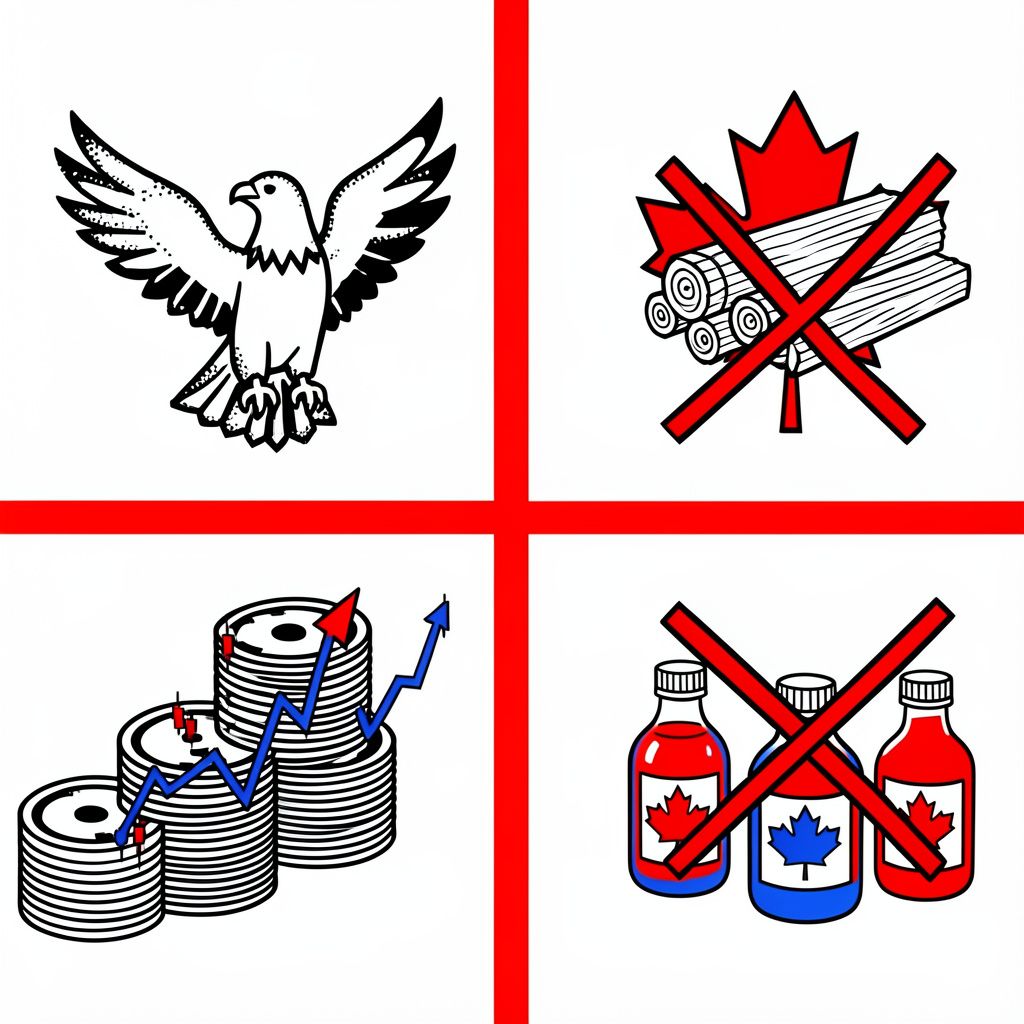
In response to retaliatory tariffs on $28 billion of American goods, the United States directed the removal of Canadian products from $50 billion federal procurement purchasing schedules.
Executive Order Targets Federal Procurement
On Tuesday, 8 September 2026, President Donald Trump directed the General Services Administration (GSA) to remove Canadian-origin products from federal Multiple Award Schedules [1][3]. This executive action targets over $50 billion USD in annual procurement opportunities, effectively banning Canadian goods from key U.S. government contracts [1][5]. The administration cited a lack of reciprocity, claiming Canadian federal and provincial governments have restricted American businesses from their procurement markets [1][5]. President Trump stated on social media that without reciprocity, there would be no access for Canadian firms [5][6]. This policy represents an implemented shift in U.S. trade enforcement, moving beyond tariff threats to direct procurement exclusion [3][6].
Retaliatory Tariffs and Escalating Tensions
Concurrently, the Canadian government implemented retaliatory tariffs on U.S. goods just after midnight EDT on 8 September 2026 [1][2]. These measures target approximately $28 billion USD worth of American exports, matching the scale of U.S. duties imposed on Canadian goods in August 2026 [3][6]. Canadian Prime Minister Mark Carney described the situation as an attempt by America to break Canadian sovereignty, vowing that such efforts would fail [1]. The Canadian tariffs range from 15% to 50% on dozens of U.S. products, including alcohol and dairy [1][2]. This marks a significant escalation from previous negotiations, which collapsed on 21 August 2026 [3][6]. The value of targeted Canadian procurement schedules exceeds the tariff target by 22 billion USD, indicating a broader scope in the U.S. administrative action compared to the tariff-specific retaliation [1][3].
Sector-Specific Impacts and Timelines
Specific import bans on Canadian alcoholic beverages, dairy byproducts, and molasses are scheduled to take effect on 29 September 2026 [6]. While the procurement exclusion was ordered on 8 September 2026, the full implementation across federal agencies may vary [1][3]. Industries such as defense, infrastructure, and technology face immediate supply chain friction due to the procurement ban [1]. Conversely, the import restrictions on consumer goods like beer and whey have a delayed implementation date later in the month [6]. Analysts note that the trade war is widening, with previous threats targeting the automotive sector and companies like Bombardier [4][5]. The timeline indicates a phased approach, with procurement directives active immediately and import bans following later in September 2026 [3][6].
Economic Implications and Trade Dependency
The economic stakes are asymmetric, with Canada sending approximately 68% of its exports to the United States [4]. This dependency creates significant leverage for U.S. policy decisions, as the U.S. economy is roughly 13 times the size of Canada’s [4]. While American suppliers retain access to parts of Canadian procurement under WTO agreements, the threshold for preferential Canadian treatment was lowered to $5 million CAD in June 2025 [4]. Critics argue that elbows-up tactics without leverage may not protect Canadian jobs effectively [4]. The current trajectory suggests continued volatility in North American trade relations through the end of September 2026 [5][6].