United States Claims Control Over Venezuelan Crude Reserves Following Government Shift
Washington, Thursday, 6 August 2026.
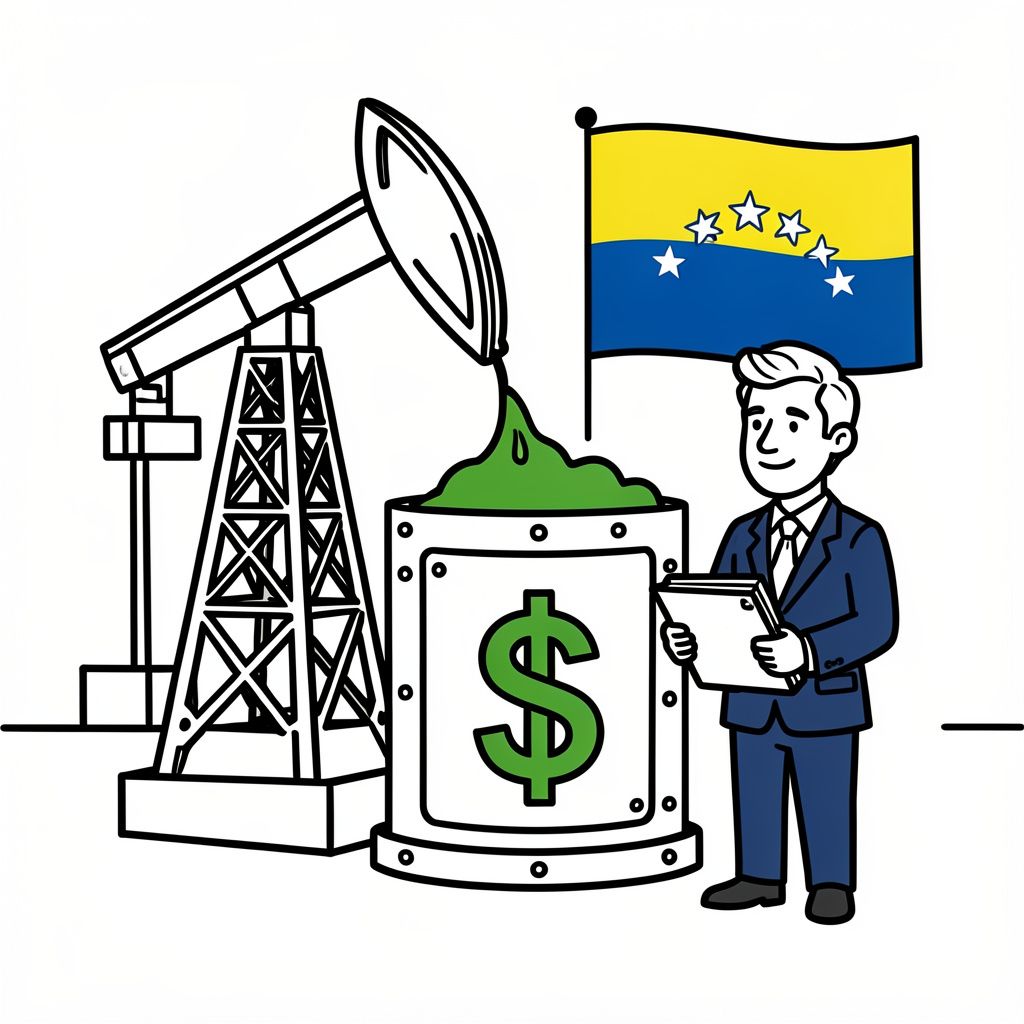
Following a January military intervention, the U.S. has assumed control over Venezuelan oil exports, generating more than $13 billion in revenues in 2026 amid ongoing financial oversight questions.
Presidential Declaration and Strategic Shift
President Donald Trump announced on Wednesday, 5 August 2026, that the United States has secured control over billions of barrels of Venezuelan oil, invoking the doctrine that ‘to the victor belong the spoils’ [1]. Speaking at a rally in Las Vegas, the President highlighted a dramatic pivot in foreign energy policy following the January 2026 military intervention that resulted in the abduction of then-Venezuelan President Nicolas Maduro [2]. Maduro is currently detained in a New York jail awaiting drug trafficking charges, while Vice President Delcy Rodriguez has assumed the presidency and acquiesced to U.S. demands [1]. Secretary of State Marco Rubio is reportedly acting as the de facto viceroy of the region, overseeing the transition [3].
The administration’s stance marks a significant departure from previous diplomatic norms, emphasizing direct resource control rather than sanctions alone. Trump criticized the George W. Bush administration for failing to seize Iraqi oil during the Iraq War, contrasting it with the current strategy in Caracas [6]. This approach underscores a broader geopolitical strategy where energy dominance is explicitly linked to military and diplomatic outcomes. The statement has triggered close monitoring from executives and energy traders regarding global supply chains and heavy crude refining operations [1].
Revenue Generation and Export Volumes
Financial data indicates substantial revenue generation since the U.S. assumed control of Venezuela’s oil exports on 3 January 2026. According to Financial Times calculations, the Trump administration has collected more than $13 billion in revenues from Venezuelan oil sales in 2026 alone [4]. Export values surged from $600 million in January 2026, corresponding to approximately 380,000 barrels per day, to $3.7 billion in April 2026, representing 1.1 million barrels per day [5]. This growth represents a 516.667 percent increase in export value over the first four months of control [5].
The primary destinations for Venezuelan oil since the intervention include the United States at 43 percent, India at 26 percent, and Spain at 8 percent, with additional shipments to Israel, Italy, and the Netherlands [5]. Commodities firms Trafigura and Vitol, initially described as a short-term fix, remain involved in exports alongside trader GE Warren [5]. Despite the revenue influx, questions persist regarding the transparency of fund management and disbursement to the Venezuelan people [4].
Geopolitical Implications and Global Oil Claims
In Las Vegas, President Trump claimed that including Venezuelan resources means the United States now controls 60 percent of the world’s oil and gas reserves [7]. This assertion accompanies ongoing tensions in the Middle East, where Iran has closed the Strait of Hormuz following the commencement of U.S. and Israeli air operations in February 2026 [1]. Approximately 20 percent of the world’s oil flows through the Strait, making the closure a critical factor in global pricing [1]. The President also noted similar efforts are underway in Iran, stating, ‘We’re doing– we’re knocking the hell out of them’ [1].
The consolidation of Western Hemisphere energy reserves aims to stabilize domestic supply chains amidst global volatility. However, the claim of 60 percent control relies on the integration of Venezuelan proven reserves into U.S. strategic calculations, a move that remains subject to international legal scrutiny [7]. The administration argues this control provides a buffer against OPEC+ production decisions and geopolitical shocks in the Persian Gulf [7].
Oversight, Audits, and Fund Allocation
Conflicting accounts exist regarding the allocation of generated revenues. Secretary of State Marco Rubio testified in January 2026 that $300 million had been disbursed to Venezuela via a Qatar account, with $200 million remaining, while Secretary of Energy Chris Wright later claimed the full $500 million had been transferred [5]. By April 2026, a State Department witness confirmed $3 billion had been authorized for disbursement, though the remaining balance in U.S. Treasury accounts could not be verified [5]. Democratic lawmakers have requested a Government Accountability Office audit, but the status remains unknown as of 6 August 2026 [alert! ‘Status unknown as of August 6, 2026; legislation/audit progress pending.’] [5].
Additionally, Venezuela is seeking access to $5 billion in IMF Special Drawing Rights inaccessible since 2019, though no public record of this transaction or U.S. conditioning has been reported [alert! ‘No public record of this transaction or U.S. conditioning of these funds has been reported as of August 6, 2026.’] [5]. Executive Order 14373 established Foreign Government Deposit Funds as Venezuelan property held in U.S. custody, yet written agreements with traders remain withheld from public view [5]. Accounting firm KPMG was slated to perform retrospective quarterly audits, though no timeline for report release has been provided [5].
Sources
- www.mediaite.com
- www.mediaite.com
- www.nytimes.com
- www.facebook.com
- latinvex.com
- www.theguardian.com
- www.nampa.org