Artificial Intelligence Companies Face Growing Risks From Heavy Debt Loads
Austin, Thursday, 6 August 2026.
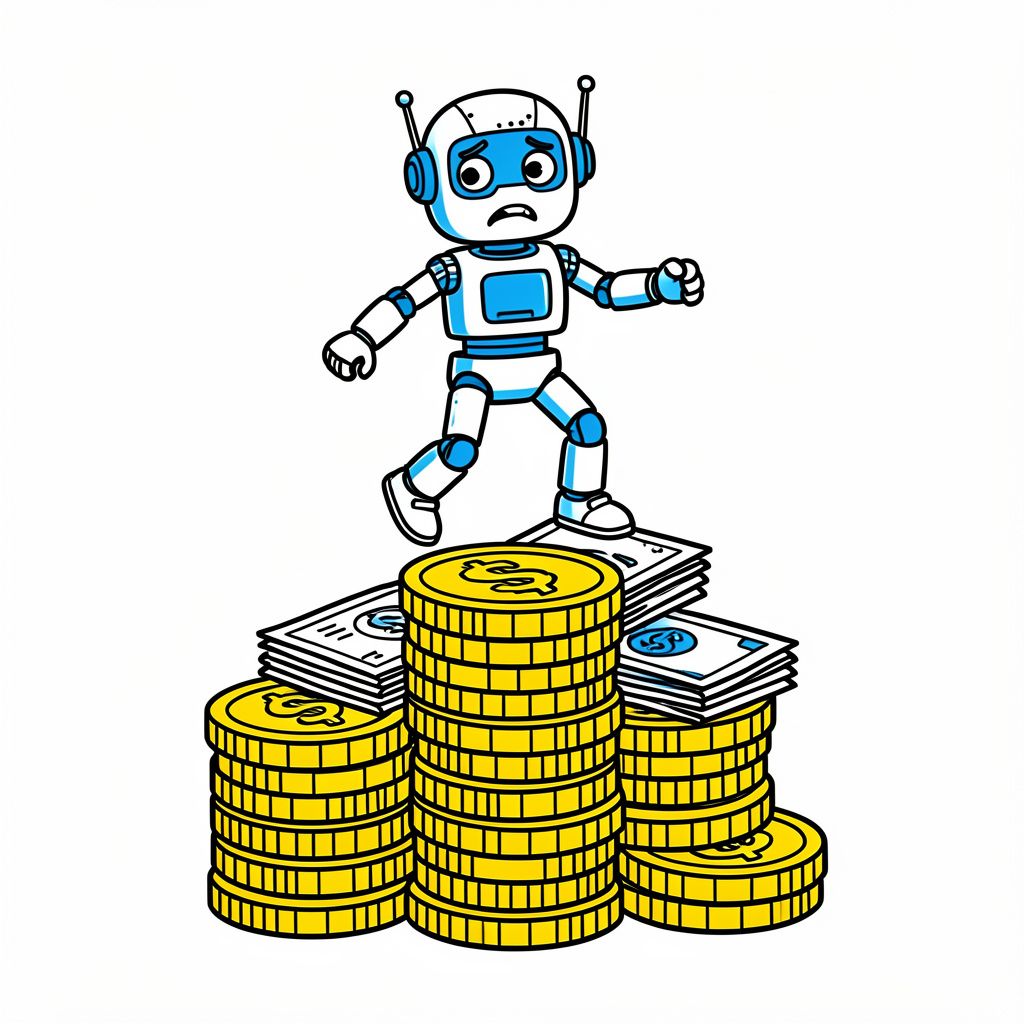
Surging debt loads funding artificial intelligence infrastructure leave companies vulnerable, highlighted by CoreWeave accepting a 10.44% yield and strict covenants to secure a $2.6 billion loan.
Market Correction Warnings Amid AI Debt Surge
Market analysts are raising concerns over high corporate debt loads tied to aggressive capital expenditures in artificial intelligence infrastructure, identifying Oracle Corporation (ORCL) and specialized cloud provider CoreWeave as particularly vulnerable in the event of a broader equity market downturn [1][5]. As of August 4, 2026, the S&P 500 rose nearly 20% following a greater than 7% decline in the first four months of 2026, while the Nasdaq Composite rose nearly 25% after dropping more than 10% through April 2026 [1][5]. Despite recent gains, heavy borrowing to fund compute capacity could amplify downside risks if revenue growth fails to keep pace with leverage commitments [1]. Today, August 6, 2026, investors are scrutinizing whether the AI-fueled rally can sustain itself against rising borrowing costs and potential market corrections [7].
Oracle’s Financial Liabilities and Cash Flow
Oracle Corporation reported fiscal 2026 Q4 revenue ended May 31, 2026, of $9.9 billion for Oracle Cloud Infrastructure, a 46% increase, with $638 billion in remaining performance obligations [1][5]. However, the company’s financial liabilities include $156 billion in total debt and $261 billion in off-balance-sheet data-center lease commitments [1][5]. Approximately 50% of Oracle’s $638 billion backlog is tied to OpenAI, which faces cash-burn concerns and future payment obligations totaling trillions over the next five years [1]. Furthermore, Oracle reported negative free cash flow of $24.5 billion for fiscal 2026, raising questions about liquidity amidst aggressive expansion [1][5]. S&P Global Ratings has downgraded Oracle’s debt to one notch above junk status, and the company faces rising credit default swap costs [7].
CoreWeave’s Leveraged Position
CoreWeave (CRWV) exhibits financial risk profiles similar to Oracle but at higher levels of intensity, holding nearly $25 billion in total debt against only $2.24 billion in cash as of March 31, 2026 [1][5]. On July 26, 2026, CoreWeave finalized a $2.6 billion first-lien delayed draw term loan maturing in September 2031, arranged by a JPMorgan-led syndicate to fund GPU acquisition [3]. To secure the funding, CoreWeave was forced to revise terms to a final structure of SOFR plus 550 basis points at a 97-cent discount, resulting in a yield to maturity of 10.44% [3]. The loan includes strict maintenance covenants, including a 1.35x Debt Service Coverage Ratio at the borrower level and a $112.5 million minimum liquidity requirement, marking a departure from the covenant-lite trend that dominated more than 80% of US leveraged loans by 2024 [3].
Interest Cost Implications
The spread widening of 100 to 125 basis points on the CoreWeave loan effectively increased the annual interest cost on the $2.6 billion facility by more than 1% [3]. Using the principal and spread increase, the additional annual cost can be illustrated as 0.026 billion dollars per year due to the spread blow-out alone [3]. CoreWeave reported negative free cash flow of $4.71 billion in Q1 2026, with $7.70 billion in capital expenditure against $2.98 billion in operating cash flow [3]. Unlike Oracle, there is no older, boring business to fall back on, as CoreWeave is a neocloud and its entire model relies on AI continuing to boom [1][5].
Market Signals and Credit Spreads
As of July 29, 2026, Oracle’s five-year credit default swaps reached 218 basis points, reflecting rising bond spreads and investor concern regarding the debt loads of hyperscalers [4]. During late July 2026, CoreWeave’s five-year credit default swap spread reached approximately 855 basis points, implying a 50% cumulative default probability [3]. AI-linked CDS trading volumes in Q2 2026 reached $650 million, a 600% year-over-year increase, signaling heightened hedging activity against potential defaults [3]. Fitch Ratings’ Q3 2026 Global Risk Outlook identified AI market correction as a primary credit risk, noting that Amazon, Alphabet, Nvidia, Meta, Oracle, and SpaceX issued $182 billion in bonds in H1 2026 [3].
Federal Reserve and Interest Rate Pressures
The U.S. Federal Reserve is considering interest rate hikes at its September 2026 meeting to address inflation, which rose to 3.5% in May 2026 after hitting a 4.2% peak [7]. CME Group’s FedWatch indicates a 60% probability of a 0.25 percentage point hike in September and a greater than 33% chance of a total increase of 0.50 percentage points or more by December 2026 [7]. Potential Federal Reserve interest rate hikes threaten market stability by increasing the cost of capital, which could trigger a collapse of the current AI bubble [7]. Every 100-basis-point borrowing cost increase significantly inflates annual interest expenses for hyperscalers projecting capital expenditure to reach $785 billion in 2026 and approximately $1 trillion in 2027 [3][7].
Comparative Stability and Outlook
In contrast to the high-debt profiles of Oracle and CoreWeave, Berkshire Hathaway maintains a defensive financial position with nearly $400 billion in cash, intended for capital deployment during market declines [1][5]. On August 3, 2026, AI cloud infrastructure stocks rallied, with CoreWeave rising 11% to $79.60 and Oracle gaining 5% to $136, though Oracle remains down 29% year-to-date as of August 5, 2026 [6]. If the trend of borrowers being forced to sweeten terms continues through H2 2026, the AI buildout faces a structural cost increase [3]. Analysts suggest that if a bear market hits, it will likely be driven by indebted companies betting big on AI infrastructure, making cash-rich entities potentially more resilient [1][5].
Sources
- www.fool.com
- www.facebook.com
- www.techtimes.com
- thehill.com
- www.theglobeandmail.com
- www.aol.com
- marketwise.com
- www.linkedin.com