Europe Considers Fast Tariffs as Trade Talks with China Stall
Brussels, Friday, 2 October 2026.
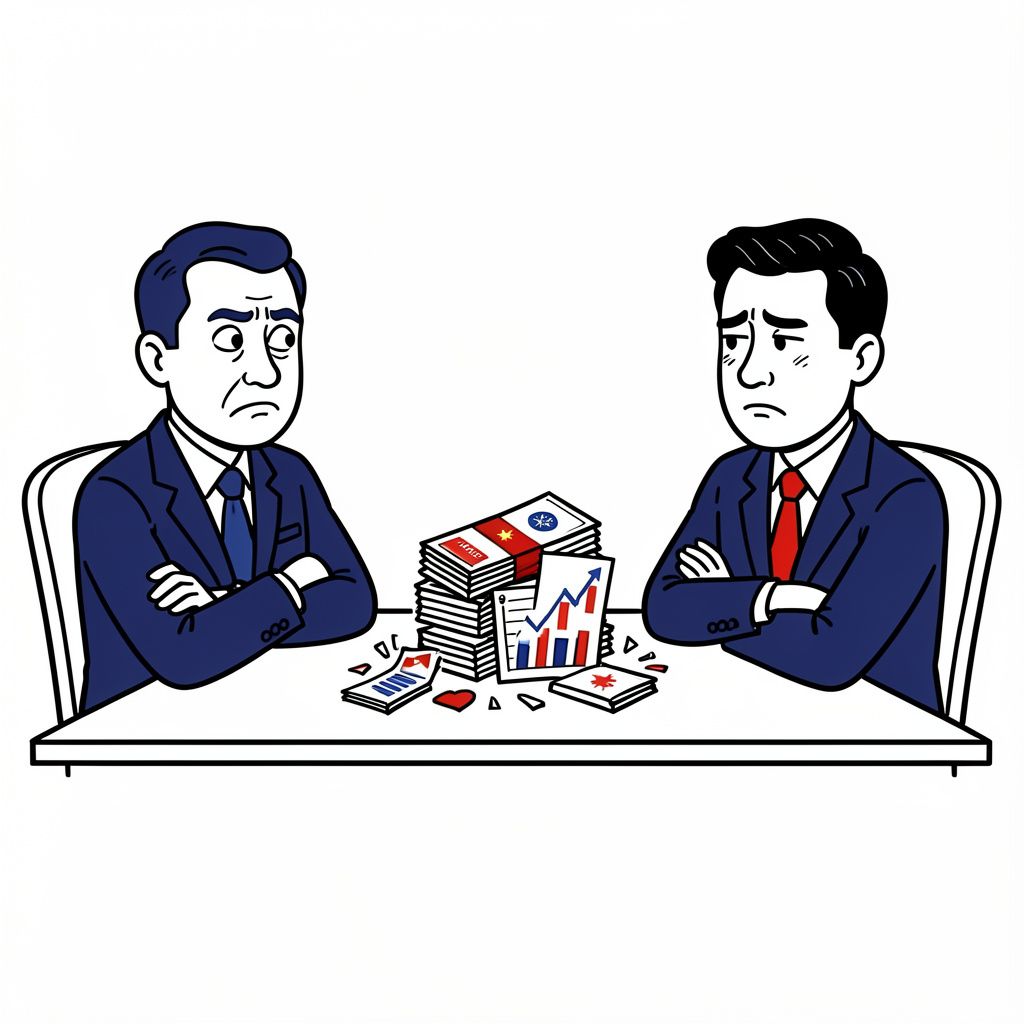
Negotiations between the EU and China have failed to ease tensions, prompting European leaders to consider aggressive, US-style market restrictions as trade deficits reach €1 billion daily.
Trade Negotiations Stall Amidst Growing Pressure
High-stakes trade negotiations between the European Union and China have failed to produce concrete agreements, marking a significant escalation in economic tensions just as a previous October deadline approached. As previously reported, Brussels had threatened strict unilateral measures unless China voluntarily capped key exports to balance the escalating multi-billion-euro deficit [7]. Today, EU Trade Commissioner Maroš Šefčovič confirmed that despite tough discussions, the parties are “definitely not there yet” on a prospective deal, raising concerns over European industrial competitiveness and job preservation [1]. The deadlock signals potential shifts in European trade policy toward Beijing, which could exacerbate global supply chain friction and indirectly impact American businesses reliant on transatlantic and Asian trade flows [2].
Escalating Trade Imbalances
The urgency behind these talks is driven by a widening trade deficit, with the EU currently importing €1 billion more in goods daily from China than it exports [2]. This imbalance is particularly acute in the automotive sector, where Chinese hybrid vehicle exports to the EU surged from under 4,000 to 50,000 units per month following 2024 tariffs on electric vehicles [4]. This represents a massive increase in export volume, calculated as 1150 percent growth in monthly units [4]. In response, France and Germany are finalizing a joint proposal to grant the EU powers to block China from the European market within 24 hours, potentially modeled on US Section 301 tariffs [2][3].
Beijing’s Response and Risks
Beijing has issued strong warnings against such measures, with the Commerce Ministry stating that restrictions would “seriously undermine mutual trust” and disrupt negotiations [3]. Chinese officials argue that imposing broad tariffs will not solve problems but will instead backfire on the EU itself and disrupt the stability of global industrial and supply chains [2]. Furthermore, China’s commerce ministry spokesperson emphasized that if the EU fails to lead by example and instead takes the lead in violating WTO rules, it will seriously undermine the rules-based multilateral trading system [2]. This rhetoric highlights the risk of a broader trade conflict that could ripple through global markets.
Next Steps for Brussels
Looking ahead, the European Commission is expected to propose a slew of new tools for countering Beijing’s trade practices, likely to come in December [5]. EU Trade Commissioner Maroš Šefčovič is scheduled to travel to Beijing for crucial meetings to assess progress, though the mood in Brussels is hardening [5]. The European Council is also expected to discuss a new “diversification instrument” and a “solidarity fund” to assist firms affected by potential retaliatory trade measures [2]. For investors and executives, the coming weeks represent a critical period where policy decisions could set the course of EU-China relations for years to come [5].
Sources
- www.politico.eu
- www.irishtimes.com
- www.cnbc.com
- www.csmonitor.com
- www.scmp.com
- jingdaily.com
- wsnext.com