US Declares Cuba a National Security Threat Over Foreign Spy Concerns
New York, Monday, 13 July 2026.
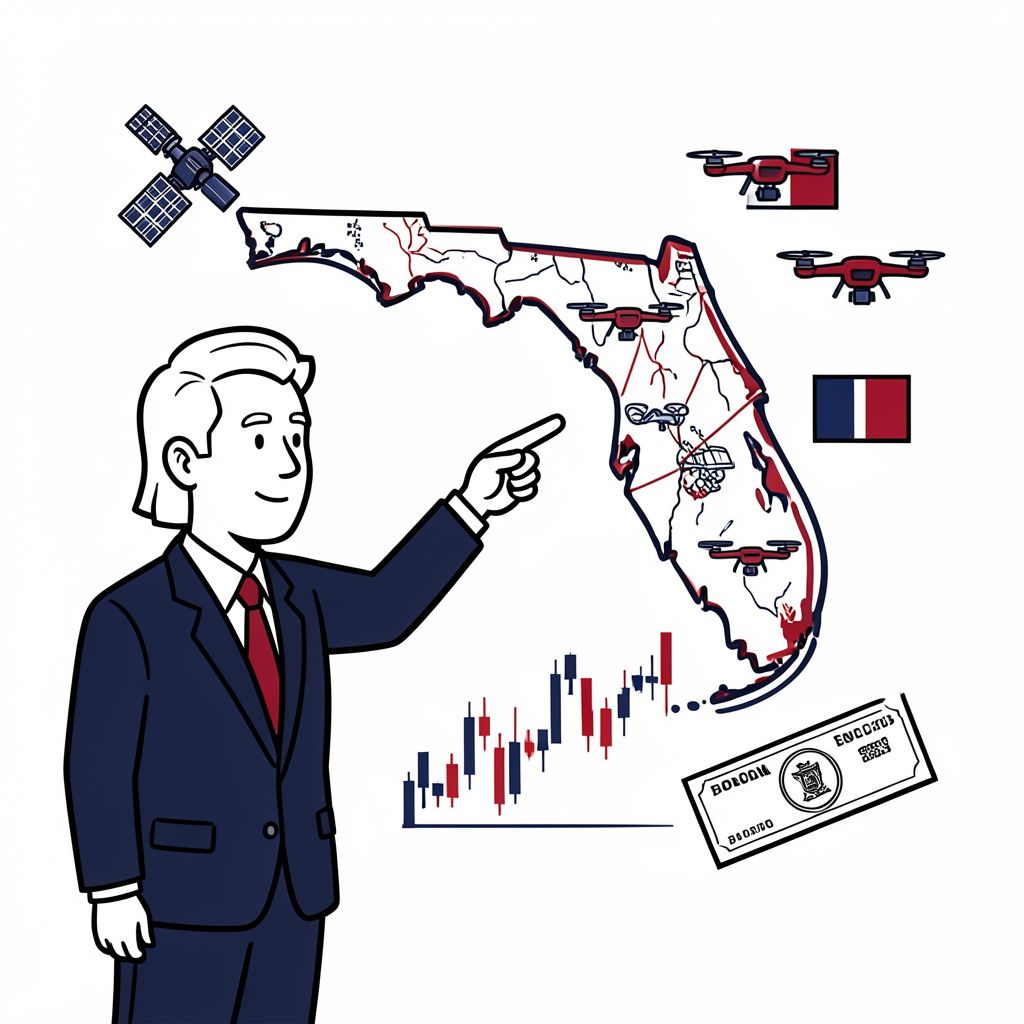
US UN Ambassador Mike Waltz declared Cuba a national security threat, citing active Chinese and Russian intelligence sites and reports of Iranian drones just 145 kilometers from Florida.
A Strategy of Maximum Pressure and Regional Realignment
Speaking on Fox News’ “Sunday Morning Futures” on July 12, 2026, United States Ambassador to the United Nations Mike Waltz emphasized that the Cuban regime represents an active and direct national security threat to the United States [2][3][4]. Waltz asserted that the Donald Trump administration will take a strong, uncompromising response, declaring that Washington “is not going to stand for it any longer” [2][3][4]. According to Waltz, while the administration has successfully diminished the footprints of foreign adversaries in places like Venezuela and the Panama Canal—where their influence had expanded under the previous Biden administration—Cuba remains a critical vulnerability right off the American coastline [2][3][4].
The Triad of Adversaries: China, Russia, and Iran
The core of Washington’s security concern rests on the intelligence-gathering capabilities of U.S. adversaries operating on the island. Waltz detailed that both China and Russia continue to operate active intelligence outposts, signals collection facilities, and station military officers in Cuba [2][3][4]. These operations are strategically positioned near U.S. shores to monitor American military bases and intercept sensitive communications [1][2][3][4]. The proximity of these installations—located roughly 145 kilometers from the Florida coast—presents an immediate tactical challenge to the Pentagon’s domestic defense posture [3][4].
Diplomatic Ultimatums and the Shadow of Intervention
The threat of military escalation has loomed heavily over U.S.-Cuban relations since May 2026, when CIA Director John Ratcliffe met directly with Cuban officials [1][3]. During this high-level meeting, Ratcliffe delivered an explicit warning from President Trump, stating that the U.S. is prepared to execute a military response or even an invasion unless Havana implements fundamental political and economic reforms [1][3]. Rather than capitulating, Cuban President Miguel Díaz-Canel reacted defiantly, warning that any such U.S. military intervention would trigger a “bloodbath with incalculable consequences” [1][3].
Implications for Global Markets and Maritime Security
For international investors and corporate strategists, the escalating friction in the Caribbean introduces a layer of heightened geopolitical risk [GPT]. The potential for naval blockades, heightened surveillance, or localized military skirmishes threatens critical maritime trade routes, particularly those converging around the Gulf of Mexico and the Caribbean basin [GPT]. As the U.S. Treasury and State Department continue to tighten economic sanctions and pressure regional supply chains, businesses operating in Latin America must prepare for increased compliance costs and potential disruptions to shipping logistics [GPT].