Elisha Wiesel Rebukes Call to End American Support for Israel
Jerusalem, Sunday, 12 July 2026.
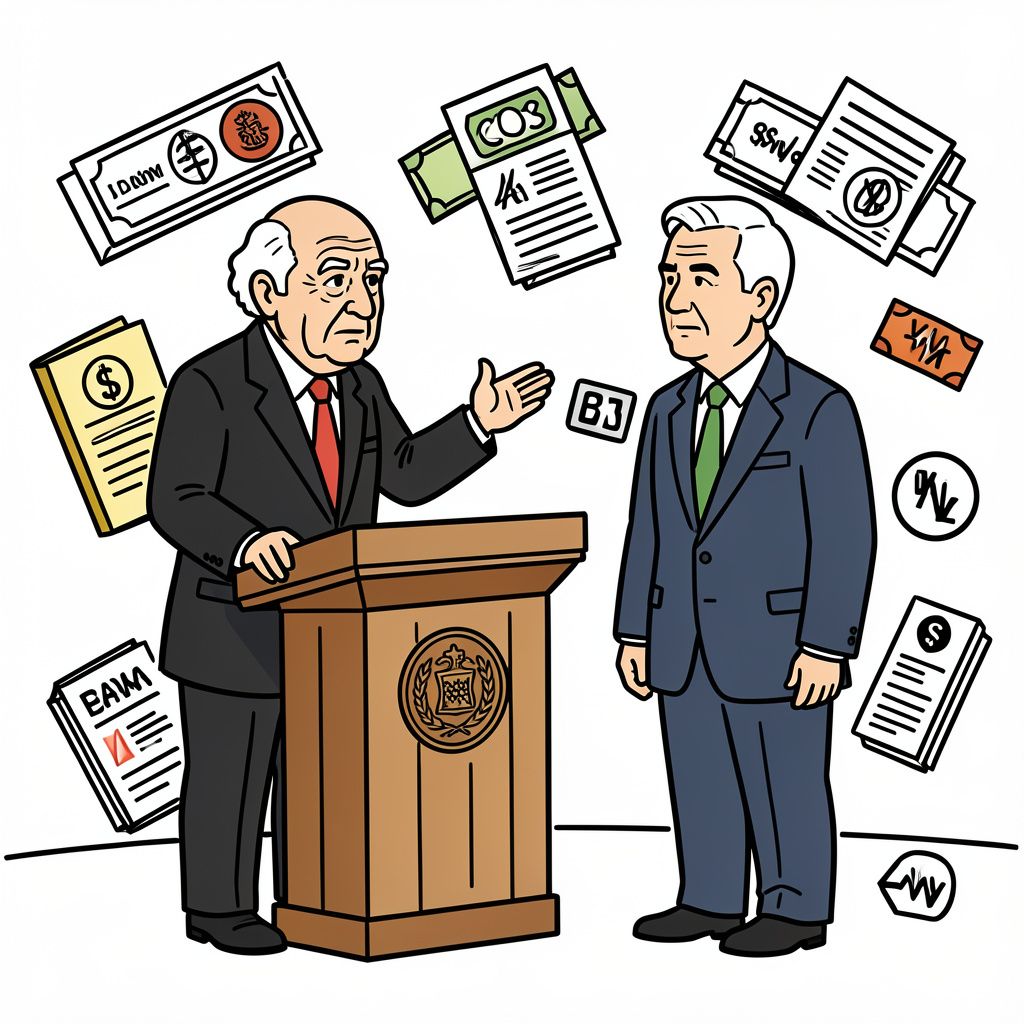
At Yad Vashem on July 12, 2026, Elisha Wiesel rebuked Rahm Emanuel for calling Israel a “pariah nation,” warning that abandoning the alliance unlearns the lessons of the Holocaust.
A Confrontation Over Moral Legacy and Geopolitics
Speaking at Yad Vashem in Jerusalem on July 12, 2026, Elisha Wiesel, Chairman of The Elie Wiesel Foundation, delivered a poignant address that linked historical memory with contemporary geopolitics [1]. The event commemorated the 10th anniversary of the passing of his father, Nobel laureate Elie Wiesel, who died 10 years prior [1]. In his remarks, the younger Wiesel sought to defend the integrity of the United States-Israel alliance during a period of heightened geopolitical friction in the Middle East, emphasizing that the strategic partnership must transcend shifting political sentiments [1][GPT].
The Rebuke of Rahm Emanuel
The core of Wiesel’s address was a direct rebuke of former White House Chief of Staff Rahm Emanuel [1]. Wiesel criticized Emanuel for characterizing Israel as a “pariah nation” and advocating for the termination of American support [1]. Recalling President Barack Obama’s 2009 visit to the Buchenwald concentration camp—an event Emanuel organized as Chief of Staff—Wiesel noted that his father had warned then that the world’s approval could never be guaranteed [1]. Wiesel argued that evaluating Israel’s right to exist based on global approval “unlearns Buchenwald,” asserting that Emanuel should know better given his direct involvement in that historic 2009 visit [1].
The Geopolitical and Economic Stakes of the Alliance
Beyond the immediate moral debate, the stability of the U.S.-Israel relationship remains a critical barometer for global markets and international security [GPT]. For multinational corporations and global policymakers, any perceived fracture in this bilateral alliance introduces significant risks [GPT]. The Middle East remains a vital corridor for global energy supply chains and maritime trade; consequently, diplomatic instability or a shift in U.S. security guarantees can quickly translate into volatility in oil prices and increased maritime insurance premiums [GPT].
Disruptions to Strategic Cooperation
Historically, the strategic cooperation between Washington and Jerusalem has provided a framework of predictability that benefits international commerce and regional defense coordination [GPT]. A cessation of U.S. support, as proposed by critics like Emanuel, would not only alter the balance of power but could also disrupt joint technological ventures, intelligence sharing, and defense procurement programs [1][GPT]. This potential disruption forces corporate risk officers to actively factor Middle Eastern political alignments into their long-term strategic planning [GPT].
Upholding a Global Human Rights Mission
Amid these complex geopolitical dynamics, The Elie Wiesel Foundation continues to position itself as an independent moral voice [1]. LizAnn Eisen, the foundation’s Executive Director, reaffirmed the organization’s commitment to upholding Elie Wiesel’s legacy of “speaking hard truths to the strong on behalf of the weak” [1]. Established by the Nobel laureate and his wife, Marion, the foundation’s advocacy extends far beyond the Middle East, encompassing historical and ongoing human rights crises in Cambodia, Rwanda, and Darfur, as well as the treatment of immigrants within the United States [1].
A Lasting Ethical Framework
Ultimately, Elisha Wiesel’s address, the full text of which was shared on the foundation’s Facebook page, serves as a reminder of the foundational ethics that guide the organization [1][2]. By invoking his father’s words—that Jews were targeted not as abstract human beings but specifically as Jews—he sought to ground modern diplomatic relations in the stark realities of historical persecution [1]. For international observers, the speech highlights the enduring tension between pragmatic realpolitik and the uncompromising moral lessons of the twentieth century [1][GPT].