New Federal Reserve Chair Kevin Warsh Targets Balance Sheet Cuts to Lower Interest Rates
Washington, Friday, 5 June 2026.
Sworn in this May, Fed Chair Kevin Warsh aims to shrink the $6.7 trillion balance sheet to lower interest rates, intriguingly adopting “strategic ambiguity” for future monetary communications.
A New Era at the Federal Reserve
Kevin Warsh officially assumed his role as the 17th Chairman of the Federal Reserve on May 22, 2026 [1][3]. Nominated by President Donald J. Trump in early March 2026, Warsh received Senate confirmation for his Board seat on May 12 and for the chairmanship on May 13 [1]. He inherits an economy transitioning through a critical inflection point as the United States navigates the mid-year period of 2026 [4]. Since 2022, core Personal Consumption Expenditures (PCE) inflation has cooled significantly, dropping from 5.5% to 3.30% by mid-2026, representing a -40% shift in the inflation rate [3]. Concurrently, labor productivity has maintained an annualized growth rate of 2.1% since the fourth quarter of 2019 [3].
Re-engineering the Balance Sheet
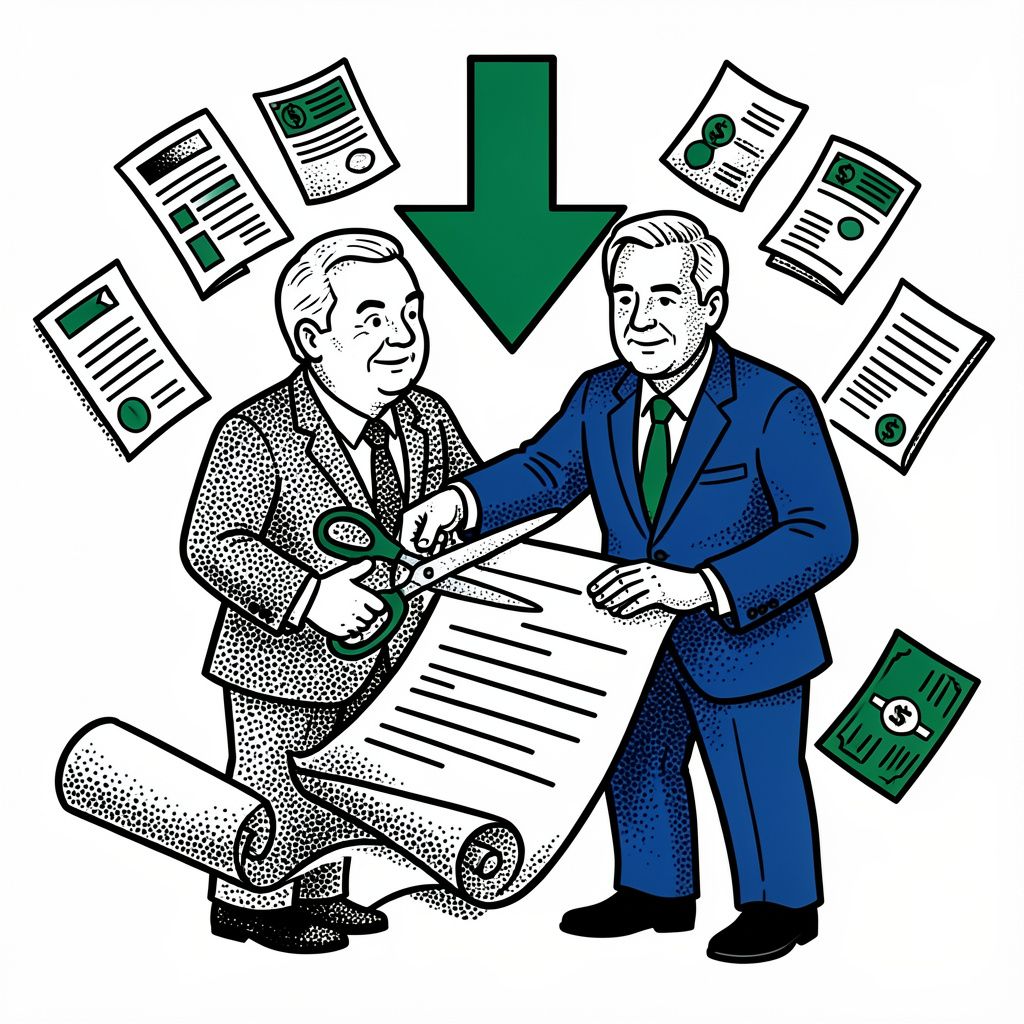
A central pillar of Warsh’s emerging policy framework is a decisive strategy regarding the Federal Reserve’s balance sheet. Following a historic expansion where liabilities peaked near $9 trillion between 2005 and 2025, the balance sheet has since been reduced to $6.73 trillion, which currently represents 21.20% of the national Gross Domestic Product (GDP) [3]. Warsh has publicly criticized this as a “bloated balance sheet” and advocates for significant further reductions [3]. His stated goal is to redeploy the financial flexibility gained from shrinking the balance sheet into lower interest rates, a move he argues will better support households alongside small and medium-sized businesses [3].
Artificial Intelligence and Strategic Ambiguity
To navigate lingering inflationary pressures without stifling growth, Warsh is looking toward technological advancements. He asserts that artificial intelligence will serve as a “significant disinflationary force” by enhancing productivity and reinforcing American economic competitiveness [3]. This macroeconomic view aligns with current market realities, where businesses are heavily investing in AI infrastructure, driving intense demand for data center expansion and making memory chips one of the most lucrative trades in the technology sector, as noted by Roundhill Investments CEO Dave Mazza [4][5].
Navigating a Fractured Committee
The practical application of Warsh’s strategies will face its first major test at the upcoming Federal Open Market Committee (FOMC) meeting scheduled for June 16-17, 2026 [3]. This gathering will not only be Warsh’s debut as chair but will also feature a highly anticipated update to the SEP [3]. However, he steps into a boardroom marked by notable monetary policy divisions [3]. In late May 2026, regional Fed presidents Beth M. Hammack, Neel Kashkari, and Lorie K. Logan explicitly opposed an easing bias that was present in the post-meeting statement from April 29 [3].