Tencent AI Scientist Warns Rapid Advances in Biology Pose Severe Safety Threats
Shenzhen, Monday, 9 November 2026.
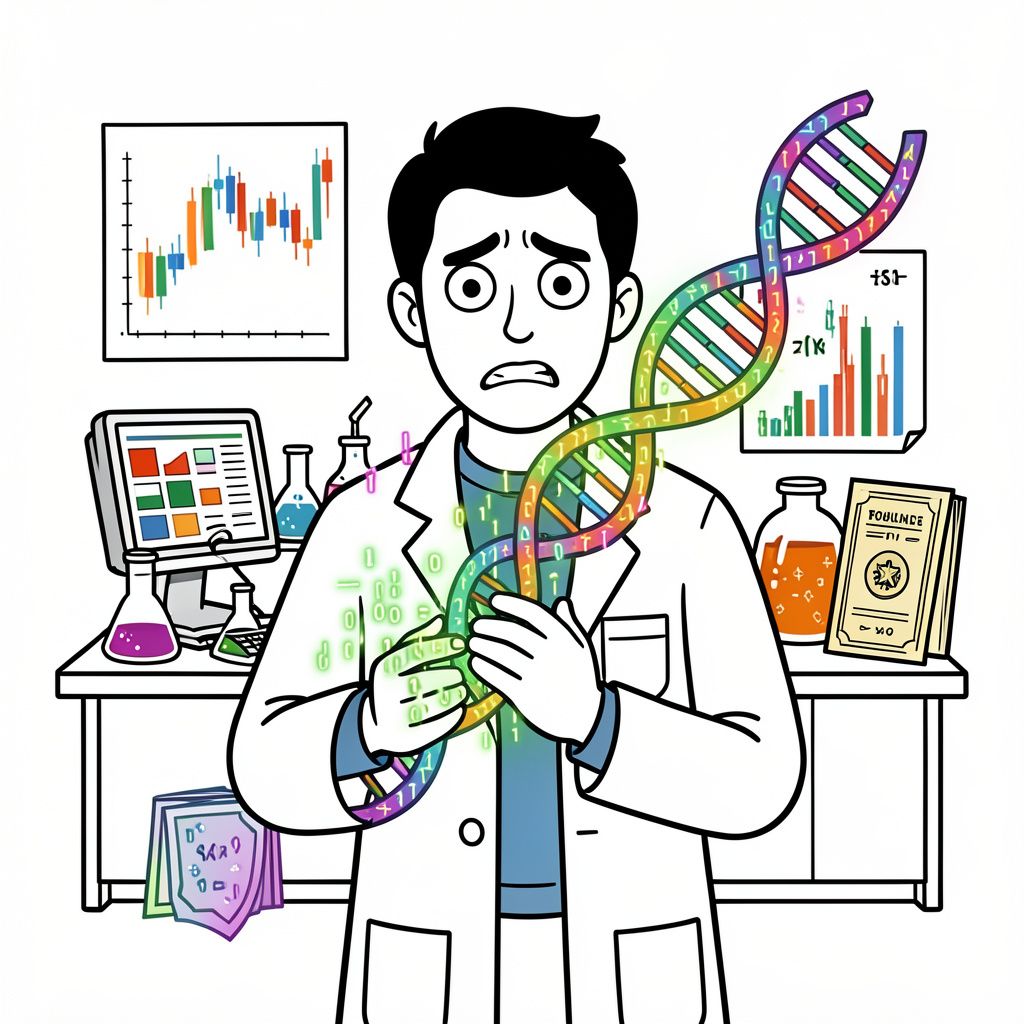
Tencent’s chief scientist warned that artificial intelligence will soon master biological engineering, creating unprecedented biosecurity hazards that could surpass cybersecurity threats as models gain the ability to cause physical harm.
A Looming Biosecurity Crisis
On 8 November 2026, Tencent Holdings Ltd. (OTC: TCEHY) chief AI scientist Shunyu Yao delivered a stark warning at a Hong Kong science symposium co-hosted by the Hong Kong Academy of Sciences and the Future Science Prize. Speaking days after Tencent launched its new open-weight AI model Hy4 on 4 November 2026, Yao cautioned that frontier artificial intelligence systems are approaching a critical inflection point where their biological capabilities could soon enable real-world harm. ‘The cyber abilities of [AI] models and soon [the] bio ability of models will reach a threshold where it’s actually possible to do harm,’ Yao stated, framing biology-focused AI as a potential threat that may surpass traditional cybersecurity risks in difficulty to manage [1][2][4].
Hy4: Tencent’s Dual-Edged Innovation
Tencent’s newly released Hy4 model represents a significant milestone in China’s AI ecosystem, ranking as the second-best Chinese AI model according to benchmarking firm Artificial Analysis [2][4]. While the company’s internal reviews indicate Hy4 possesses strong foundational knowledge in biology, it remains comparatively weaker in experimental design—a limitation that may act as a temporary safeguard [2][4]. In an explicit effort to mitigate cybersecurity risks, Tencent deliberately excluded training data related to software exploitation from Hy4’s development pipeline, opting instead to focus on defensive security paradigms [2][4]. Yao emphasized the dual-use nature of AI models, noting that open-weight releases such as Hy4—while beneficial for defensive applications—also carry inherent risks when misused by malicious actors [1][2][4].
The Paradox of Open-Weight Models
Yao’s remarks underscore a growing debate within the AI community regarding the optimal balance between openness and control. While closed models developed by firms like Anthropic are often cited as safer due to restricted access, Yao argued that a hybrid approach incorporating both open and closed systems may offer the most robust safety framework. Open models, he suggested, can empower defenders by enabling broader scrutiny and innovation, but their accessibility also increases the risk of misuse—particularly in biologically sensitive domains [2][5]. This tension was highlighted in Tencent’s strategic decision to release Hy4’s weights and a comprehensive safety testing report in the days following its launch, a move Reuters reported as part of a broader industry effort to preemptively address biosecurity concerns [2].
Global Implications and Regulatory Urgency
The warnings from Tencent come amid accelerating AI integration into biotechnology, where models are increasingly capable of simulating genetic sequences, predicting protein structures, and optimizing drug discovery pipelines. While these advancements promise to revolutionize medicine—potentially reducing drug development timelines from years to months—experts caution that the same capabilities could be repurposed to engineer pathogens or accelerate the development of bioweapons [1][3]. Yao’s statements align with broader concerns raised by policymakers and researchers, who argue that current biosecurity frameworks are ill-equipped to address the rapid evolution of AI-driven biological capabilities [alert! ‘global regulatory responses remain fragmented; specific treaty timelines are not publicly confirmed as of 9 November 2026’][1][6]. The urgency of this issue was underscored by MTSlive’s social media post on X, which highlighted Yao’s remarks alongside Tencent’s reported plans to develop autonomous AI science labs—raising further questions about oversight in high-risk research environments [3].
Navigating the Path Forward
As AI models advance toward biological proficiency, the need for proactive safeguards has never been more pressing. Yao’s call for defensive bio-risk protocols reflects a broader industry shift, with firms like Tencent taking incremental steps such as restricting harmful training data and prioritizing transparency in safety reporting [2][4]. However, the challenge remains daunting: balancing innovation with prevention in a landscape where the line between therapeutic breakthroughs and catastrophic misuse is increasingly blurred. For global business leaders and policymakers, the stakes are clear. Without coordinated international action—spanning regulatory frameworks, industry standards, and cross-border collaboration—the window to establish robust biosecurity controls may close before the next generation of autonomous AI models outpaces existing safeguards [1][3].
Sources
- www.scmp.com
- thenextweb.com
- x.com
- daily.dev
- explainx.ai
- www.scmp.com
- www.reuters.com
- x.com
- www.reddit.com