Tech Stocks Suffer Severe Sell-Off as AI Spending Concerns Mount
New York, Friday, 6 November 2026.
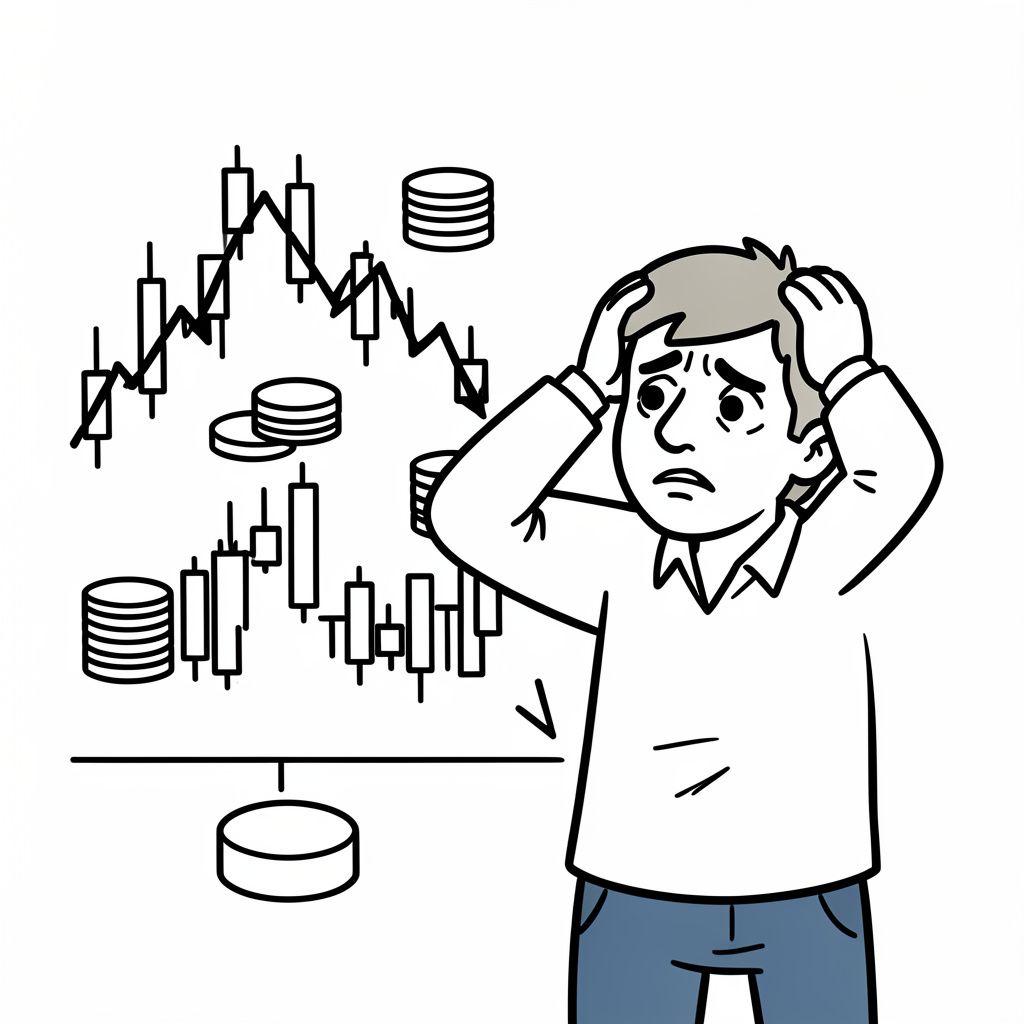
Wall Street faced steep losses Thursday as tech shares tumbled into correction territory, erasing over two trillion dollars in market value amid mounting investor skepticism toward massive artificial intelligence infrastructure investments.
A Historic Rout in Tech and AI-Related Stocks
The Dow Jones Industrial Average plunged 1,833.06 points (3.44%) to 51,523.06 on Thursday, November 5, 2026, while the S&P 500 shed 4.36% to 7,353.73. The Nasdaq Composite, dominated by technology stocks, collapsed 5.52% to 24,315.00, entering correction territory after falling more than 10% from its October 6, 2026 record close [1][3][4]. The sell-off erased over $2 trillion in market value from the S&P 500 alone by midmorning, with the CBOE Volatility Index (VIX) surging 69.66% to 28.18, its highest level since March 31, 2026 [1][3][4]. Major tech stocks bore the brunt of the decline, with the so-called ‘Magnificent 7’ losing nearly $900 billion in aggregate value, led by Nvidia’s $374 billion drop and Tesla’s $161 billion decline [1][3].
Semiconductor Sector Collapses Amid Investor Capitulation
The sell-off was particularly brutal for semiconductor stocks, with the PHLX Semiconductor index plummeting 12% on November 5, 2026, marking the worst single-day performance for large-cap tech stocks since the COVID-19 pandemic [1][2]. Nvidia, Micron, and AMD each suffered double-digit losses, with the iShares Semiconductor ETF (SOXX) falling nearly 11% on the day and 15% for the week [3]. Retail investors contributed to the rout, dumping a net $358 million in individual U.S. stocks by 2:58 p.m. ET, the largest single-day net selling spree since March 17, 2020 [1]. Viraj Patel, global macro strategist at Vanda Research, described the episode as ‘a total capitulation by retail investors,’ while Charlie McElligott, cross-asset strategist at Nomura, noted ‘single-name stock moves are absolutely BONKERS’ amid the chaos [1].
Political Shifts Amplify Concerns Over AI Infrastructure Spending
The market turbulence followed a decisive Democratic sweep in the November 3, 2026 midterm elections, which handed the party control of both the House and Senate. Investors now fear that the new political landscape could lead to increased regulation of AI infrastructure, including data centers, particularly in key states like Texas and Ohio [2][3]. The Nasdaq’s decline into correction territory was driven by concerns that Democratic gains could slow the massive data center buildout required to support the AI boom [2]. Dan Ives, managing director at Yorkville, characterized the election results as ‘a seismic shift that will have a negative impact on the pace of the AI Revolution buildout in the US over the next few years’ [5]. Meanwhile, OpenAI responded to the political shift by unveiling new ‘responsible AI infrastructure’ policies on November 5, 2026, committing to pay for all electricity and infrastructure costs at its facilities and creating local water and employment plans [5].
Broader Economic Repercussions and Market Corrections
The Nasdaq Composite’s 12% drop from its October 6 record marked its third correction in 2026, following previous downturns in March and July [6]. Historical data suggests that while corrections often lead to short-term volatility, the index has historically rebounded strongly over the following 6 to 12 months. According to Schaeffer’s Research, the Nasdaq has averaged a 13.6% gain six months after a 10% decline, with gains in 73% of such instances [6]. However, the risk of a deeper bear market remains significant, with 37% of Nasdaq corrections since 1971 deteriorating into bear markets (declines of 20% or more) [6]. The broader sell-off extended beyond U.S. markets, with chip stocks in Asia also plummeting following the Democratic midterm wins, including declines of 11.69% for Advantest, 11.76% for Lasertec, and 9.03% for SK Hynix [3]. The VIX’s surge to 28.18 underscored the heightened anxiety in the market, with Goldman Sachs’ CFO noting the current environment as ‘very uneven and inconsistent’ [3].
Policy Uncertainty and Sector-Specific Impacts
The sell-off was not limited to AI and semiconductor stocks, as all 11 S&P 500 sectors traded in negative territory on November 5, 2026. The information technology sector, which includes many AI-related companies, dropped 6.6%, while consumer discretionary and industrials fell 4.1% and 4%, respectively [3]. The odds of a Federal Reserve interest rate hike at the December 9, 2026 meeting fell to 70.1% from 82.7% the previous day, reflecting the market’s growing risk aversion [3]. Meanwhile, defensive assets such as gold and silver surged, with December gold futures hitting $4,155.80 per ounce and December silver reaching $53.49, the highest levels since October 22 and 29, 2026, respectively [3]. Lisa Su, AMD’s CEO, acknowledged the market’s short-term focus, stating, ‘I think the market can sometimes be a little bit short-sighted,’ while emphasizing the long-term importance of AI and superintelligence [1].
Looking Ahead: Potential Paths to Recovery or Further Decline
Analysts remain divided on whether the current correction will deepen into a bear market or serve as a buying opportunity. The Macro Research Board, a team of investment strategists, suggested that ‘the shakeout in AI-related stocks has much further to run’ but noted that a meaningful rotation beneath the surface could benefit diversified portfolios [3]. Meanwhile, Kevin Mahn, chief investment officer at Hennion & Walsh, cautioned that ‘there’s going to be more choppiness ahead,’ given the prolonged debate over AI valuation multiples and enterprise capital expenditure cycles [1]. The market’s focus will likely remain on political developments, particularly regarding AI regulation, as well as corporate earnings and economic data such as the upcoming employment report scheduled for release on November 6, 2026 [1][3]. For now, investors are grappling with the dual uncertainties of political shifts and the sustainability of AI-driven growth, leaving the market in a precarious state as it navigates uncharted territory.