New Guide Reveals How Enterprises Can Slash Artificial Intelligence Costs by 80 Percent
San Francisco, Thursday, 28 May 2026.
Based on 2.4 billion system requests, AI.cc’s new guide reveals five hidden techniques allowing enterprises to cut artificial intelligence expenses by up to 80 percent without sacrificing quality.
The Escalating Price of Enterprise AI
As of Thursday, May 28, 2026, corporate expenditure on artificial intelligence is surging at an unprecedented rate [GPT]. On May 19, 2026, Gartner projected that global AI spending will climb by 47 percent year-over-year, reaching $2.59 trillion by the end of the year [2]. This financial explosion is fundamentally altering priorities for financial operations (FinOps) teams. According to the FinOps Foundation’s 2026 State of FinOps survey, 98 percent of practitioners now manage AI spend, a stark increase from just 31 percent in 2024 [7]. A primary driver of this inflation is the corporate shift toward agentic workloads. The BCG AI Radar 2026 report indicates that CEOs have dedicated over 30 percent of their AI investments to these multi-step autonomous agents, which can cost up to 10 times more than single-turn conversational queries [2].
Deconstructing the Optimization Stack
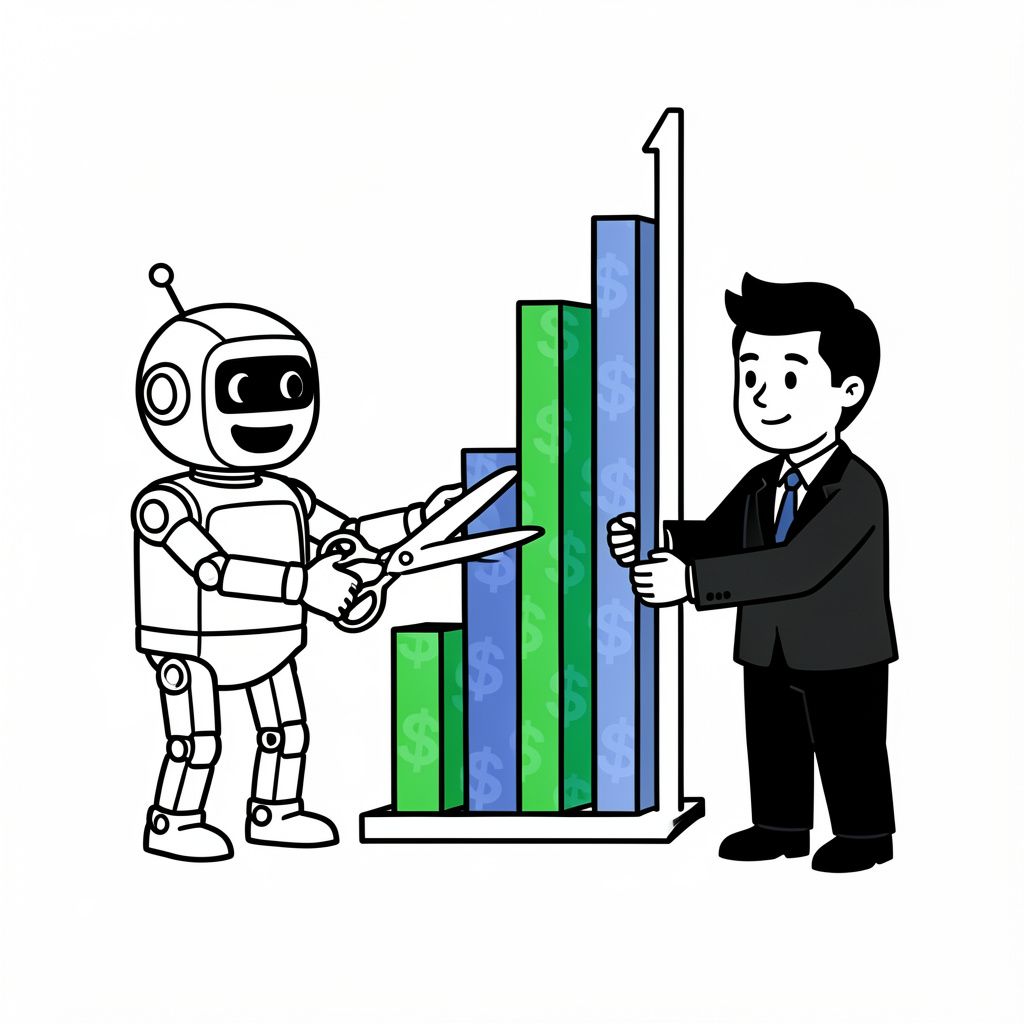
To mitigate these spiraling expenses, Singapore-based AI API aggregation platform AI.cc released a comprehensive token optimization guide on May 27, 2026 [1]. Drawing on an exhaustive analysis of 2.4 billion API calls across more than 8,000 enterprise and developer accounts, the guide outlines a sequential optimization stack [1]. For a baseline workload of 50 million tokens, unoptimized costs typically hover around $25,000 per month [1]. By applying AI.cc’s five compounding techniques, engineering teams can compress that monthly expenditure to a range of $5,000 to $8,000, ultimately reaching as low as $3,800 when factoring in aggregation pricing [1]. A spokesperson for AI.cc noted that most teams inadvertently leave 60 to 80 percent of their AI budgets unutilized because these optimization patterns only become apparent at massive scale [1].