The Risks of Privatized Intelligence: Why Independent Thinking Remains a Crucial Business Advantage
San Francisco, Sunday, 24 May 2026.
As tech giants privatize intelligence, author Wendy Liu warns that outsourcing cognitive labor to bots erodes human critical thinking—our most vital competitive advantage in the modern economy.
The Cost of Cognitive Offloading
In a commentary published on May 23, 2026, San Francisco-based writer and author Wendy Liu issued a stark warning about the growing reliance on artificial intelligence across professional sectors [1]. She argues that as major technology firms effectively privatize intelligence, individuals risk allowing their intellectual faculties to wither in service of automated bots [1][4]. For corporate leaders navigating the current AI landscape, Liu’s insights present a critical business consideration: the long-term human capital cost of cognitive offloading [1]. As employees increasingly rely on large language models for everyday tasks, the inherent difficulty of independent thinking—a crucial driver of innovation—is being outsourced to corporate-managed black boxes [1].
Market Realities and the AI Bubble
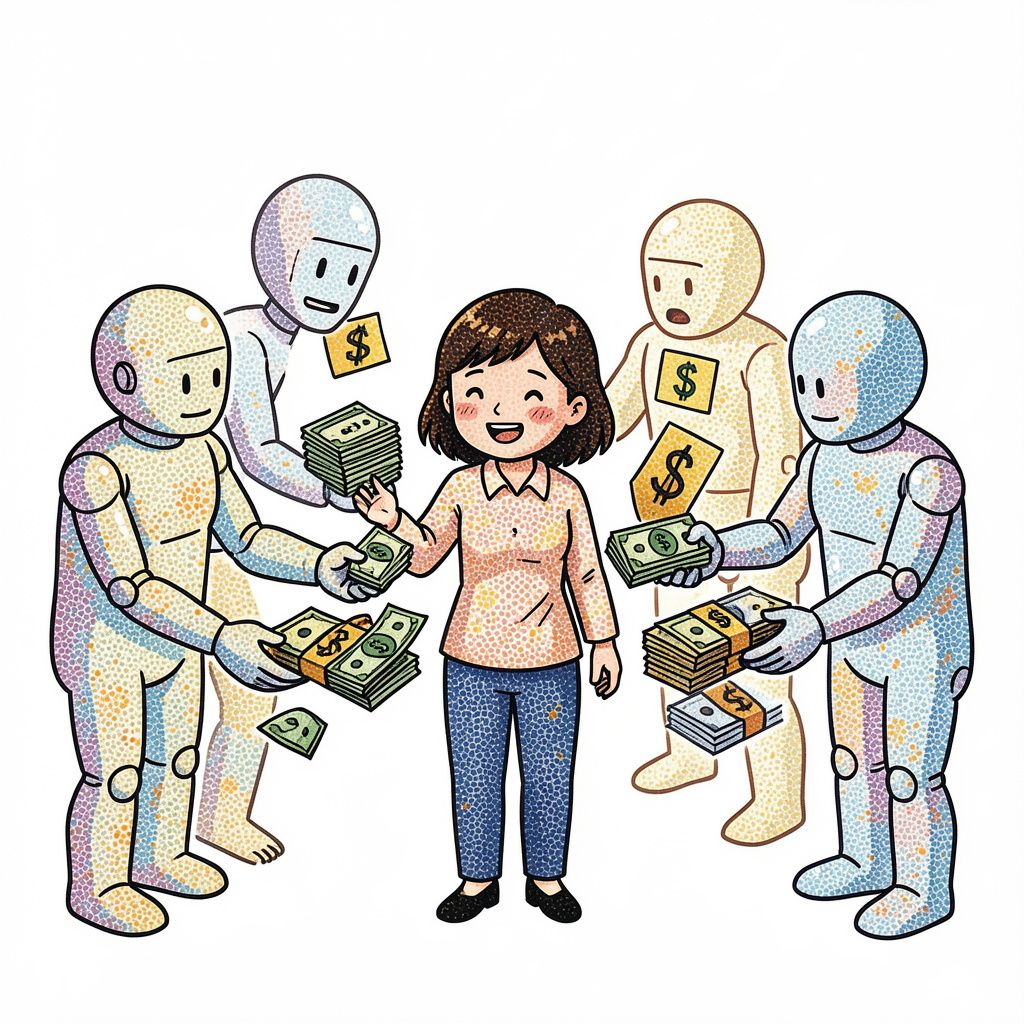
The financial markets and tech ecosystems have aggressively fueled this transition, creating an environment where cognitive outsourcing is heavily incentivized. As of November 2025, projections indicated that trillions of dollars would be poured into datacenter infrastructure to support the AI boom [1]. Concurrently, numerous technology companies have leveraged the pivot toward artificial intelligence as a justification for large-scale employee redundancies [1] [alert! ‘Exact dates for these corporate redundancies were not specified in the primary source’]. While these mass layoffs are often framed as strategic realignments to fund AI investments, they raise significant concerns about wealth inequality and the cultural division that became a prominent talking point in September 2025 [1].
Preserving Human Capital in a Vibe-Coding Era
For business leaders, the decision to integrate AI involves navigating the tension between short-term efficiency and long-term intellectual resilience. Liu herself acknowledges that by avoiding AI tools, she operates less efficiently as a coder and writer [1]. However, she maintains that this inefficiency is a necessary trade-off to preserve humanity and build character [1]. By choosing a path rooted in intention and integrity, Liu deliberately walked away from the potentially lucrative financial rewards of joining an AI startup—a speculative market where even high-school dropouts have successfully raised millions of dollars in venture capital [1].