Factory-Built Homes From Overseas Offer Faster Relief for Australia's Housing Shortage
Sydney, Friday, 20 November 2026.
Australian builders are using imported modular units to erect 19-story towers in just 19 weeks, slashing build times by 25 percent to counter steep domestic productivity declines.
Australia’s Housing Crisis Drives Shift to Chinese Prefab Suppliers
As Australia grapples with a persistent housing shortage and escalating construction costs, the New South Wales government has intensified its push for factory-built prefabricated housing. In a bid to accelerate residential development, policymakers are turning to international modular manufacturers, particularly those in China, to meet demand. The state’s Modern Methods of Construction (MMC) initiatives, which aim to modernize the building approvals system, have sparked renewed commercial interest in overseas prefab suppliers like YSHUN, a leading modular construction firm. This strategic pivot reflects broader supply-chain realignments across the Asia-Pacific, as developers weigh the cost efficiencies of imported prefab units against stringent local compliance standards and building codes. [1][alert! ‘The shift to Chinese suppliers is motivated by cost and speed, but compliance with Australian standards remains a critical hurdle.’]
Productivity Decline and Policy Responses
The urgency of Australia’s housing crisis is underscored by declining productivity in the residential construction sector. Between 2013 and 2025, housing construction productivity plummeted by approximately 21%, according to data from the Australian Bureau of Statistics cited by ABC News. [1] Modern methods of construction currently account for only about 5% of new homes in Australia, highlighting the sector’s lag in adopting innovative building techniques. [1] In response, the New South Wales government has rolled out significant policy measures, including a A$32.3 million investment over four years to streamline building approvals and establish a Modern Methods of Construction Innovation Facility. [1] Additionally, legislative reforms passed in August 2026 legally recognized prefabricated buildings and modern construction methods, further facilitating the adoption of factory-built housing. [1]
Case Study: Speed and Efficiency in Sydney
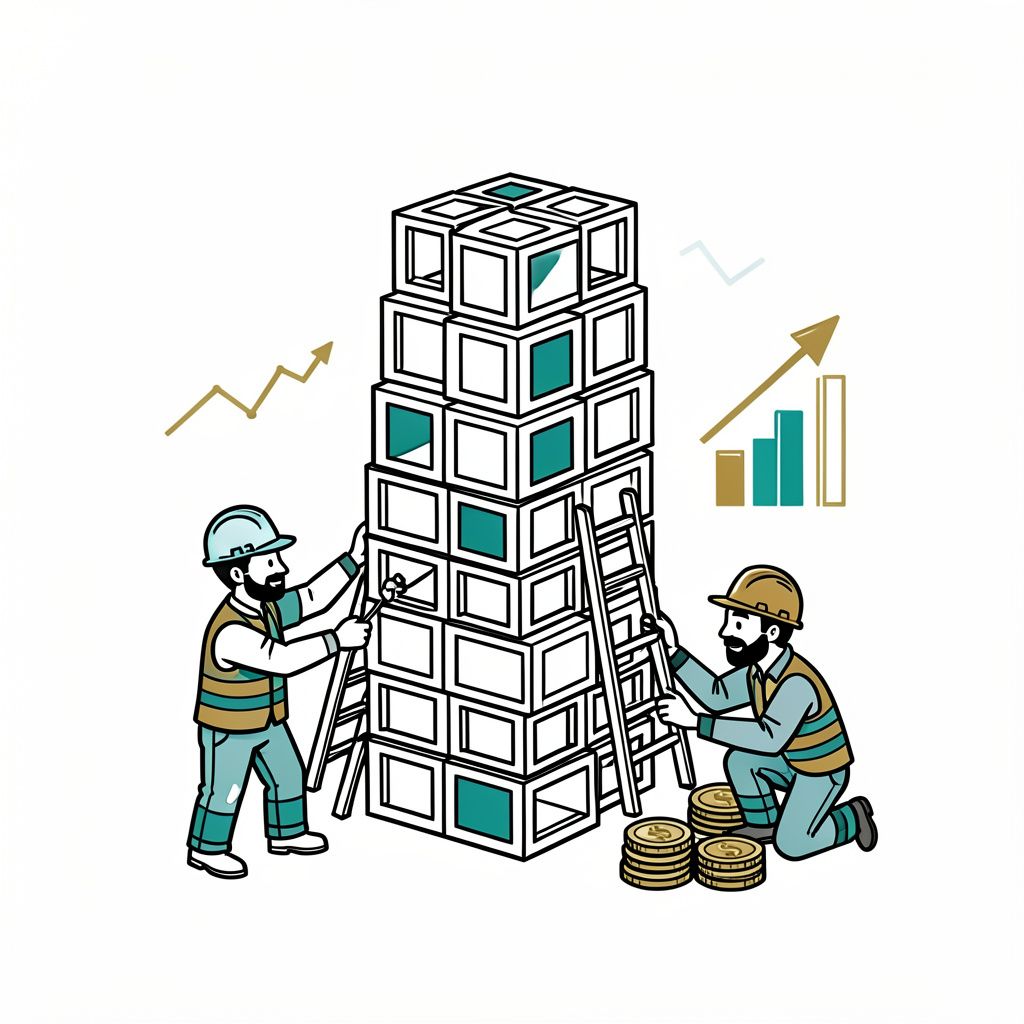
A recent project in Macquarie Park, Sydney, exemplifies the potential of imported modular units to transform construction timelines. Developer Freecity utilized modular apartment units manufactured in China to complete a 19-storey building in just 19 weeks, reducing overall construction time by approximately 25%. [1] This achievement not only demonstrates the efficiency gains of prefabrication but also highlights the logistical and regulatory complexities involved in importing building components. Zheng Weirong, CEO of YSHUN, emphasized that international prefab suppliers must navigate technical documentation requirements and collaborate closely with local engineers to ensure compliance with Australian standards. [1] ‘For international prefab suppliers, entering Australia requires more than manufacturing capacity. Technical documentation and cooperation with local engineers are essential,’ Weirong stated.
Financing and Liability Challenges in Modular Construction
While prefabricated housing offers speed and cost advantages, it also introduces unique financing and liability challenges. Traditional mortgages are tied to land security, whereas factory-built homes are constructed off-site before installation, complicating ownership and insurance arrangements. [2] To address these issues, prefabAUS, an industry body, introduced a standard-form domestic building contract in September 2026 for Class 1 prefabricated housing. The contract outlines payment stages for design, factory manufacture, transport, placement, and completion, providing clarity for builders and financiers alike. [2] Graeme Samuel AC, Non-Executive Chair of Quipex, noted that banks and insurers often struggle to price risk for modular homes during the factory construction phase due to difficulties in verifying assets. [2] ‘Banks and insurers price risk, but where they cannot identify and verify an asset, they are often not prepared to price it at all. That is the position with a modular home while it is being built in a factory,’ Samuel explained.
Tasmania’s Legislative Push for Modular Housing Finance
Tasmania has taken a proactive stance to overcome financing barriers for modular housing. On October 28, 2026, the state introduced the Modular Housing Finance Guarantee Bill 2026 to Parliament, proposing government-backed guarantees for eligible construction finance prior to modular dwelling installation. [7] The Housing Industry Association (HIA) has urged MPs to support the legislation, arguing that it could unlock housing supply in regional communities where access to trades is limited. [7] Benjamin Price, HIA Executive Director for Tasmania, highlighted that modular construction allows homes to be built in factories while sites are prepared, reducing weather-related delays and enabling construction in remote areas. [7] ‘Modular homes are built in a factory while the site is being prepared, then delivered and installed. That means less time lost to weather, fewer delays, and homes that can reach towns where it’s hard to get trades on the ground,’ Price said.
Market Growth and Industry Projections
The Australian prefabricated housing market is poised for significant expansion, with market share projected to reach 15% by March 2028 and 30% by 2032, up from approximately 5% currently. [6] Industry leaders attribute this growth to a combination of housing affordability pressures, sustainability imperatives, and government support. Damien Crough, Executive Chair of prefabAUS, describes prefabricated housing as a ‘smarter way to build,’ emphasizing its efficiency and waste reduction capabilities. [6] Prefabricated homes are designed to meet current codes and standards with a 50-year design life, while producing 50 to 90% less waste compared to traditional construction methods. [6] The sector’s expansion is also fueled by increased government investment, with companies like Viridi Group projecting substantial turnover growth, from A$40 million in the 2024-2025 financial year to A$100 million by March 2028. [6]
The Future of Prefabrication in Australia
As Australia seeks to address its housing crisis, the role of prefabrication—particularly imports from China—is likely to grow, provided regulatory and financing hurdles are overcome. The combination of policy support, technological advancements, and market demand suggests that factory-built housing will play an increasingly central role in the nation’s construction landscape. [1][2][6] However, challenges remain, including ensuring compliance with local standards, securing financing for off-site construction, and managing liability risks across distributed supply chains. [2] Industry experts argue that collaboration between international suppliers, local engineers, and financial institutions will be critical to realizing the full potential of prefabrication. [1][2] With governments at both the state and federal levels continuing to introduce supportive measures, the stage is set for a transformative shift in how Australia builds its homes.
Sources
- www.einpresswire.com
- builtoffsite.com.au
- infrastructuremagazine.com.au
- www.facebook.com
- www.instagram.com
- advancedoffsitegroup.com.au
- infrastructuremagazine.com.au