How a New Food Factory in Ethiopia Could Soon Nourish 200 Million People
Addis Ababa, Wednesday, 18 November 2026.
Opening this December, a pioneering Ethiopian facility will manufacture essential flour nutrients locally, dramatically cutting import reliance and securing daily nutrition for up to 200 million people.
Ethiopia’s Nutrient Premix Revolution: A Local Factory with Regional Impact
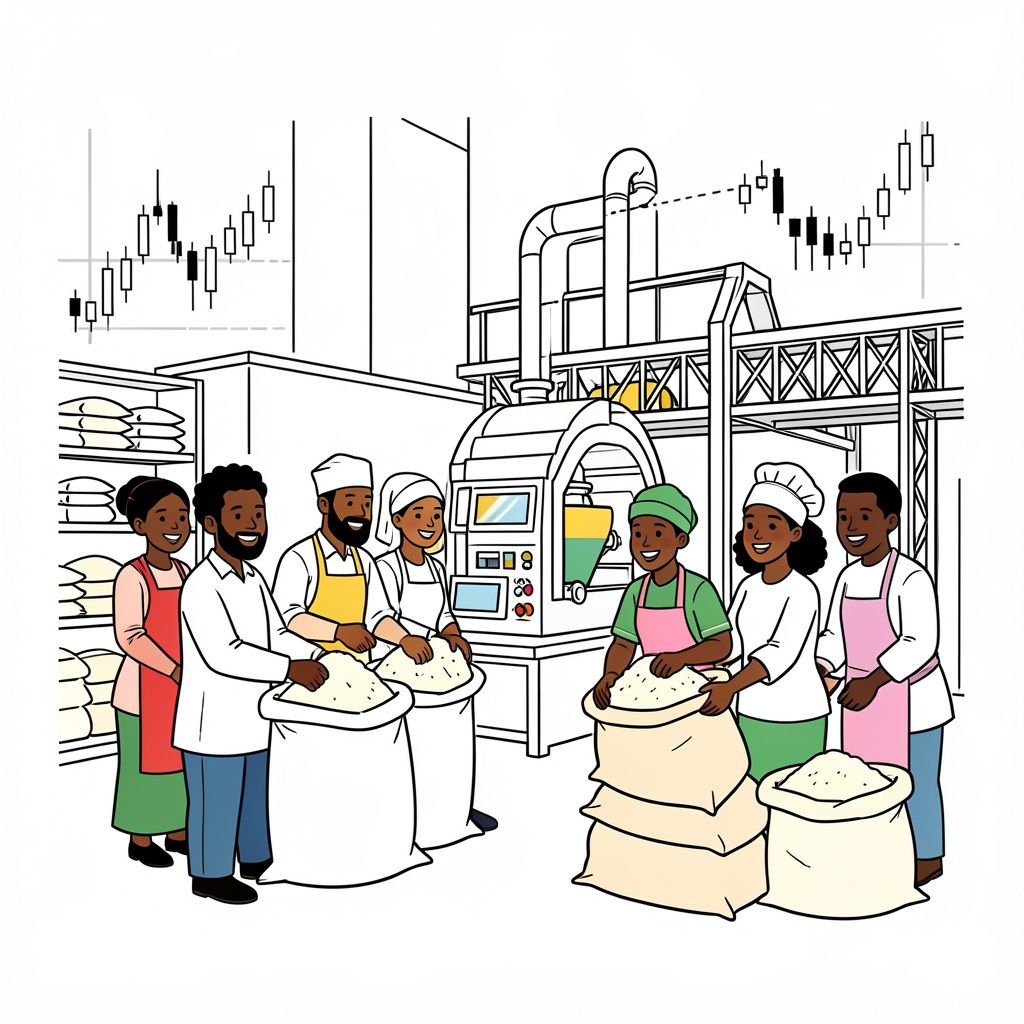
On December 7, 2026, Sanku, a nutrition-focused social enterprise, will inaugurate its new nutrient premix manufacturing plant in Addis Ababa, Ethiopia [1]. The facility, located in the Kilinto Special Economic Zone, represents a strategic move to localize production of critical nutritional inputs for flour fortification, directly addressing food security challenges in the Horn of Africa. With an annual capacity of up to 3,000 metric tons, the factory is designed to supply premix for flour consumed by up to 200 million people—more than doubling Sanku’s current reach of 87 million across Eastern Africa [1]. This expansion underscores the growing emphasis on regional supply chain resilience and public health infrastructure in a region where long-distance imports have historically strained resources.
From Policy to Practice: How Fortification is Transforming Ethiopia’s Food System
Ethiopia took a decisive step toward improving public nutrition in 2022 when it approved mandatory fortification policies for wheat flour and edible oil, aiming for 60% of wheat-flour processors to fortify their products by 2030 [1]. However, as Felix Brooks-church, co-founder and CEO of Sanku, noted, passing legislation is only the first step. “Passing a law doesn’t mean fortified flour automatically reaches families,” he emphasized. “Millers need reliable supplies of nutrients, the right equipment, and support to maintain quality.” [1] Sanku’s model bridges this gap by working directly with millers and governments to turn policy into action. The new Addis Ababa facility exemplifies this approach, producing premix locally to reduce reliance on imports and make fortification more affordable for Ethiopian millers.
Economic and Social Ripple Effects: Jobs, Skills, and Sustainable Growth
The economic implications of the new facility extend beyond nutrition. The US$4 million investment, covering a 6,900-square-meter site, is expected to create 50 direct and 200 indirect jobs in Ethiopia once fully operational [1]. H.E. Demeke Mekonnen, Former Deputy Prime Minister and Board Chair of the Yadam Foundation, highlighted the broader benefits: “Local production of premix will reduce Ethiopia’s dependence on imports for essential nutritional inputs. The factory brings jobs and skills, keeps the value chain within our economy, and helps our millers deliver fortified flour to families.” [1] By embedding the supply chain within Ethiopia’s borders, the facility not only strengthens food security but also fosters industrial capacity and economic resilience in the Horn of Africa.
A Model for Africa’s Future: Scaling Impact and Lessons from Tanzania
Sanku’s expansion in Ethiopia follows the launch of Eastern Africa’s first dedicated premix factory in Tanzania in 2024, which was funded by MacKenzie Scott [1]. The company’s reach in the region has grown rapidly, from 7 million people in 2023 to 87 million by November 2026 [1]. This trajectory reflects a broader trend in Africa, where social enterprises are increasingly leveraging local production to address systemic challenges. Brooks-church emphasized the importance of this model: “This is premix made in East Africa, by East Africans, for East African millers, to nourish East African families.” [1] With plans to reach 100 million people globally by 2028 and expand to ten countries, Sanku’s model demonstrates how localized solutions can scale to have a continental—and even global—impact [1].
Supply Chain Resilience: Reducing Import Dependence in Public Health
Ethiopia’s mandatory fortification policies, combined with the new Sanku facility, signal a shift toward self-sufficiency in public health nutrition. By producing premix locally, the factory directly addresses vulnerabilities in long-distance supply chains, which have historically been susceptible to disruptions in global trade [1]. Commercial revenue now covers approximately one-third of Sanku’s operating costs, indicating a sustainable pathway for scaling operations without over-reliance on external funding [1]. As the facility ramps up production in December 2026, it will not only nourish millions but also serve as a blueprint for other African nations seeking to fortify their food systems sustainably.