US Navy Shift to Remote Base Strains Middle East Supply Chains
Diego Garcia, Monday, 17 August 2026.
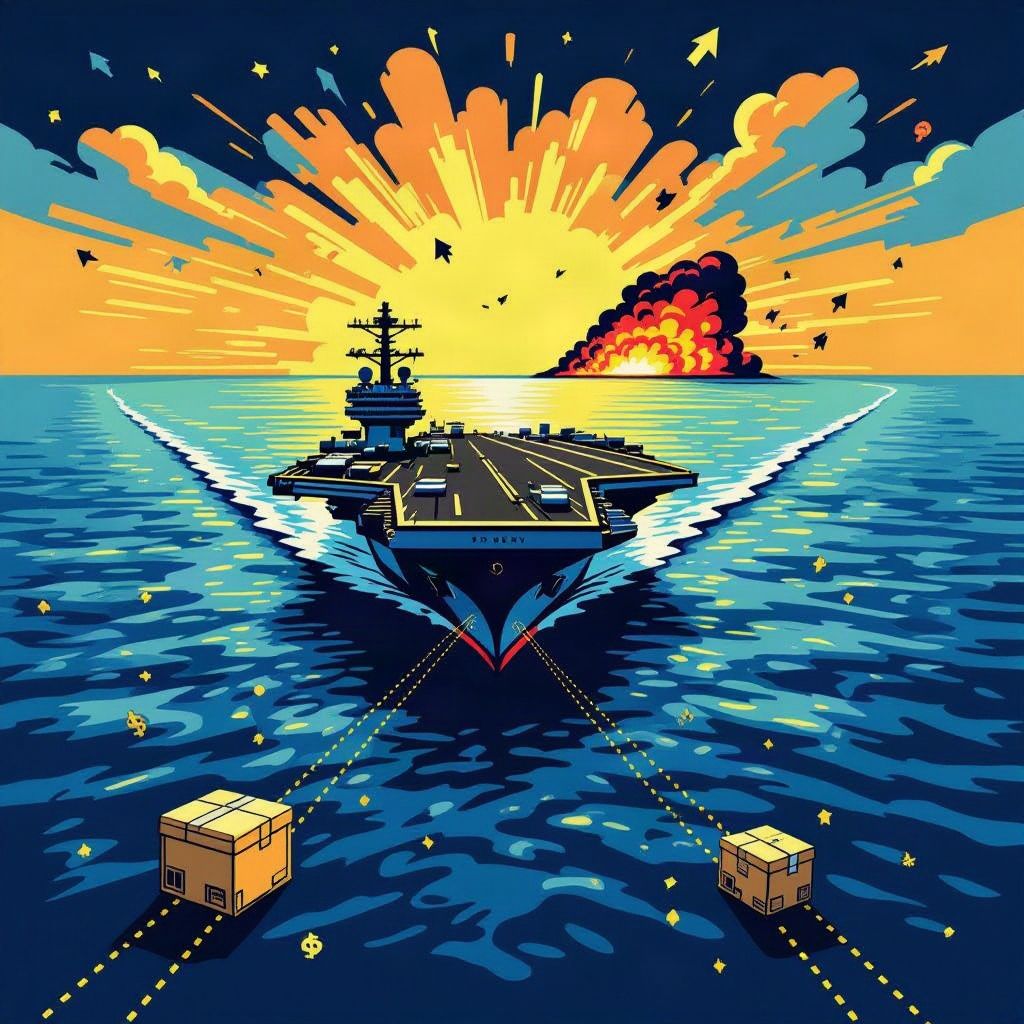
Iranian attacks on Bahrain forced the US Navy to move logistics 2,200 miles to Diego Garcia, triggering severe supply shortages and prolonged deployments for carrier strike groups.
Logistical Shift to Diego Garcia
Following Iranian military strikes targeting the U.S. Fifth Fleet headquarters in Bahrain, the Pentagon has been forced to relocate primary naval logistics and supply lines to the Indian Ocean base of Diego Garcia [1][2][8]. This strategic shift occurred after Iranian missile and drone attacks destroyed a key U.S. Navy logistics base in Bahrain early in the conflict, specifically around February 28, 2026 [2][8]. The move creates an extended 2,200-mile supply chain to sustain carrier strike groups, putting significant strain on military fuel reserves and maritime transport logistics [1][2][8]. Diego Garcia currently hosts 2,500 U.S. military personnel and supports carrier strike groups, such as the USS Abraham Lincoln, which are conducting air operations and enforcing a blockade of Iranian ports [1][8].
Logistical Shift to Diego Garcia
The logistics network now utilizes a approximately 3,540 km maritime supply route to Diego Garcia to avoid coastal facilities vulnerable to Iranian attacks, necessitating longer shuttle runs and slower replenishment [1][2]. This distance creates a significant operational burden compared to previous arrangements where Bahrain and Fujairah in the UAE served as primary ports for crew downtime and resupply [2][3]. In March 2026, the UK government authorized the U.S. to use Diego Garcia for limited defensive operations against Iranian missile capabilities following an attempt to strike the base [1][8]. On March 20, 2026, Iran fired two ballistic missiles toward Diego Garcia; British officials confirmed one fell short and the other was intercepted by a U.S. warship [1][2][8].
Operational Strain on USS Abraham Lincoln
As of mid-August 2026, the USS Abraham Lincoln has been on deployment for approximately nine months, with a crew of 5,000 sailors experiencing supply shortages and deteriorating mental health due to the loss of the Bahrain hub [2][4][5]. The vessel set a modern endurance record of over 206 days underway, with personnel operating under constrained conditions involving reported shortages of food, hygiene supplies, and laundry services [2][5]. The total personnel-days endured by the crew during this underway period amounts to 1.030 million [2]. Reports of poor living conditions aboard the USS Abraham Lincoln led to congressional inquiries from lawmakers including Senator Richard Blumenthal, who noted the reported problems included shortages of basic supplies and the deteriorating mental health of its crew members [2][4][5].
Operational Strain on USS Abraham Lincoln
On August 14, 2026, Donald Trump announced at Joint Base Andrews that a new aircraft carrier is deploying to the Middle East to relieve the USS Abraham Lincoln [1][8]. The USS George Washington is scheduled to relieve the USS Abraham Lincoln to restore rotation capacity, moving west through the Strait of Malacca after visiting Vietnam [2]. While President Trump affirmed plans to replace the carrier, he publicly criticized the current deployment duration as insufficient, creating tension with family accounts and established naval rotation cycle assessments [2][8]. Acting Navy Secretary Hung Cao stated that personnel were pushed to their limits but have never broken, even as families of crew members pressured for a definitive homecoming schedule [2][5].
Geopolitical and Strategic Implications
In 2025, the U.K. and Mauritius signed a treaty recognizing Mauritian sovereignty over the Chagos Archipelago while retaining U.K. control of Diego Garcia for an initial 99-year period, though implementation is currently on hold due to U.S. concerns [1][8]. In June 2026, U.S. officials drafted a proposal to bypass the U.K. and take direct control of Diego Garcia as an alternative to the sovereignty transfer plan [1][8]. James Tumbridge, an international lawyer and attorney general for the Chagossian government-in-exile, stated that the base is integral to regional security for the U.K., U.S. and allies, emphasizing that the conflict has underscored the strategic necessity of the location [1][5][8]. Tumbridge also noted that Bahrain is a far easier target, so the U.S. change of supply arrangement makes sense despite the inconvenience [1][8].
Geopolitical and Strategic Implications
The incident highlights that Iranian strikes have achieved significant strategic impact by degrading US naval logistics networks and carrier operations, rather than through direct kinetic strikes on the vessel itself [2]. Democratic lawmakers launched an inquiry into USS Abraham Lincoln deployment extensions, demanding data on authorization, operational justifications, safety incidents, mental health, and crew welfare [2][5]. As of August 17, 2026, the status of the administration’s response to lawmakers remains unconfirmed, while the USS George Washington arrival in the region is expected in late August 2026 [2]. The shift underscores the vulnerability of coastal logistics hubs and the critical role of remote Indian Ocean assets in sustaining prolonged naval engagements [1][2][8].