President Trump Directs Scale-Back of Major United States Military Exercises With South Korea
Washington, Monday, 17 August 2026.
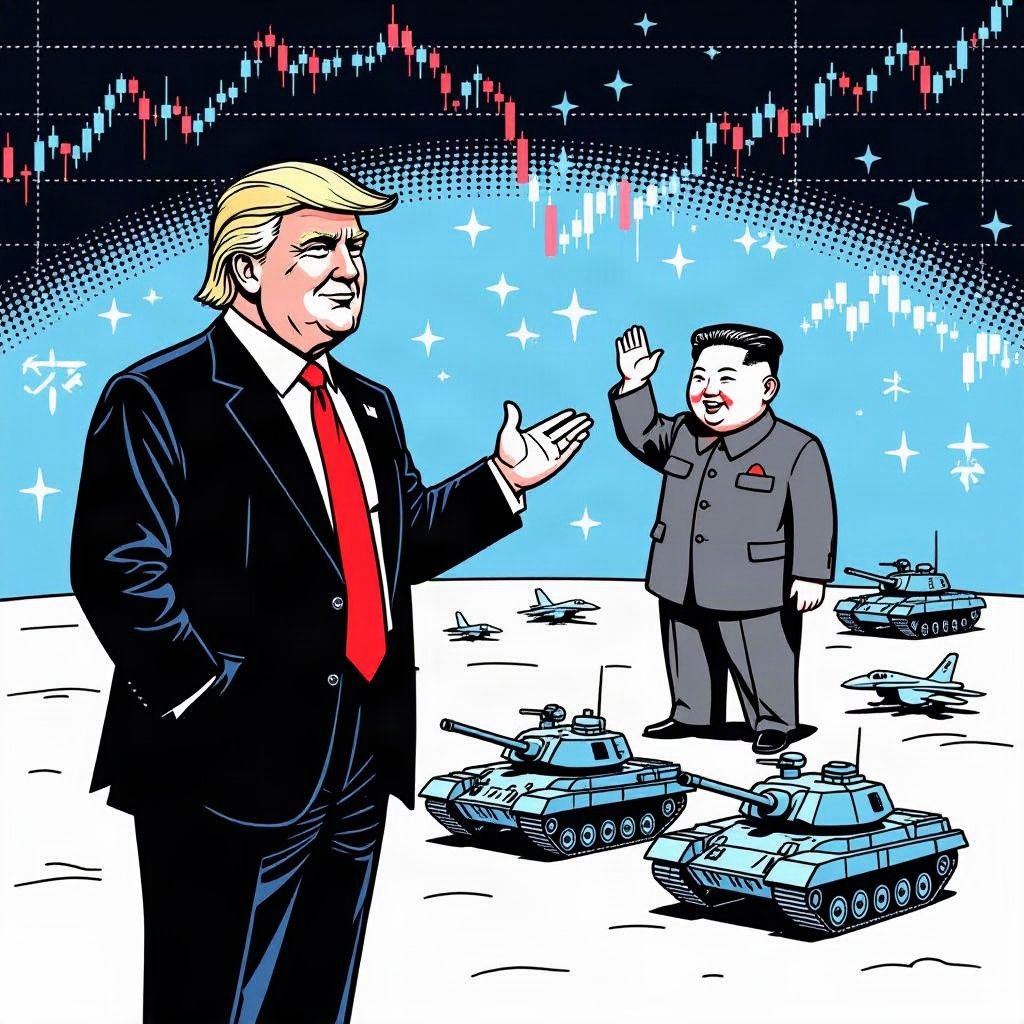
President Donald Trump ordered the Pentagon to scale back joint military exercises with South Korea, citing his relationship with Kim Jong Un and Seoul’s refusal to assist with Iran.
Presidential Directive and Exercise Details
President Donald Trump has instructed the Pentagon to substantially reduce joint military exercises with South Korea, marking a significant shift in U.S. defense posture in East Asia [1][4]. The order was issued on Sunday, 16 August 2026, citing both diplomatic relationships with North Korean leadership and Seoul’s refusal to assist in U.S. efforts regarding Iran [1][6]. The affected drills, known as Ulchi Freedom Shield, were scheduled to commence on Monday, 17 August 2026, involving approximately 18,000 South Korean soldiers and a sizable portion of the 28,500 American troops stationed in the country [3][8]. This participation rate represents 63.158 percent of the total U.S. troop presence in South Korea, highlighting the scale of the alliance’s operational integration [3][4]. While the President noted it was “too late to cancel” the exercises entirely, the directive to scale back signals a recalibration of military signaling in the region [1][7].
Diplomatic Friction and the Iran Factor
The decision to reduce military drills appears linked to broader geopolitical frustrations, specifically South Korea’s refusal to join U.S. operations aimed at the denuclearization of Iran [4][6]. President Trump described the request for assistance as declined with a “No thanks!” and characterized the large-scale exercises as sending a signal that is “totally inappropriate and hostile” to North Korea [4][7]. This stance contrasts with North Korea’s recent behavior; despite resuming ballistic missile testing in early August 2026, President Trump claimed the nation has been “unthreatening and respectful” during his tenure [1][5]. Conversely, North Korea’s foreign ministry condemned the joint drills just days prior, labeling them a “rehearsal for an aggressive war” and threatening unspecified stern steps [2][9].
Strategic Implications and Regional Security
Historical precedents exist for such reductions; President Trump previously suspended joint exercises in 2018 during denuclearization negotiations and again in 2020 due to the pandemic [2][5]. However, experts warn that hollowing out these joint exercises could weaken deterrence against possible conflicts in Asia and slow South Korea’s assumption of greater defense responsibility [5][7]. The annual Ulchi Freedom Shield exercises are designed to test joint precision targeting and equipment distribution, capabilities deemed critical following reports of North Korean troops gaining battlefield experience in Ukraine [5][8]. Pentagon leaders are reportedly considering plans to withdraw about 4,500 troops from South Korea for redeployment elsewhere in the Indo-Pacific, though Congress has historically opposed reducing the American footprint below the 28,500 level [3][5].
Naval Deployments and Broader Context
Concurrent with the exercise reduction, significant naval movements are underway in the region. The USS George Washington was deployed to replace the USS Abraham Lincoln in the Persian Gulf, leaving the U.S. without a Pacific aircraft carrier at a critical moment [4][10]. This redeployment occurs as North Korea accelerates its nuclear and missile program expansion, having conducted ballistic missile tests in early August 2026 for the first time since late June [2][5]. While the administration emphasizes cost savings and diplomatic rapport, analysts suggest the diplomatic benefits for relations with North Korea remain doubtful given the regime’s continued weapons development [5][7]. The long-term impact on supply chain stability and bilateral relations between Washington and Seoul remains a key area of monitoring [1][6].
Sources
- apnews.com
- www.bbc.com
- www.politico.com
- www.nbcnews.com
- www.theguardian.com
- www.axios.com
- www.cbsnews.com
- www.usfk.mil
- apnews.com
- apnews.com