U.S.-Colombia Relations at Risk as President Petro Alleges Election Interference by Donald Trump
Bogota, Sunday, 7 June 2026.
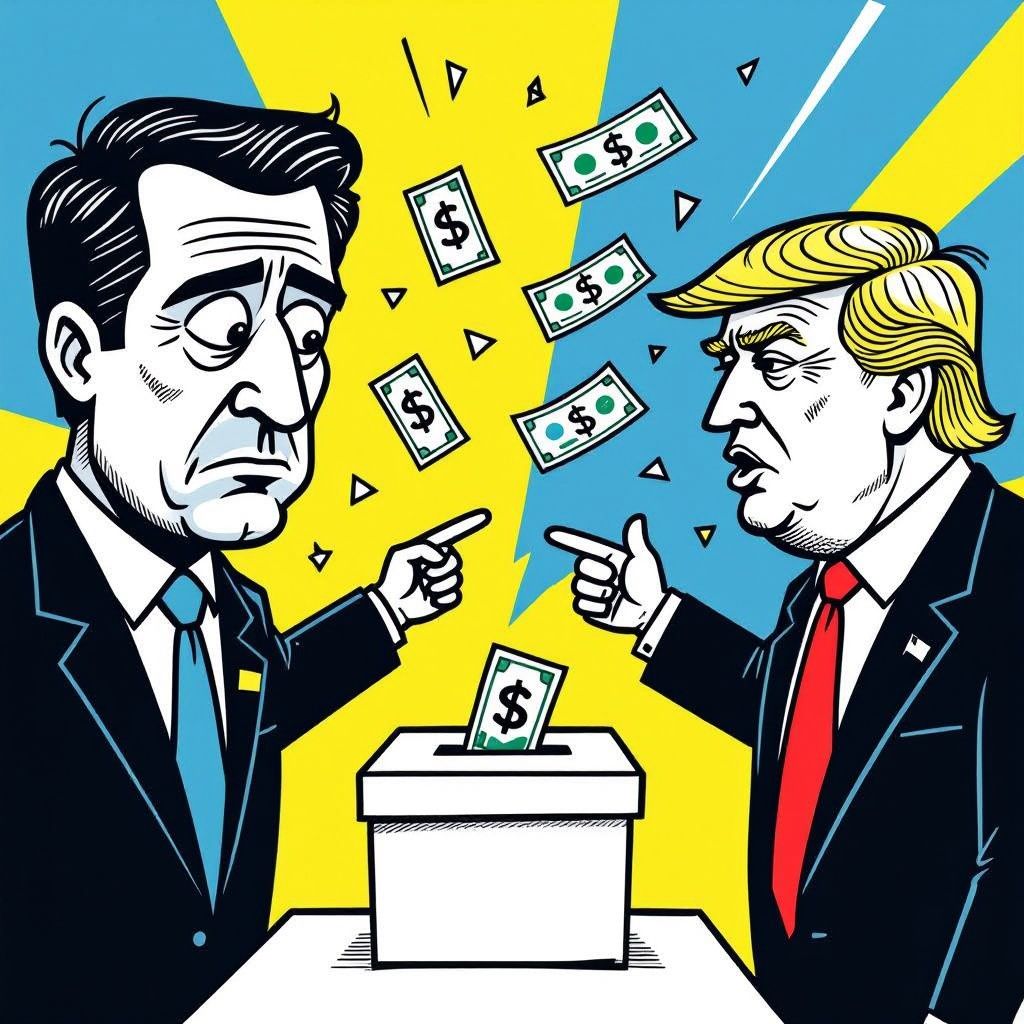
Outgoing Colombian President Gustavo Petro alleges Donald Trump is interfering in the upcoming runoff election by endorsing a right-wing candidate, potentially straining future U.S.-Colombia diplomatic and economic relations.
A Diplomatic Rift Over Electoral Endorsements
In an interview published on June 5, 2026, outgoing Colombian President Gustavo Petro explicitly accused former U.S. President Donald Trump of election interference [1][2]. The accusation stems from Trump’s “Complete and Total Endorsement” of far-right presidential candidate Abelardo de la Espriella [1]. Speaking to CBS News correspondent Lilia Luciano, Petro asserted that “without a doubt” Trump is meddling in the Latin American nation’s democratic process, stating that any attempt by one country to determine the destiny of another is an assault on freedom and sovereignty [1][2][3].
Drug Policy at the Heart of the Divide
The clash between Petro’s administration and U.S. political figures is deeply rooted in divergent approaches to drug trafficking and regional security [1]. Petro claims the U.S. has abandoned anti-drug cooperation for ideological reasons, specifically because his administration is progressive, left-leaning, and holds differing views on geopolitical issues such as the conflict in Gaza [1]. Tensions have escalated significantly; the Trump administration previously sanctioned Petro, revoked his U.S. visa, and signaled criminal investigations, which ultimately led Petro to cancel a planned meeting with New York City Mayor Zohran Mamdani [1].
Domestic Tensions and Electoral Integrity
Domestically, the electoral environment is fraught with allegations of fraud and intense polarization [alert! ‘Sources differ slightly on the exact runoff date, with one citing before June 17 and another specifying June 21’]. While Petro has claimed irregularities, the National Registry (Registraduría Nacional) stepped in on June 6, 2026, to present evidence debunking his assertions [4]. The Registry confirmed that the Hash code of the Divipole program remained unaltered during the election period, refuting Petro’s claims that 885,000 ID cards were irregularly added for the May 31 vote [4]. The Electoral Observation Mission (MOE) clarified that these IDs were actually a legal logistical projection for early voting at consulates abroad [4].
The Path to the Runoff and Regional Implications
As Colombians prepare to head to the polls for the decisive runoff election [1][4], the stakes for international markets and regional stability are exceptionally high [GPT]. De la Espriella has demonstrated significant strength among expatriates, capturing 54% of the vote abroad (319,988 votes) compared to Cepeda’s 28% (167,526 votes) [4]. The stark contrast between Cepeda’s continuation of Petro’s progressive agenda and de la Espriella’s hardline conservative platform offers voters two radically different visions for Colombia’s economic and social future [1][4].
Sources
- www.cbsnews.com
- www.socialnews.xyz
- www.cbsnews.com
- elpais.com
- www.instagram.com
- www.registraduria.gov.co