Bank of Japan Keeps Interest Rates Unchanged as Inflation Forecasts Rise
Tokyo, Tuesday, 28 April 2026.
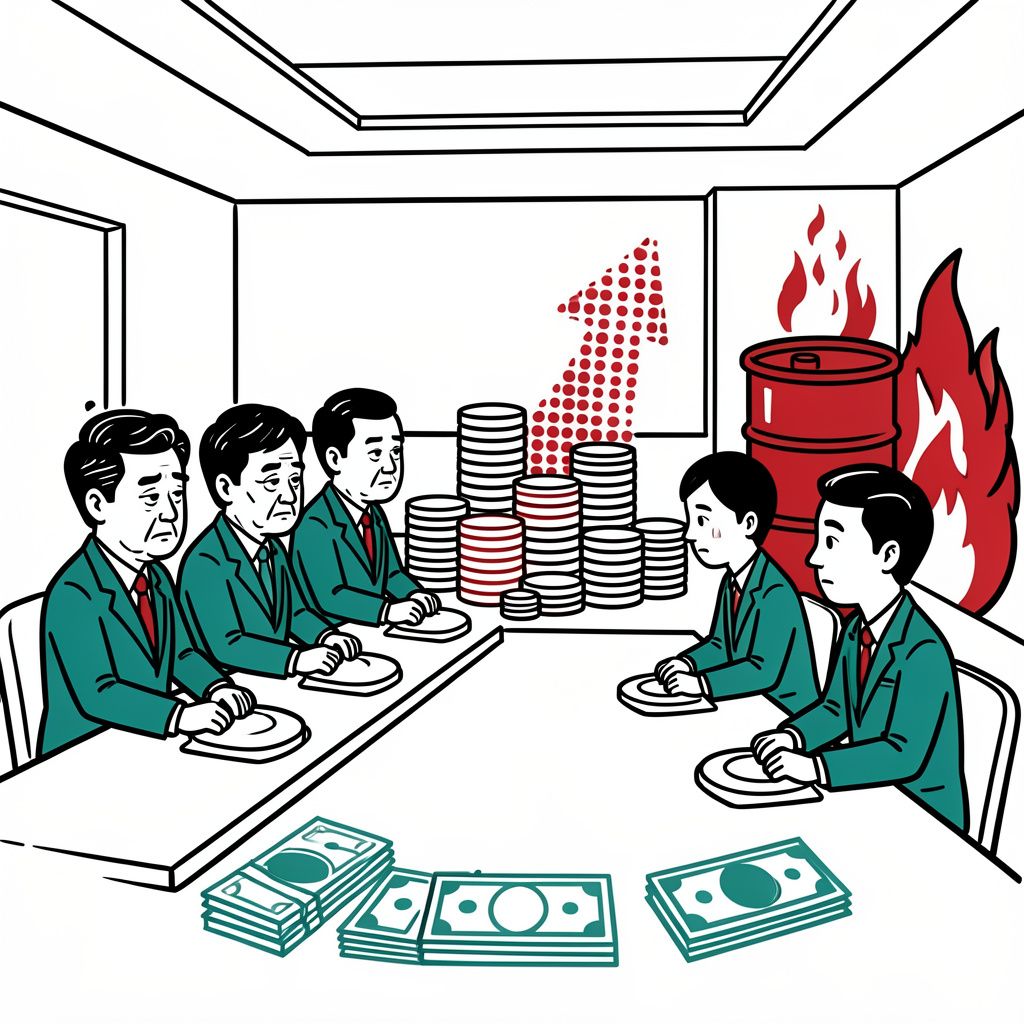
Japan’s central bank maintained its benchmark rate in a rare 6-3 split vote today, sharply raising its 2026 inflation forecast to 2.8% amid mounting global energy pressures.
Upward Inflation Trajectories and Stagflation Risks
The central bank’s updated economic outlook underscores the heavy toll that Middle Eastern geopolitical instability is extracting from the world’s fourth-largest economy [GPT]. The BOJ drastically revised its fiscal year 2026 core consumer price index (CPI) forecast upward to 2.8 percent, an increase of 0.9 percentage points from the 1.9 percent projected previously [1][5]. This inflationary pressure is largely attributed to surging crude oil prices and the resulting deterioration in Japan’s terms of trade [1]. Simultaneously, the BOJ slashed its fiscal 2026 economic growth forecast, a reduction of 0.5 percentage points, dropping it from 1.0 percent to a sluggish 0.5 percent [1].
Currency Defense and Market Reactions
Financial markets reacted swiftly to the central bank’s underlying hawkish tone. Following the announcement, the benchmark Nikkei 225 index dropped by more than 1 percent, and the yield on 10-year Japanese Government Bonds (JGBs) hovered at 2.468 percent, just shy of the 2.496 percent peak hit on April 13, 2026—the highest level since 1997 [1]. Despite these immediate market jitters, Nomura Securities projects Japan’s 10-year bond yield to close the year at 2.45 percent, alongside an expected nominal GDP growth rate of 3.5 percent year-over-year [8]. Meanwhile, the Japanese yen, which has depreciated by over 1.5 percent year-to-date, was trading at 159.12 per U.S. dollar [1].
The June Window and Shifting Board Dynamics
Market attention has now pivoted to the BOJ’s next policy meeting scheduled for June 16, 2026, which analysts have flagged as the next likely “live date” for a rate hike [5]. The timing is deeply intertwined with the central bank’s internal governance. Board member Junko Nakagawa, one of the three hawkish dissenters today, will see her term expire on June 29, 2026 [5][6]. Her designated replacement, Ayano Sato, is widely viewed by markets as a reflationist who heavily favors monetary easing [5][6].