Federal Reserve Nominee Kevin Warsh Defends Independence Amid Confirmation Blockade
Washington, Tuesday, 21 April 2026.
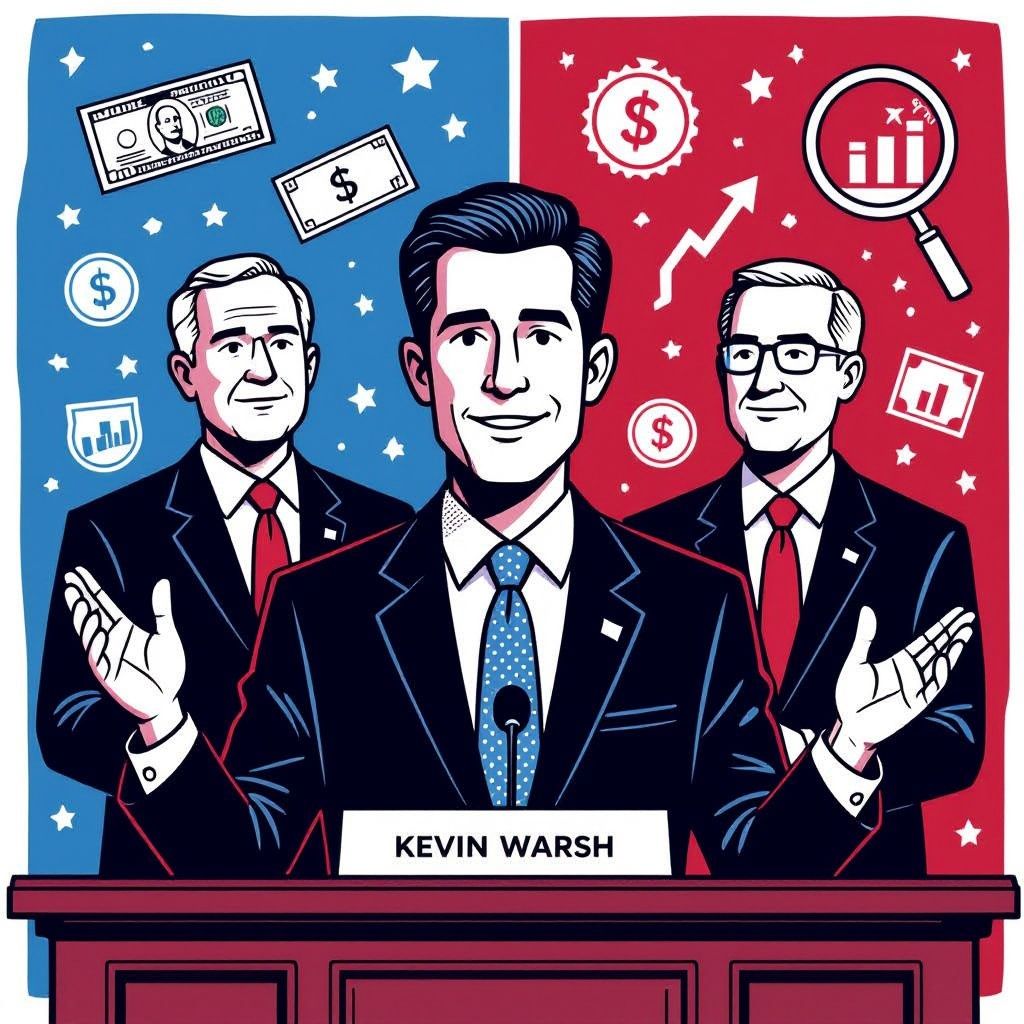
During his confirmation hearing, Federal Reserve chair nominee Kevin Warsh defended his policy independence, though his approval remains unexpectedly blocked by a Republican senator protesting a DOJ investigation.
Navigating Political Pressures and Independence
On Tuesday, April 21, 2026, Kevin Warsh faced the Senate Banking, Housing, and Urban Affairs Committee, navigating intense scrutiny regarding his ability to maintain the Federal Reserve’s operational independence [1]. Markets have been closely watching the 56-year-old nominee following reports that President Donald Trump pressured him during a 45-minute White House meeting to commit to rapid interest rate cuts [1]. Warsh categorically denied making any such concessions, stating that the president never asked him to predetermine or fix any interest rate decision, nor would he ever agree to do so [1]. However, concerns regarding executive influence linger, exacerbated by President Trump’s recent public remarks that he “would” be disappointed if Warsh did not cut rates immediately upon confirmation [1]. Furthermore, Warsh declined to explicitly state that Donald Trump lost the 2020 election, noting only that the results were “certified” [1][2].
An Unprecedented Confirmation Blockade
Despite the intense policy debates, Warsh’s immediate path to the Federal Reserve chairmanship is obstructed by an intra-party conflict. Senator Thom Tillis (R-NC) has vowed to block Warsh’s nomination from advancing out of the committee until the Department of Justice (DOJ) drops its investigation into current Fed Chair Jerome Powell [1][4]. The Senate Banking Committee consists of 22 members, with a partisan split of 12 Republicans and 10 Democrats, giving the GOP a narrow advantage of 2 seats [1]. This margin means that a single Republican dissent, representing 8.333 percent of the committee’s Republican voting bloc, can effectively deadlock the nomination if Democrats vote uniformly against him [1].
Scrutiny Over Complex Financial Ties
Beyond monetary policy, Warsh’s expansive personal wealth—reported at a minimum of $135 million—drew heavy fire from Democratic lawmakers [1]. On April 20, 2026, the Banking Committee’s Minority Staff released a comprehensive report detailing concerns over Warsh’s financial disclosures [3]. A primary point of contention is his holding of more than $100 million tied to billionaire investor Stanley Druckenmiller, whose investment strategies are heavily reliant on predicting Fed monetary policy [1][3]. The Office of Government Ethics noted that Warsh is currently not in compliance regarding these holdings, though Warsh testified that a “large majority” of his assets will be divested before he takes the oath of office [1].
A Paradigm Shift for the Central Bank
If confirmed, Warsh intends to implement what he describes as a “policy regime change” at the Federal Reserve [1]. He has been highly critical of the central bank’s actions during the inflation surge of 2021 and 2022, labeling them a “fatal policy error,” and advocates for a fundamentally new inflation framework [1]. His vision includes a smaller Federal Reserve balance sheet, lighter banking regulations, and a reduced footprint for the central bank in the broader economy [1][4]. However, executing such sweeping changes, including rate cuts and balance-sheet reductions, will require consensus approval from the 12-member Federal Open Market Committee (FOMC) or the Board of Governors [1][4].