European Nations Threaten World Cup Boycott Over FIFA Privatization Plan
Zurich, Thursday, 30 July 2026.
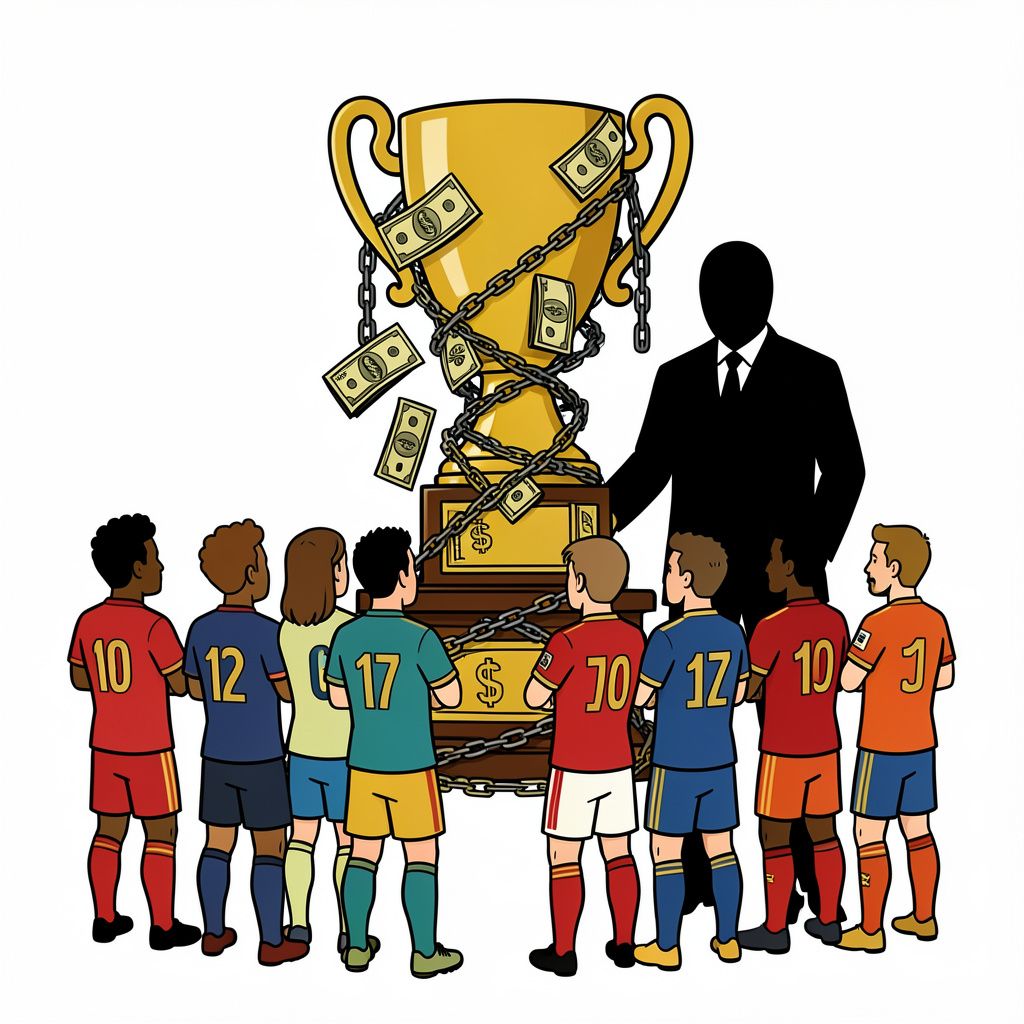
All 55 UEFA member associations unanimously agreed to boycott future FIFA World Cups following a controversial proposal to sell a $4.2 billion stake in tournament commercial operations to private investors.
European Nations Threaten World Cup Boycott Over FIFA Privatization Plan
All 55 UEFA member associations unanimously agreed to boycott future FIFA World Cups following a controversial proposal to sell a significant stake in tournament commercial operations to private investors [1]. This decisive action was taken during a virtual meeting on July 23, 2026, marking a severe escalation in the governance dispute between European football bodies and FIFA [1]. The proposed structure, known as ‘FIFA Forward Enterprise’ (FFE), aims to consolidate commercial rights including broadcast, sponsorship, and licensing into a new subsidiary [2]. Sky News has confirmed that European nations are actively discussing this boycott if FIFA President Gianni Infantino proceeds with the plan to sell off part of the organization to private investors [3].
European Nations Threaten World Cup Boycott Over FIFA Privatization Plan
The backlash stems from FIFA’s confirmation on July 28, 2026, regarding plans to establish the FFE to manage its main events [1]. FIFA intends to sell up to a 21% minority stake in this new entity to external investors to raise approximately $4.2 billion [1]. Based on the reported stake and capital raise target, the implied total equity valuation of the FFE can be calculated as 20, resulting in a valuation of $20 billion [1][2]. This financial maneuver follows the 2026 men’s World Cup, co-hosted by the U.S., which generated record revenue of $12 billion for FIFA [2].
Governance Concerns and Organizational Response
UEFA has stated unequivocally that no UEFA national teams will participate in any FIFA competition while these proposals remain active [1]. The European confederation emphasized that the World Cup cannot be treated as an investment product and should never be surrendered to private investors [1]. In response, FIFA President Gianni Infantino defended the initiative as a democratic process necessary to strengthen the commercial side of the game [1]. Infantino asserted that FIFA continues to govern football without any external interference, despite the sale of commercial stakes [2].
Governance Concerns and Organizational Response
Political scrutiny has also emerged, with U.S. House Judiciary Democrats calling for testimony regarding alleged corruption and ticket pricing practices [2]. Concerns have been raised regarding the relationship between the FIFA President and political figures, including incidents involving Donald Trump [2]. Former FIFA President Sepp Blatter commented that the close relationship between the FIFA President and the US President has reached a financial dimension that is deeply damaging football [2]. Additionally, political figures like Andy Burnham have stated directly that football belongs to the people, not investors [2].
Deadlines and Future Tournament Implications
FIFA has set a deadline of September 19, 2026, for its 211 member associations and the FIFA Council to approve the FFE privatization proposal [1]. The organization aims to distribute funds to member associations by the start of 2027 if the proposal is approved [1]. The next major tournaments affected include the Women’s World Cup qualifiers scheduled to commence in October 2026 and the tournament itself in Brazil in summer 2027 [1]. The men’s World Cup is scheduled for 2030 in Spain, Portugal, and Morocco, which remains under threat of boycott if the governance dispute is not resolved [1].
Deadlines and Future Tournament Implications
Other confederations have also expressed concern, with Concacaf and the Asian Football Confederation criticizing a lack of due process and consultation [1]. The African confederation has stated it is participating in the consulting process while advising its Member Associations to independently examine the plans [1]. UEFA confirmed that the proposal must be abandoned in its entirety with binding assurances that FIFA will never again open its governance to private ownership for participation to resume [1]. The situation remains fluid as the September deadline approaches, with significant implications for the global football calendar [2].