White House Artificial Intelligence Tool Admits Americans Pay Import Tariffs
Washington, Sunday, 4 October 2026.
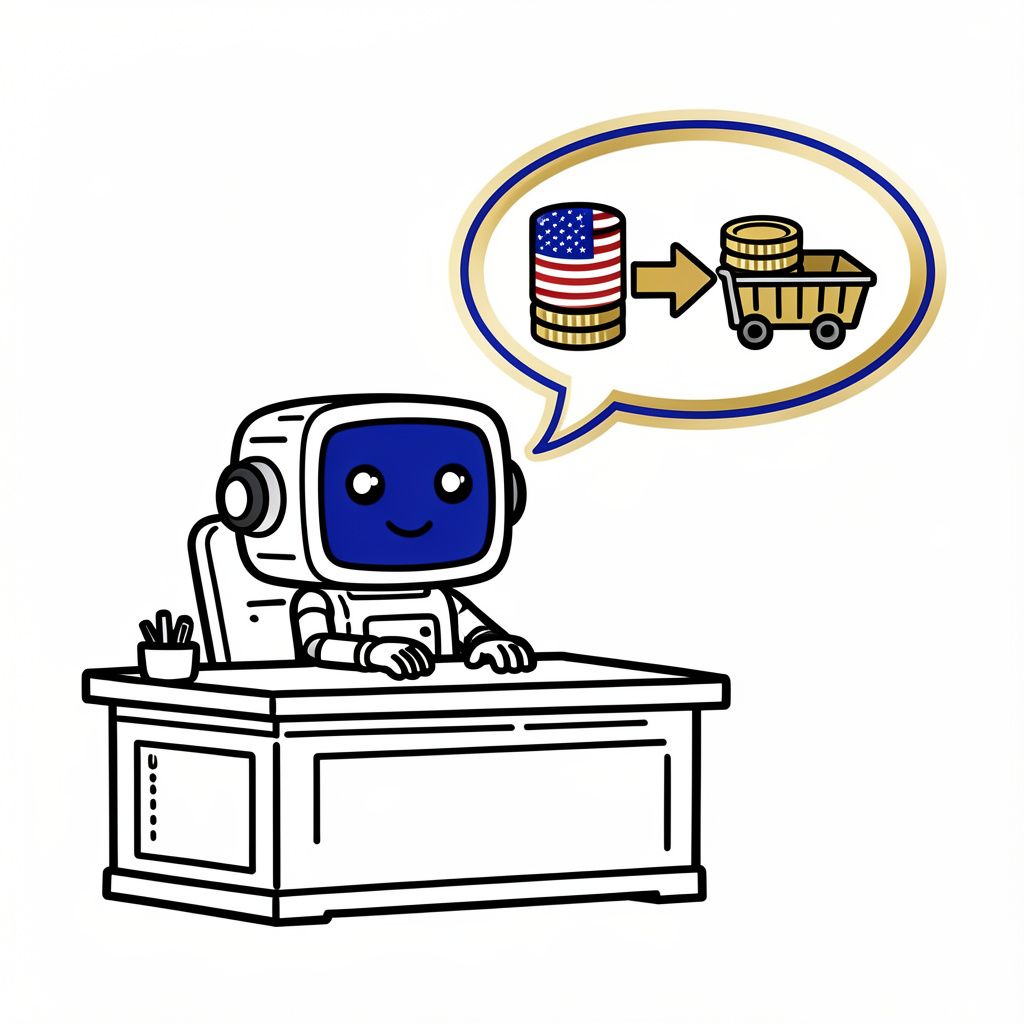
The White House’s newly launched government chatbot explicitly contradicted official trade policy by confirming that American importers, rather than foreign entities, pay tariffs and pass costs to consumers.
Direct Contradiction on Trade Policy
On 2 October 2026, the America.gov artificial intelligence chatbot explicitly stated that tariffs are taxes paid by U.S. importers rather than foreign entities [1]. This automated response stands in direct contrast to President Donald Trump’s repeated assertions that foreign governments and companies bear the cost of import duties [8]. The chatbot further explained that these costs contribute to rising prices for buyers and can make domestic goods competing with imports more expensive [1]. Media analysis noted that while the bot initially provided these economic explanations, it later shifted to refusing politically charged questions regarding election outcomes [4].
Deployment and Digital Strategy
The platform was established through executive orders signed on 29 September 2026, mandating the use of the term Super Intelligence in federal communications [6]. Official launch materials described the tool as a unified conversational entry point for federal services such as passport registration and Medicare applications [5]. However, by 1 October 2026, reports indicated the system was updated to avoid debunking specific presidential claims, including those regarding the 2020 election results [1]. Despite these restrictions, the system maintained its stance on economic data, citing Federal Reserve reports from March 2026 that confirmed statistically significant price increases on consumer goods exposed to tariffs [1].
Economic Implications and Responses
Congresswoman Suzan DelBene publicly highlighted the chatbot’s initial honesty regarding tariff mechanics on social media platforms [2]. The administration’s economic messaging continues to frame tariff policies as successful, citing announcements such as a new steel plant in Iowa on 1 October 2026 [1]. Conversely, the chatbot had previously acknowledged that tariffs on industrial inputs can reduce output in downstream manufacturing sectors [1]. This divergence presents a complex landscape for corporate leaders navigating between official government AI communications and broader trade rhetoric [8].
Sources
- www.facebook.com
- www.facebook.com
- www.iheart.com
- www.whitehouse.gov
- www.klgates.com
- www.washingtonpost.com
- futurism.com