Is Inflation Here to Stay? Why Central Banks May Be Losing the Fight
New York, Saturday, 20 June 2026.
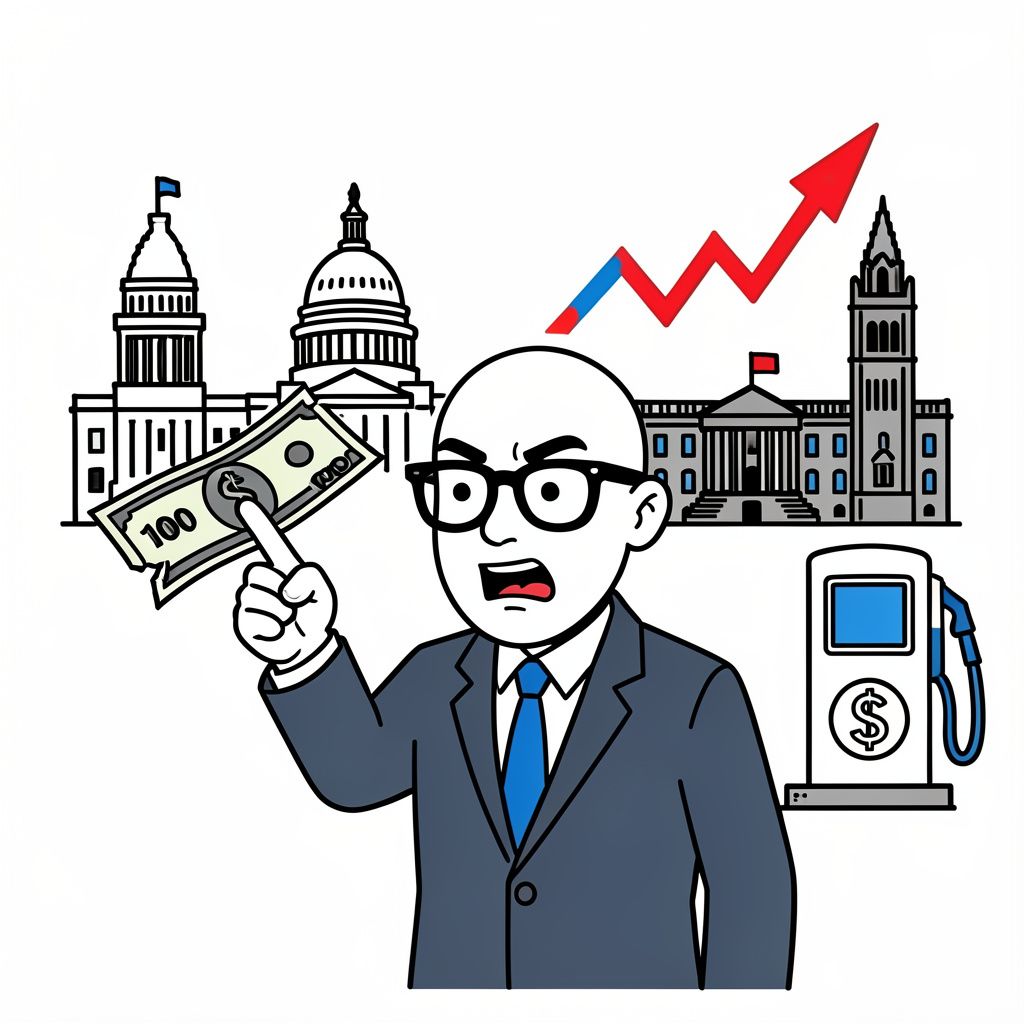
A stark warning from top economists reveals inflation may not be temporary—it could be a permanent fixture of the economy. With US and UK debt-to-GDP ratios exceeding 120%, governments are quietly relying on inflation as a ‘closet tax’ to manage unsustainable debt. Bond yields surging above 5% signal deeper structural risks, while energy shocks and food shortages threaten to push inflation toward 9% in the coming years. If this trend holds, central banks may face an impossible choice: crush growth with higher rates or let inflation erode savings and wages. The question isn’t whether inflation will return—but whether we’re prepared for its long-term consequences.
The Debt Trap: How Governments Are Quietly Using Inflation as a ‘Closet Tax’
The United States and United Kingdom are navigating a precarious economic tightrope, with debt-to-GDP ratios exceeding 120%—levels historically associated with sovereign debt crises [1]. As of June 2026, the US national debt stands at approximately $34.7 trillion, while UK public sector net debt has surpassed £2.7 trillion [2][3]. Economists Gerald Ashley and George Cooper argue that governments are increasingly reliant on inflation as a ‘closet tax’ to manage these unsustainable debt burdens, a strategy that erodes purchasing power without requiring legislative approval [1]. Cooper bluntly states, ‘inflation is effectively another form of tax, but it’s a tax that a government can apply without legislation, yeah. So and without most people knowing it’ [1]. This fiscal sleight of hand allows policymakers to reduce the real value of debt while avoiding the political fallout of explicit tax hikes or spending cuts.
Bond Market Alarm Bells: Yields Signal Structural Inflation Risks
The bond market is flashing warning signs that inflation may be far from transitory. As of 20 June 2026, US 30-year Treasury yields have climbed above 5%, while UK 30-year gilt yields are nudging towards 6% [1]. These elevated yields reflect investor expectations of persistent inflationary pressures, as higher borrowing costs force governments to refinance maturing low-yield debt at significantly higher rates [1]. The impact is twofold: first, increased debt servicing costs divert tax revenue away from public services and infrastructure; second, higher yields tighten financial conditions for businesses and households, potentially stifling economic growth. The UK’s debt interest payments alone are projected to reach £120 billion in the 2026-27 fiscal year, equivalent to 10% of total government spending [3].
Energy Shocks and Food Shortages: The Looming Inflation Catalysts
The US-Iran conflict has introduced a new layer of inflationary risk, with energy and food supply chains facing unprecedented disruptions. While strategic petroleum reserve releases have temporarily mitigated oil price spikes, economists warn that the full impact of the conflict will materialize in the coming months [1]. Cooper predicts that oil-derived inputs, such as fertilizers and chemicals, will disrupt global farming, leading to food shortages within 12 months of the war’s onset [1]. Historical precedent suggests that energy shocks can trigger a ‘third wave’ of inflation, with the 1970s serving as a cautionary tale. During that decade, US inflation peaked at approximately 15% in 1980 following two major oil crises [1]. Cooper forecasts a similar pattern, with inflation potentially reaching 9% in the coming years if current geopolitical and structural factors persist [1].
Central Banks’ Dilemma: Crush Growth or Erode Savings?
Central banks are caught between a rock and a hard place. The US Federal Reserve and the Bank of England face an unenviable choice: continue raising interest rates to combat inflation and risk triggering a recession, or tolerate higher inflation and allow it to erode savings and wages [1][4]. The Fed’s policy rate currently stands at 4.0%, below the core inflation rate of 2.5%, suggesting that real interest rates remain negative [4]. This accommodative stance aims to support economic growth but may inadvertently fuel further inflationary pressures. Meanwhile, the UK’s inflation rate has proven stubbornly persistent, with core CPI hovering around 3.5% as of May 2026 [3]. The Bank of England’s Monetary Policy Committee has signaled that rate cuts are unlikely in the near term, despite growing concerns about economic stagnation [3].
Equities in the Crosshairs: How Investors Are Recalibrating Strategies
As inflationary risks mount, investors are recalibrating their strategies to navigate an increasingly uncertain economic landscape. Federated Hermes has upgraded its 2026 S&P 500 price target from 7,500 to 7,800, citing productivity gains from AI integration, renewed economic growth, and improving corporate profit margins [4]. The firm projects S&P 500 earnings to reach nearly $400 by 2028, driven by higher nominal GDP growth and a favorable profitability mix [4]. However, these optimistic projections come with caveats. The S&P 500’s current market multiple stands at approximately 22×, above the long-term industrial-era average of 18×, reflecting a shift towards higher-valuation tech sectors [4]. Analysts warn that near-term volatility is likely, with the 2-year S&P 500 target set at around 8,600, implying an annual gain of 10.256% [4]. ‘Markets rarely move in a straight line,’ cautions a Federated Hermes analyst, underscoring the potential for turbulence amid reaccelerating global growth [4].
The Long-Term Outlook: Are We Prepared for Persistent Inflation?
The prospect of persistent inflation raises critical questions about the long-term resilience of the global economy. If inflation becomes structurally embedded, central banks may be forced to maintain higher interest rates for extended periods, increasing the risk of financial instability [1]. Households and businesses could face a protracted period of elevated borrowing costs, while governments grapple with rising debt servicing expenses [1][3]. Political commentator Helen Thomas suggests that meaningful policy changes are unlikely until a ‘big enough crisis forces action,’ implying that current inflation levels may not yet be severe enough to prompt decisive intervention [1]. Cooper echoes this sentiment, noting that the negative effects of inflation only become politically salient when second-round impacts—such as higher interest rates curtailing investment and job opportunities—begin to materialize [1]. In the meantime, businesses and investors are advised to adopt long-term planning strategies to mitigate the risks of an inflationary environment that shows no signs of abating.