Powell’s Cautious Stance: Why the Fed Might Delay Rate Cuts Until Inflation Cools Further
Washington D.C., Saturday, 20 June 2026.
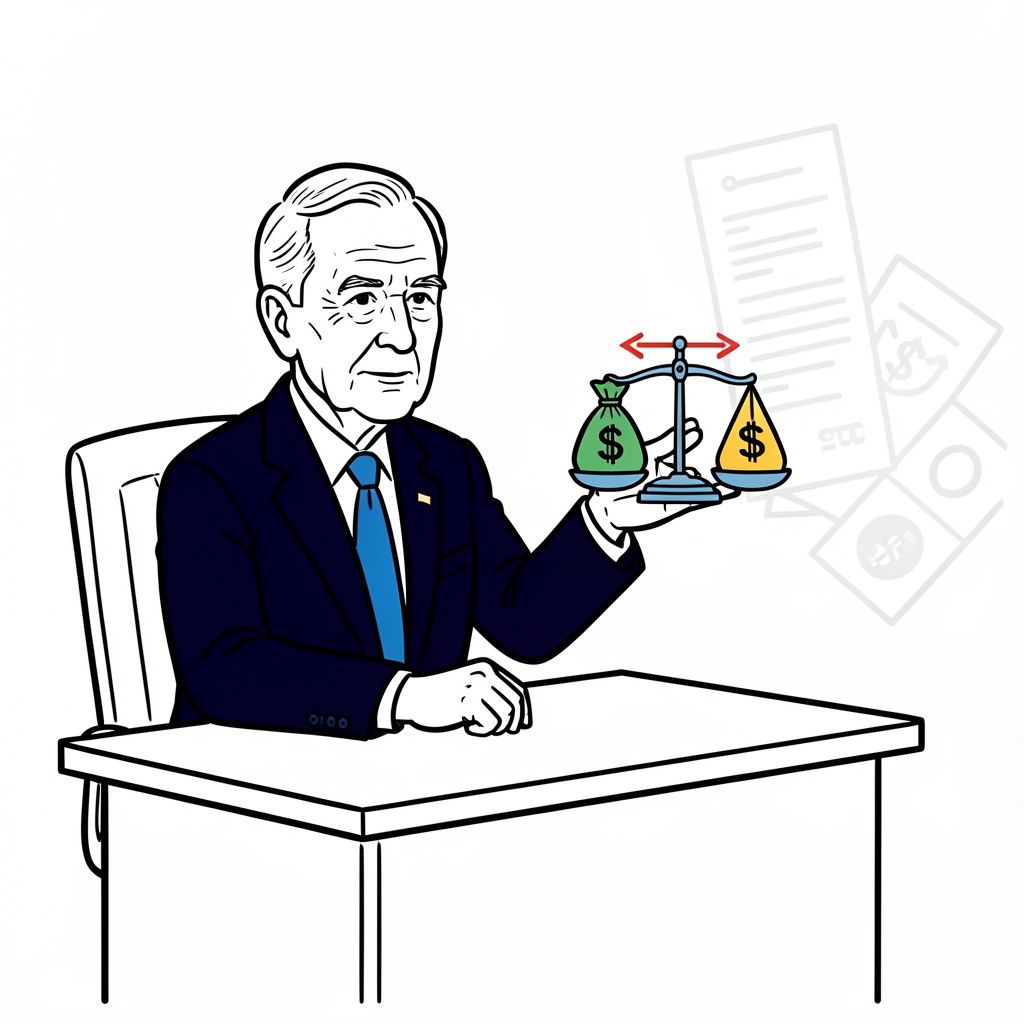
Federal Reserve Chair Jerome Powell signaled a cautious approach to interest rate cuts in mid-2026, prioritizing sustained inflation control over immediate economic stimulus. Despite signs of easing price pressures, inflation remains stubbornly above the Fed’s 2% target, leaving policymakers hesitant to commit to rate reductions. Powell’s testimony revealed a delicate balancing act: supporting growth while avoiding an inflation resurgence. Markets reacted to the Fed’s data-dependent stance, as nearly half of policymakers now project rate hikes by year-end—an unexpected shift from earlier expectations of cuts. With labor market resilience waning and inflation still elevated, the Fed’s next move hinges on upcoming economic data, leaving investors in a wait-and-see limbo.
The Fed’s Inflation Dilemma: Why 2% Remains Elusive
Federal Reserve Chair Jerome Powell’s June 20, 2026 testimony before Congress painted a picture of cautious optimism tempered by persistent inflationary pressures. While the Personal Consumption Expenditures (PCE) price index showed inflation at 2.3% year-over-year through May 2025, core PCE - the Fed’s preferred measure excluding volatile food and energy prices - remained stubbornly at 2.6%, still above the central bank’s 2% target [1]. This gap between headline and core inflation has become a defining challenge for monetary policy, with Powell emphasizing that ‘the path to 2% has been bumpier than anticipated’ [1]. The Fed’s preferred inflation gauge has now exceeded its target for 31 consecutive months, a streak not seen since the early 1990s [GPT].
Labor Market Resilience: A Double-Edged Sword
The U.S. labor market continues to show remarkable resilience, though recent data suggests a gradual normalization. The unemployment rate stood at 4.2% in May 2025, up slightly from 3.7% a year earlier but still near historic lows [1]. Payroll gains averaged 124,000 per month in the first five months of 2025, down from 250,000 in the same period of 2024 [1]. This slowdown in job growth has been accompanied by a moderation in wage growth, which has decelerated from 4.5% year-over-year in early 2024 to 3.9% in May 2025 [1].
The Rate Hike Surprise: Why Nearly Half of Policymakers Now Favor Tightening
The June 2026 Federal Open Market Committee (FOMC) meeting delivered an unexpected hawkish tilt. While the committee voted unanimously to keep the federal funds rate in its current 3.50%-3.75% range, the Summary of Economic Projections revealed that 9 of 18 policymakers now expect at least one rate hike in 2026, with 6 projecting two or more hikes [4][7]. This represents a dramatic shift from the March 2026 projections, when no policymakers penciled in a rate hike for the year [4].
Geopolitical Wildcards: How the Iran War Reshaped the Inflation Outlook
The economic landscape has been further complicated by geopolitical developments. The Iran war, which began on February 28, 2026, sent energy prices surging and contributed to a spike in inflation to 4.2% - the highest level in three years [5]. While President Trump announced an initial peace agreement on June 16, 2026, the impact on gas prices and overall inflation remains uncertain [5]. The U.S. Energy Information Administration projects that energy costs will remain elevated until at least 2028, creating a persistent headwind for inflation control [8].
The Investment Implications: How to Position Portfolios in a Higher-for-Longer Environment
The Fed’s cautious stance has significant implications for investors. With rate cuts now appearing less likely in 2026, experts recommend several strategic adjustments. Mike Reynolds, Vice President of Investment Strategy at Glenmede, suggests that ‘the question is if inflation will become a persistent problem’ and recommends focusing on ‘big blue-chip companies with No. 1 market share’ [8]. This aligns with the historical performance of quality stocks during periods of economic uncertainty.
The Road Ahead: What Data Will the Fed Watch Most Closely?
The Fed’s next move will depend heavily on upcoming economic data. Powell identified three key areas of focus in his testimony: inflation trends, labor market conditions, and economic growth [1]. The July 28-29, 2026 FOMC meeting will be particularly important, as it will include updated economic projections and a new dot plot [6].
Conclusion: Why Patience Remains the Fed’s Watchword
Powell’s testimony underscored the Fed’s commitment to a data-dependent approach, with patience emerging as the central theme. The central bank appears willing to tolerate a period of below-trend growth if it means achieving sustainable price stability. As Powell stated, ‘We will do everything we can to achieve our maximum employment and price stability goals’ [1]. This cautious stance reflects the lessons of the 1970s, when premature rate cuts led to a resurgence of inflation [GPT].
Sources
- www.federalreserve.gov
- www.federalreserve.gov
- www.federalreserve.gov
- www.opb.org
- www.facebook.com
- www.advisorperspectives.com
- www.forbes.com
- www.forbes.com