Global Conflict Triggers Severe Motor Oil Shortage Across the US Auto Industry
Detroit, Saturday, 23 May 2026.
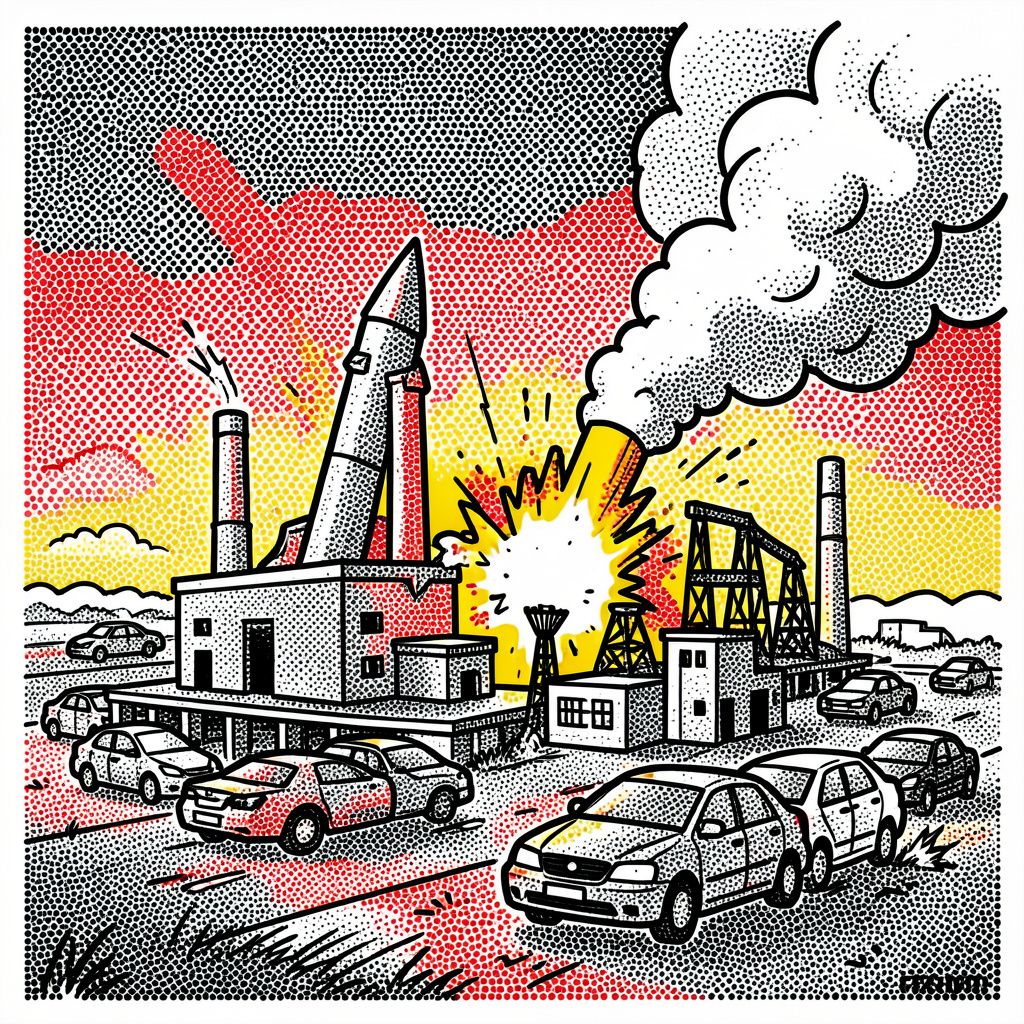
An Iranian missile strike on a key Middle Eastern refinery has triggered massive motor oil shortages, driving up routine maintenance costs and threatening U.S. auto production lines.
Supply Chain Shockwaves from the Middle East
The catalyst for the current automotive crisis stems from the ongoing United States conflict with Iran, which has severely disrupted global oil markets and led to the closure of the critical Strait of Hormuz [2]. The situation escalated drastically when an Iranian missile struck Shell’s Pearl Gas-to-Liquids (GTL) facility, a cornerstone of the global chemical supply chain [2]. According to Holly Alfano, CEO of the Independent Lubricant Manufacturers Association, modern motor oil consists of 70 percent or more Group III base oil [2]. With 45 percent of the world’s Group III base oil originating from the Middle East, the destruction of the Pearl GTL facility has created an immediate and severe bottleneck [2]. The disruption has choked off the importation of materials required to blend synthetic motor oils, creating a domino effect that is now hitting American shores in late May 2026 [1].
Dealerships and Retailers Feel the Squeeze
The shortage is already forcing major automotive brands to take drastic defensive measures. Automakers such as Nissan and Toyota have begun rationing synthetic motor oil supplies to their dealership networks to preserve inventory, while other manufacturers are aggressively stockpiling whatever remaining supply they can secure [1]. The panic has also reached the retail sector; a leaked internal memo from auto parts giant AutoZone recently warned its network of massive impending supply shortages [3]. This scarcity threatens to severely constrain dealership service lanes, which traditionally serve as a highly lucrative revenue stream for automotive retailers [1].
Broader Economic Implications for Automakers
This upstream chemical shortage arrives at a particularly vulnerable moment for the global automotive industry, which is already battling weak consumer sentiment and fierce international competition [4]. The lack of synthetic oil does not just impact aftermarket maintenance; it directly threatens new-vehicle production lines that rely on these lubricants for factory fills [1]. The timing is precarious, as major automakers are currently attempting to restructure their operations to appeal to cost-conscious consumers. For instance, on May 21, 2026, Stellantis CEO Antonio Filosa unveiled a $70 billion revival plan focused heavily on affordability in the U.S. market, which includes launching nine new Jeep and Ram vehicles priced under $40,000 [4].
The Push Toward Electrification Amidst New Hurdles
As the cost of maintaining internal combustion engine vehicles rises due to the oil shortage, the economic calculus for consumers may shift further toward electric vehicles (EVs) [GPT]. Automakers are aggressively expanding their EV portfolios to capture this market segment. Ford is currently developing an electric truck targeted at a highly competitive $30,000 price point, while Rivian Automotive is increasing the initial production capacity at its Georgia facility by 50 percent following strong quarterly revenue [4]. Furthermore, Tesla’s full self-driving system has now been made available in several additional countries, including China, bolstering the appeal of its electric fleet [4].