Why Tech Titans Are Paying $200 Million to Move to Miami's Private Island Sanctuary
Miami, Sunday, 2 August 2026.
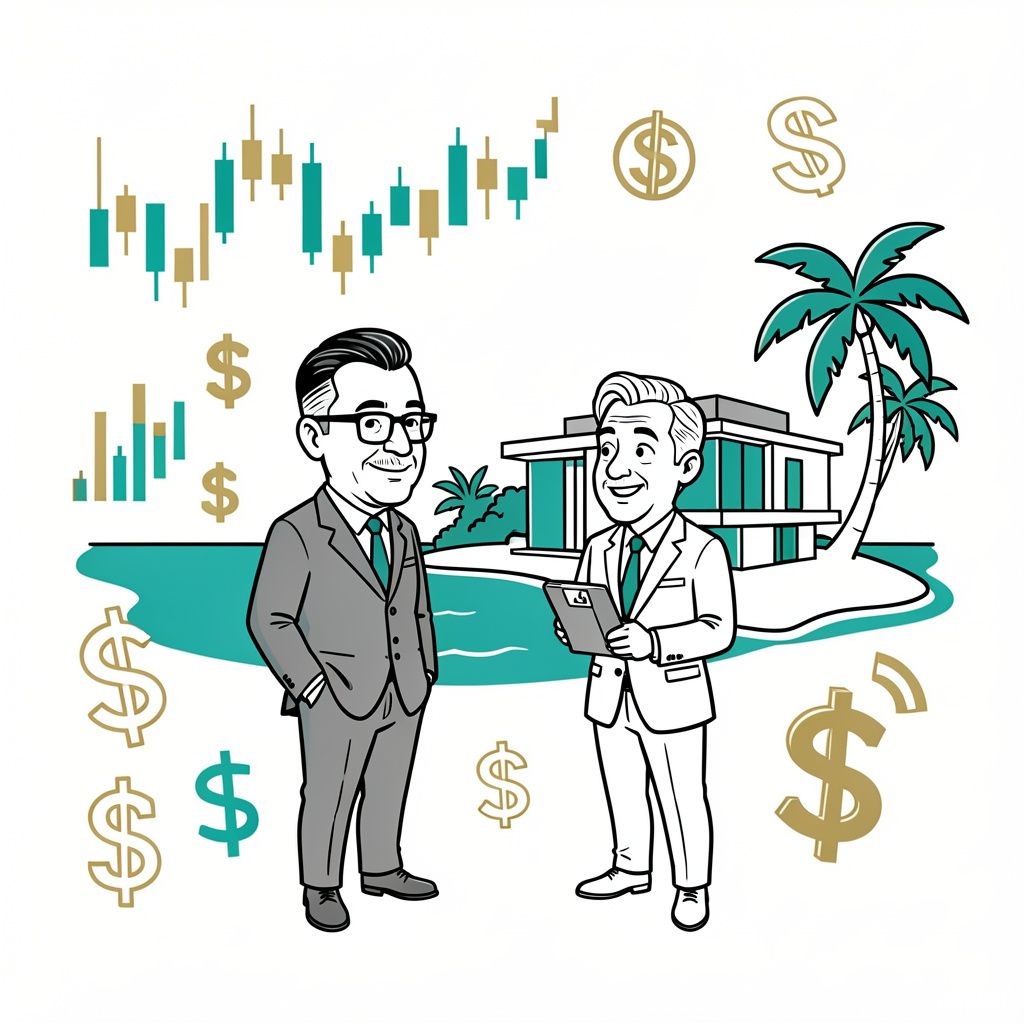
Billionaires like Jeff Bezos and Mark Zuckerberg are relocating to Miami’s heavily guarded Indian Creek Island, seeking tax protection and high-tech security while pushing local property valuations above $200 million.
Migration of Capital and Leadership to South Florida
The concentration of extreme wealth in South Florida has reached a new milestone as tech founders and finance titans expand their footprints on Miami’s Indian Creek Island [1]. Known as the ‘Billionaire Bunker,’ this exclusive private enclave reflects a broader economic trend of capital and corporate leadership migrating away from traditional financial hubs toward Florida [4]. High-profile acquisitions include Meta CEO Mark Zuckerberg, who reportedly purchased a mansion for an estimated $150 million to $200 million in February 2026 [1]. Amazon founder Jeff Bezos has also purchased three properties there since 2023 for a combined total exceeding $230 million [1]. This influx of ultra-high-net-worth individuals continues to reshape the region’s commercial and residential real estate market, driving record valuations and influencing state tax revenues [4].
The Economics of Scarcity and Valuation
Indian Creek Island comprises only 41 waterfront lots on a 1.21-square-kilometer man-made island, creating extreme scarcity that dictates market dynamics [1]. Property entry prices start at $60 million, with recent high-profile acquisitions driving valuations higher [1]. A waterfront lot adjacent to Jeff Bezos’s property sold for approximately $105 million in 2025, highlighting the rapid appreciation in asset values [2]. In the broader luxury market, luxury-home prices rose more than twice as fast as those of non-luxury homes during Q2 2024 [5]. The median luxury home sale price reached a record $1,180,000, while non-luxury median home prices rose to a record $342,500 [5]. The ratio of luxury to non-luxury median prices is approximately 3.445, indicating a significant divergence in market segments [5]. Palm Beach County has experienced a 187% increase in luxury home prices over the decade ending March 2026, becoming a hub for billionaires [6].
Security Infrastructure and Privacy Protocols
The island maintains its own government and 24/7 police force that patrols by land and sea, ensuring a level of security unmatched by standard municipalities [1]. Security infrastructure extends beyond land-based gating to include radar and thermal monitoring of the surrounding waters [2]. The enclave utilizes a single-bridge connection to Surfside, which serves as the exclusive entry point and security choke point [2]. Real estate transactions in the area are conducted exclusively off-market, requiring buyers’ agents to negotiate directly with property owners’ representatives [1]. This privacy is a primary driver for residents, with one luxury broker noting that people of that caliber feel safe and not bothered [1]. The island’s security model is built on reducing variables by limiting access points and centralizing movement to ensure that entry is a strictly enforced protocol [2].
Tax Policy and Future Economic Implications
The migration is driven in part by a desire for security and a tactical retreat from tax-the-rich legislation in states such as California, Washington, and New York [4]. California’s Proposition 40, a proposed 5% tax on the net worth of billionaires who were California residents on 2026-01-01, is scheduled for the November 2026 ballot [1]. This potential liability encourages ultra-high-net-worth individuals to establish residency in Florida prior to the election outcome [4]. However, risks remain; the broader Miami housing market was identified by the UBS Global Real Estate Bubble Index in 2025 as having the highest bubble risk globally, exceeding the 2006 peak [4]. Despite this, the city is leveraging wealth to fund large-scale public works projects, including high-speed transit and affordable housing for the island’s support staff [4]. The current luxury real estate trend reflects a K-shaped economic environment where high-income earners benefit from rising asset prices [6].
Sources
- fortune.com
- www.millionluxury.com
- www.miamicondoinvestments.com
- www.foxbusiness.com
- fortune.com
- finance.yahoo.com