Emerging Super El Nino Threatens Global Markets and Power Grids in 2026
Washington, Sunday, 2 August 2026.
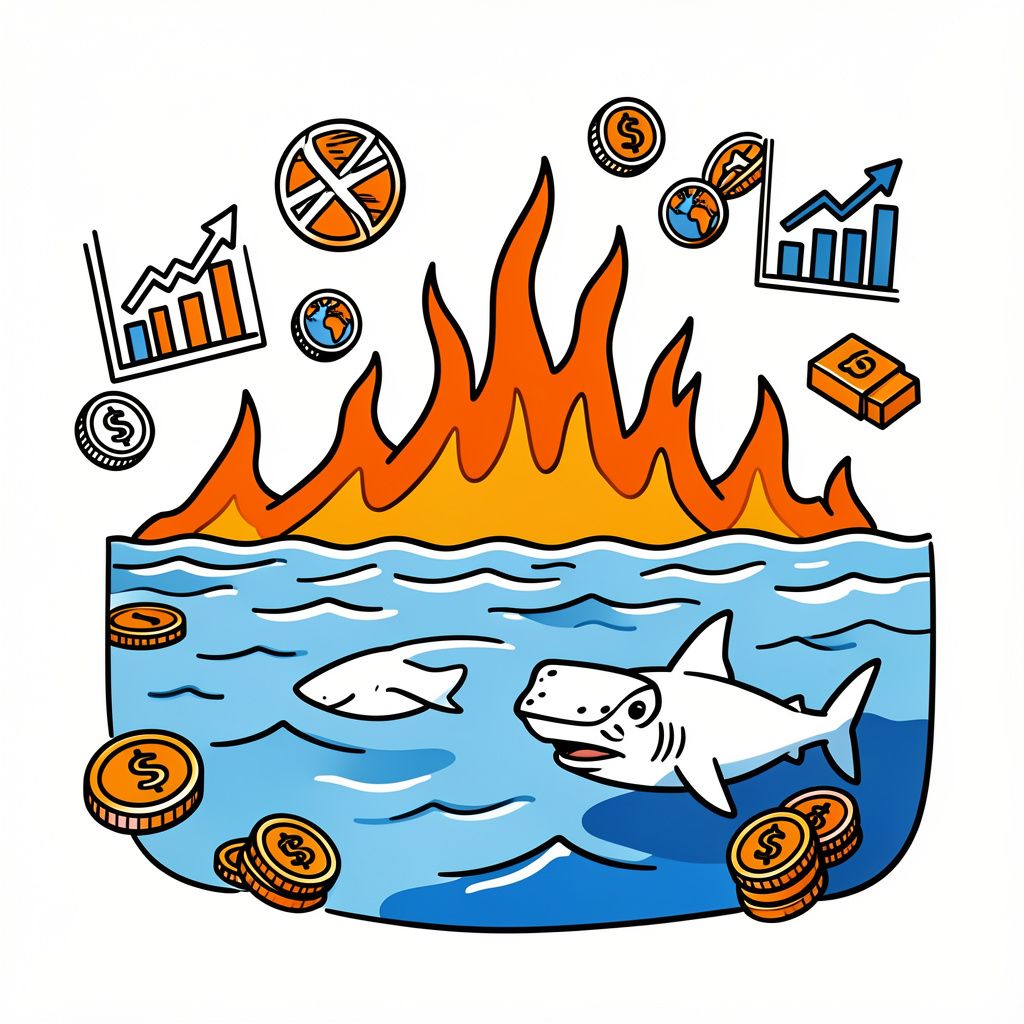
Meteorologists warn that an emerging Super El Niño event in late 2026 threatens to disrupt global supply chains, agricultural yields, and energy infrastructure. Characterized by Pacific Ocean temperatures surging more than 2 degrees Celsius above baseline averages, NOAA forecasts an 81 percent probability of a very strong event peaking between October and December 2026, with a 97 percent likelihood of persisting into 2027. Beyond triggering severe weather anomalies—such as heightened flood risks across the Southern United States and droughts in Central America—the extreme oceanic warming is driving an intriguing biological shift: tropical marine predators, including hammerhead sharks and yellow-bellied sea snakes, are migrating unusually far north into West Coast waters. Combined with existing supply chain pressures, this climate event threatens to spike food inflation, alter regional energy demand, and heavily strain global property insurance markets.
Forecast Probabilities and Historical Precedent
The National Oceanic and Atmospheric Administration (NOAA) has established El Niño conditions in the tropical Pacific, with models indicating a significant probability of a ‘super’ event developing later this year. Current forecasts assign an 81 percent probability of a ‘very strong’ event occurring between October and December 2026, with a 97 percent probability of the phenomenon persisting into early spring 2027 [2]. This high-confidence forecast relies on subsurface ocean temperatures across the central and eastern equatorial Pacific becoming significantly warmer than average, a key ingredient for El Niño formation [3]. Historically, such ‘super’ events, defined by ocean temperature anomalies exceeding 2.0 °C above average, have occurred only a handful of times since 1950, specifically during the 1982-83, 1997-98, and 2015-16 episodes [2]. The threshold for a ‘very strong’ classification is precise, requiring sea surface temperature anomalies in the Niño-3.4 region to sustain at least 2.0 °C above baseline averages [3].
Economic Implications for Agriculture and Supply Chains
Global commodity markets are bracing for potential disruptions as the climate event threatens to exacerbate existing strains on food systems. The preceding 11 years leading up to 2026 were confirmed as the warmest on record, and current climate change factors are expected to compound the impacts of this weather pattern [5]. Supply chains are already under pressure from fuel and fertilizer shortages stemming from geopolitical conflicts, which could drive operational costs higher for nitrogen fertilizer production and farm machinery [5]. Agricultural yields face direct risks, with forecasts indicating potential droughts in key production zones such as central India, central Africa, Indonesia, and Australia [5]. Conversely, regions like the Southern United States and parts of South America may experience above-average rainfall, altering harvest timelines and logistics [2]. These divergent weather patterns threaten to spike food inflation and disrupt the stability of global trade networks throughout late 2026 and into 2027.
Infrastructure Strain and Insurance Market Volatility
Energy infrastructure and water management systems are projected to face severe stress as regional power demand shifts in response to temperature anomalies. Warmer-than-average conditions in the northern tier of states during the fall and winter seasons of 2026 may reduce heating demand but increase cooling loads earlier in the year [2]. Water agencies are monitoring the developing pattern closely, as intense bursts of precipitation can reduce terrestrial water storage by causing faster surface evaporation rather than replenishing groundwater [5]. The property insurance market is particularly vulnerable, with historical data linking strong El Niño events to increased risks of flash flooding and river flooding across the Deep South and Gulf Coast [2]. Insurers are evaluating exposure to these heightened risks, knowing that even strong events do not lead to typical impacts everywhere but significantly tilt the odds in favor of expected outcomes [2]. The economic cost of such disruptions was evident in past events, with the 1982-1983 episode causing over $13 billion in damages [3].
Regional Weather Patterns and Biological Shifts
In North America, meteorological projections indicate the southern United States will face increased storm activity and wetter conditions starting in autumn 2026, while the northern U.S. and Pacific Northwest are expected to experience hotter, drier conditions [8]. This shift contrasts with the La Niña event that ended in April 2025, which frequently caused crop failures in the Southern Great Plains [8]. Beyond atmospheric changes, the extreme oceanic warming is driving an intriguing biological shift in marine ecosystems. Tropical marine predators, including hammerhead sharks and yellow-bellied sea snakes, are migrating unusually far north into West Coast waters due to the unusually warm Pacific waters [2]. Marine scientists predict this shift will disrupt cold, nutrient-rich upwelling off California, potentially displacing species like squid and anchovies while facilitating the migration of predators into the region [2]. These ecological changes serve as visible indicators of the broader thermal energy redistribution occurring across the Pacific basin.
Preparedness and Future Outlook
Emergency managers and weather offices are currently monitoring the developing pattern for the 2026-27 fall and winter seasons, utilizing improved early warning systems compared to previous decades. Advances in forecasting tools and data monitoring allow officials more time to take anticipatory and risk-reducing actions before the event peaks [3]. The next scheduled NOAA ENSO update is expected on the second Thursday of August 2026, which will provide further clarity on the event’s trajectory [7]. While the full economic impact remains to be seen, the convergence of high-probability forecasts and existing supply chain vulnerabilities suggests a period of heightened volatility. Stakeholders across agriculture, energy, and insurance sectors are advised to prepare for simultaneous, geographically disparate floods and droughts that could threaten water supplies and government revenues [5]. The coming months will test the resilience of global infrastructure against one of the most powerful natural climate patterns.
Sources
- www.news9.com
- www.newsweek.com
- news.climate.columbia.edu
- www.wri.org
- www.climate.gov
- www.bbc.com
- www.ncei.noaa.gov