Representative Boebert Links Delayed Colorado Water Funds to Political Retaliation
Washington, D.C., Sunday, 17 May 2026.
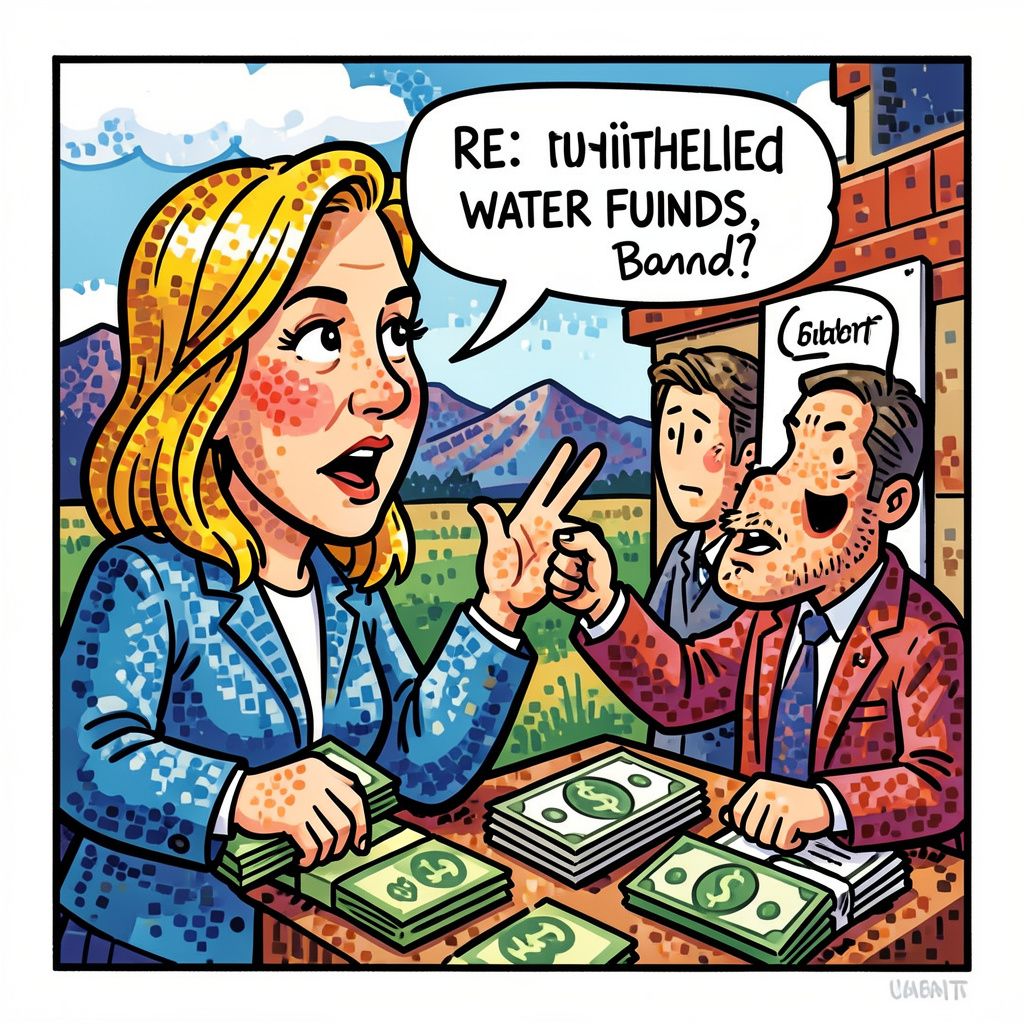
Representative Lauren Boebert sparked controversy by suggesting federal clean drinking water funds for Colorado were intentionally withheld as political retaliation over the prosecution of former clerk Tina Peters.
The Intersection of Infrastructure and Politics
On Friday, May 15, 2026, Democratic Colorado Governor Jared Polis commuted the nearly nine-year prison sentence of Tina Peters, a former Republican Mesa County clerk [1][4]. Peters had been convicted for allowing unauthorized access to voting systems during efforts to overturn the 2020 presidential election results [1][2]. Following the announcement, Republican U.S. Representative Lauren Boebert quickly claimed partial credit for the decision, stating she worked “hand-in-hand” with President Donald Trump to apply relentless pressure on the state government [1]. Peters is scheduled for release on June 1, 2026 [1][4].
A Veto Rooted in Retaliation?
The specific funds in question relate to a federal drinking water project in Boebert’s own congressional district [1]. In January 2026, President Trump vetoed a bill that would have secured clean water access for 50,000 residents in the region [1][4]. Despite the legislation passing unanimously through both the U.S. House of Representatives and the Senate, Trump blocked the measure, officially citing financial concerns [1]. However, Boebert noted on the House floor that the President had initially supported the project before pivoting to promise retaliation against Colorado for keeping Peters incarcerated [1][4].
Economic and Municipal Repercussions
The fallout from Boebert’s comments has intensified existing political fractures [2]. When the House of Representatives failed to override Trump’s veto on January 8, 2026, Boebert directed her frustration at her congressional colleagues rather than the President, accusing them of caving to political pressure out of fear of social media attacks [1][4]. Now, her suggestion that essential public utilities were used as a bargaining chip has drawn sharp criticism, with opponents arguing it undermines both federal grant integrity and election security enforcement [2]. For the business community, the normalization of using municipal water projects as leverage in partisan disputes signals a troubling shift in how federal infrastructure capital is deployed [alert! ‘Forward-looking economic analysis based on current political rhetoric’] [GPT].