Suspected Iranian Cyberattack Breaches US Gas Station Fuel Monitors
Washington, Friday, 15 May 2026.
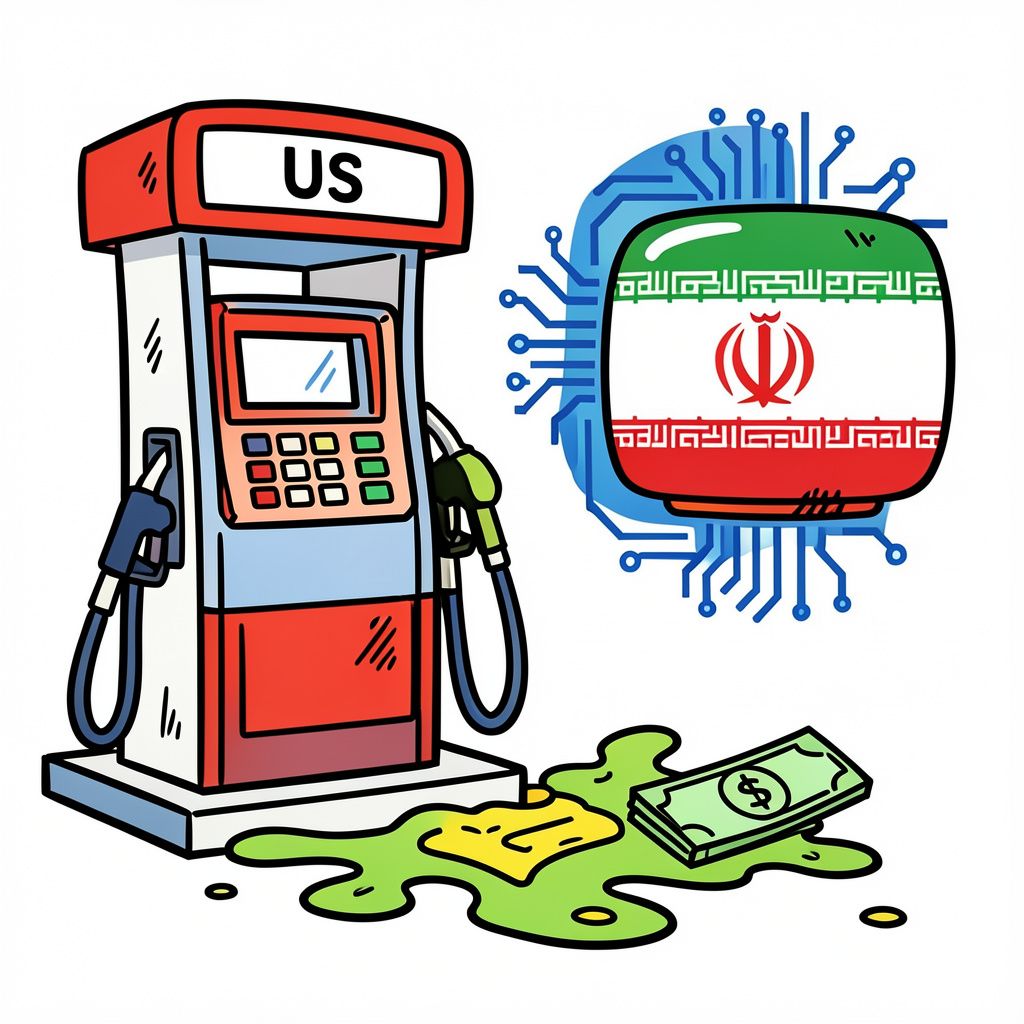
Suspected Iranian hackers breached unprotected fuel monitors at US gas stations. This infrastructure intrusion raises significant safety and economic concerns by potentially masking dangerous, undetected gas leaks.
The Vulnerability of Unsecured Infrastructure
As of mid-May 2026, federal investigations are actively underway regarding the breach of Automatic Tank Gauge (ATG) systems across multiple states [1][2]. These critical devices, which monitor fuel levels at gas stations, were reportedly left exposed online without basic password protection [2][3]. By exploiting these unprotected systems, hackers could potentially manipulate display readings, raising severe safety concerns about undetected gas leaks, although no physical damage or alteration of actual fuel levels has occurred to date [1][2]. The vulnerability of these systems is not a sudden revelation; cybersecurity researchers have warned about the risks of internet-facing ATGs for over a decade [1]. More recently, in September 2024, the cybersecurity firm Bitsight TRACE identified critical vulnerabilities in ATG products, warning that their exploitation could lead to significant environmental hazards and economic losses [2].
A History of Escalating Cyber Warfare
The suspected perpetrator is Iran, a nation with a well-documented history of targeting American critical infrastructure [3]. Following the October 7, 2023, Hamas attack on Israel, US officials blamed hackers affiliated with Iran’s Islamic Revolutionary Guard Corps (IRGC) for malicious intrusions into American water utilities, which included the display of anti-Israel messages [1][3]. This aggressive cyber posture is partly viewed by analysts as a long-term, asymmetric response to the 2010 Stuxnet virus—widely attributed to the United States and Israel—which damaged Iran’s nuclear facilities and spurred heavy Iranian investment in cyber warfare capabilities [2]. In April 2026, a joint government advisory highlighted the ongoing exploitation of industrial control devices across multiple sectors, leading to operational disruptions and financial losses [2].
Political Ramifications and Election Security
This geopolitical friction extends deeply into US domestic politics, directly impacting political campaigns, government officials, and voter sentiment. During the 2020 election, the Cybersecurity and Infrastructure Security Agency (CISA) blamed Iran for impersonating the far-right group the Proud Boys in an attempt to intimidate voters [1]. In the subsequent 2024 US presidential election, Iranian hackers successfully breached the campaign of Republican candidate Donald Trump, stealing and leaking internal documents to news organizations [1]. Furthermore, since late February 2026, Tehran-linked hackers have escalated their targeting of US officials, notably leaking the emails of FBI Director Kash Patel [1][3].
The Broader Cybersecurity Mandate
Securing decentralized networks remains a monumental challenge for both the public and private sectors. While investigations into the May 2026 gas station breaches are ongoing, federal officials concede that definitively attributing the attacks may prove impossible [alert! ‘Attribution in cyberspace is notoriously difficult due to sophisticated routing techniques and a lack of definitive forensic evidence’] [1][2][3]. The broader implications for US infrastructure are stark. Joe Wassel, a former Civilian Director of Communications for the US Secretary of Defense, notes that cyberspace connects all other operational domains, stating, “When we become vulnerable to cyberattack, all other domains fail” [4]. This systemic vulnerability is evident across all critical sectors; for example, US Public Safety Answering Points handle 240 million emergency calls annually, averaging roughly 657534.247 calls per day, making their reliance on secure, redundant systems paramount to national safety [4].