Britain Pitches a Bold Plan for Frictionless Goods Trade with the EU
London, Saturday, 23 May 2026.
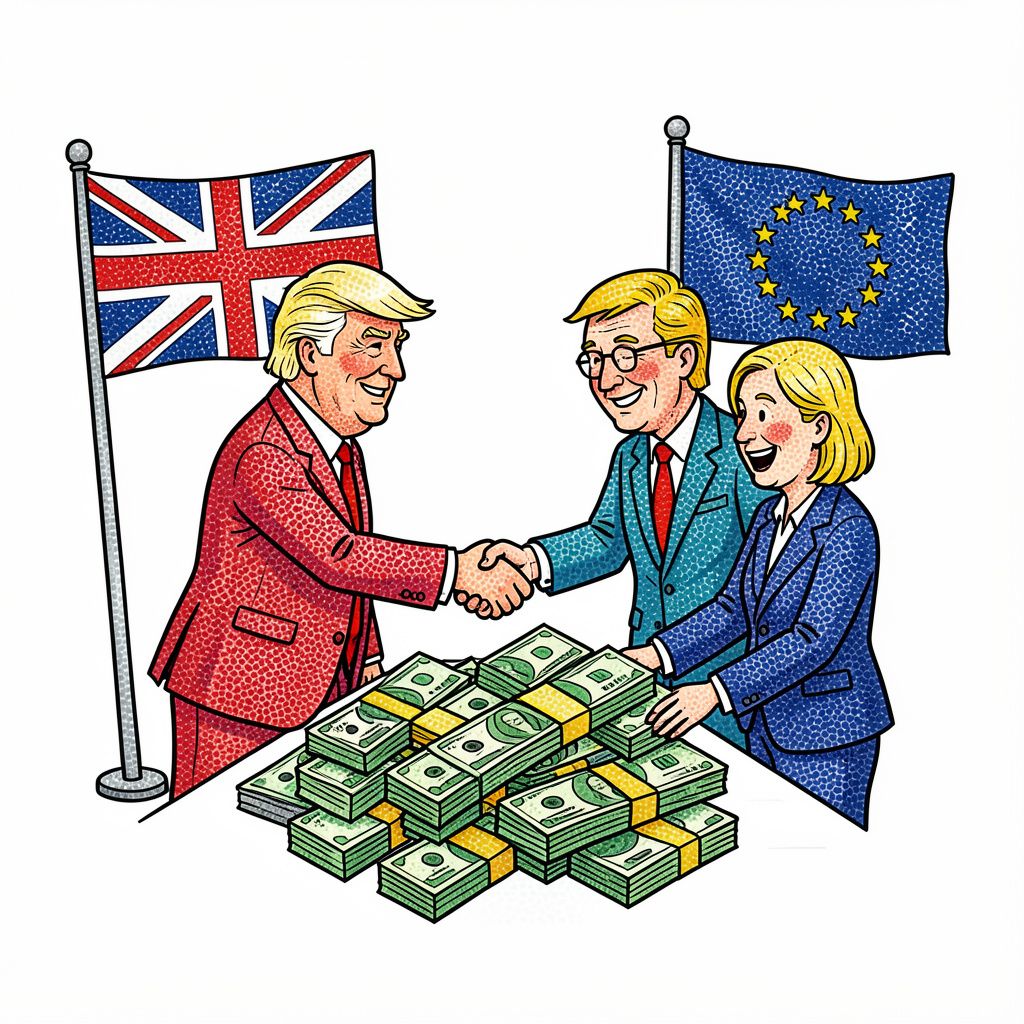
In a major post-Brexit shift, Britain has proposed a single market for goods with the EU to eliminate border friction and ease supply chains, despite early European skepticism.
The Push for Economic Reintegration
The UK government has signaled a profound shift in its post-Brexit strategy, with officials floating the idea of a frictionless single market for goods between the UK and the European Union [1]. This ambitious proposal goes significantly beyond the existing negotiations, which have primarily focused on aligning rules for food, agricultural products, electricity, and emissions trading [1]. The push for closer ties follows weeks of public statements from Prime Minister Sir Keir Starmer and Chancellor Rachel Reeves advocating for deeper economic reintegration [1]. To facilitate this, the government recently announced a European Partnership Bill in the King’s Speech, creating a legal mechanism to dynamically align UK and EU laws in negotiated sectors [1].
Measuring the Economic Stakes
The economic rationale driving this proposed reset is rooted in the stark realities of post-Brexit trade dynamics [GPT]. The UK officially left the EU single market and customs union on December 31, 2020 [5]. Since then, the Trade and Cooperation Agreement (TCA) has allowed for tariff-free trade but introduced substantial non-tariff barriers that have strained supply chains [5]. The macroeconomic impact has been severe; estimates suggest Brexit has reduced the UK’s gross domestic product by at least 4 percent [4]. With total trade in goods and services between the UK and the EU valued at £841.7 billion in 2025, reducing cross-Channel friction remains a paramount concern for British industries [3].
Geopolitical Pressures and European Demands
The UK’s negotiating position is increasingly intertwined with broader European security and geopolitical shifts. Some British ministers calculate that recent changes in the United States’ posture toward Europe may encourage continental leaders to view UK-EU economic reintegration more favorably [1]. In May 2025, the Starmer administration signed a new Security and Defence Partnership with the EU and extended the fisheries agreement for 12 years, supported by a £360 million domestic fund that averages £30 million in annual investment [3][5]. Yet, defense collaboration has faced setbacks; in November 2024, negotiations for UK participation in the Security Action for Europe (SAFE) defense procurement program collapsed over EU financial demands [3][5].
The Domestic Debate on Sovereignty
Domestically, the prospect of deepening ties with Europe has reignited debates over sovereignty and democratic control. Rejoining the EU formally under Article 49 of the Treaty on the Functioning of the EU would require unanimous approval from all member states and acceptance of all membership obligations, potentially including the adoption of the euro [4][5]. Critics warn that giving up control of sterling would mean sacrificing monetary sovereignty, a move that would severely restrict the UK’s fiscal policy flexibility [4]. As an alternative, some analysts suggest a “Norwegian model,” which would entail joining the European Free Trade Association (EFTA) and the European Economic Area (EEA) [4][5]. While this would keep the UK out of the Eurozone, it would still require adherence to many EU rules and mandatory financial contributions [4].
Sources
- www.bbc.com
- www.theguardian.com
- committees.parliament.uk
- www.taxresearch.org.uk
- www.instituteforgovernment.org.uk