Unauthorized Drone Disrupts Travel for Over 400 Flights at San Diego Airport
San Diego, Sunday, 6 September 2026.
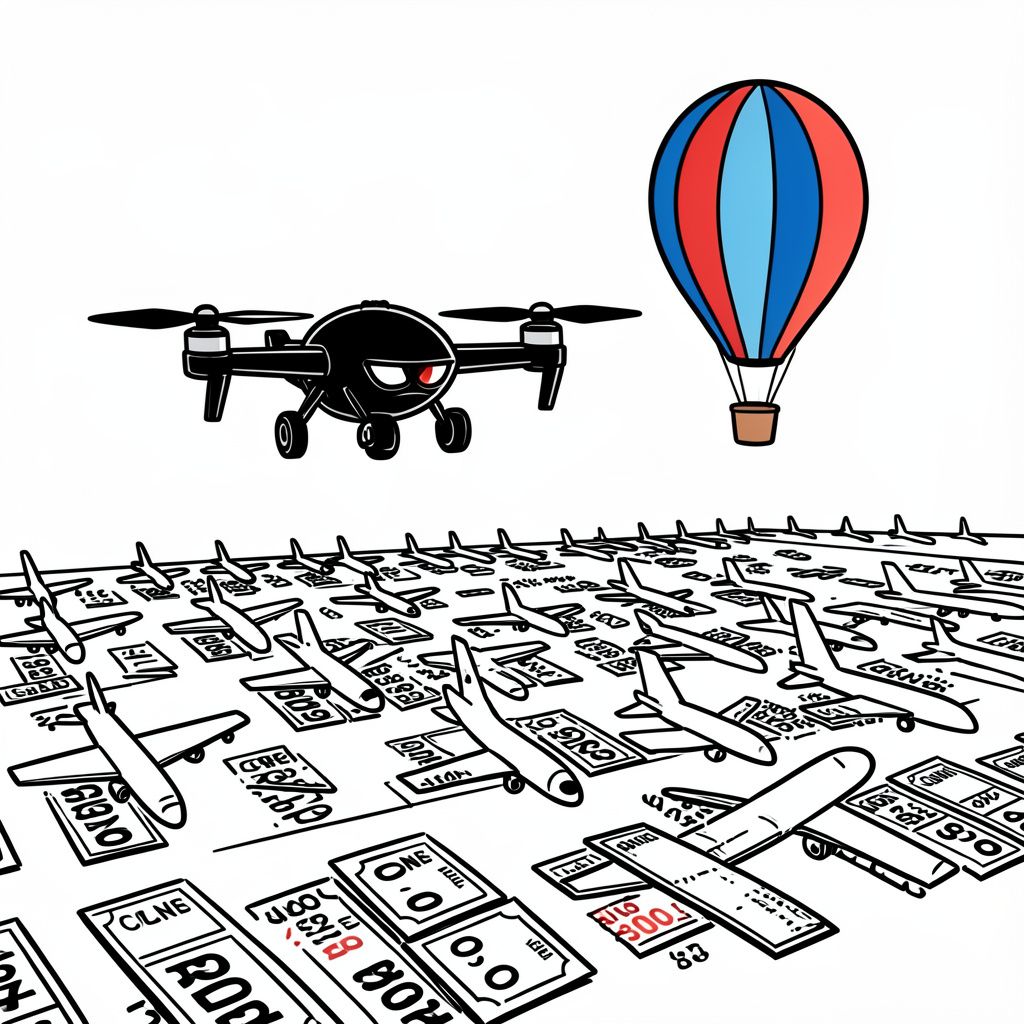
An unauthorized drone and weather balloon forced a two-and-a-half-hour ground stop at San Diego International Airport, delaying over 420 flights right as Labor Day weekend travel began.
Airspace Breach Halts Operations at San Diego International
San Diego International Airport (SAN) experienced a significant operational disruption on Friday, 4 September 2026, when an unauthorized drone and a weather balloon were spotted near the airfield [1][3]. The incident occurred just as travel volumes surged for the Labor Day holiday weekend, compounding the logistical challenge for airlines and passengers alike [1]. By 6:00 p.m. on the day of the incident, approximately 420 flights had been delayed, with average delay times reaching 122 minutes according to Federal Aviation Administration (FAA) data [1][3]. The presence of unmanned aerial systems near major transportation hubs continues to highlight vulnerabilities in aviation security infrastructure, prompting immediate regulatory responses [3].
Timeline of the Operational Pause
Air traffic controllers initiated a ground stop at approximately 2:00 p.m. Pacific Time after the objects were detected in the vicinity of the airport [2][3]. The FAA maintained the pause on arrivals and departures until an all-clear was issued at approximately 4:30 p.m., resulting in a total operational halt lasting roughly 2.5 hours [1][3]. While official airport operations resumed following the all-clear, residual delays persisted into the evening as aircraft and crews were out of position [3]. Travelers reported wait times varying significantly, with some experiencing delays upwards of 3.5 hours while others faced shorter interruptions depending on their scheduled departure windows [1].
Security Protocols and Investigation Status
Following the incident, Airfield Operations began monitoring the situation in coordination with the FAA, Transportation Security Administration (TSA), and local law enforcement [1]. The TSA is currently leading the investigation into the unauthorized drone activity, as federal regulations strictly prohibit drone operations in controlled airspace near airports without specific authorization [3]. In contrast, the weather balloon was identified as a standard tool used by the National Weather Service for gathering atmospheric data and was not considered a security threat [1][3]. Airport Public Information Officer Nicole Hall confirmed that while the balloon was benign, the drone sighting required a full security response to ensure passenger safety [1].
Economic Impact and Passenger Compensation
The economic ripple effects of such disruptions extend beyond immediate flight delays, impacting local tourism and airline operational costs during a peak travel period [3]. U.S. carriers are generally not mandated to provide cash compensation for delays of this duration unless passengers are stranded overnight away from their home base [3]. Given the 2.5 hour duration of the ground stop, many travelers were not eligible for automatic monetary reimbursement, though airlines offered rebooking options or hotel accommodations for those forced to stay overnight [3]. This event underscores the financial risks associated with airspace intrusions, where even short-duration incidents can disrupt hundreds of itineraries and strain airport resources [3].