How Jordan's Aqaba Port Became Iraq's Vital Supply Hub Amid Regional Conflict
Aqaba, Tuesday, 1 September 2026.
Jordan’s Aqaba port saw transit cargo jump 155% in early 2026 as conflict disrupted the Strait of Hormuz, forcing Iraq-bound goods onto a vital 760-kilometer overland route.
Unprecedented Transit Growth in H1 2026
The Aqaba Container Terminal (ACT) recorded a 155.1% increase in transit cargo volumes during the first half of 2026, covering the period from January 1 to June 30, 2026, compared to the same period in 2025 [1][3]. This surge is primarily attributed to the diversion of shipping traffic away from the Strait of Hormuz following escalated conflict between the United States and Iran [1][5]. While overall container trade at the port grew by approximately 5%, the transit segment specifically drove the majority of this exponential activity [1][5]. The data indicates a significant shift in logistical patterns, with goods previously routed through maritime channels now utilizing overland corridors [3][7].
Geopolitical Disruption and Route Diversion
Commercial shipping traffic through the Persian Gulf chokepoint experienced severe disruptions after heightened conflict emerged in late February 2026 [1][3]. Prior to U.S. and Israeli strikes on Iran that triggered a regional war, the Strait of Hormuz served as a critical route for global oil shipments and commercial trade [4][5]. Consequently, logistics operators rerouted Iraq-bound goods away from the volatile maritime routes, leading to a significant decline in traffic at Iraq’s Basra port [1][3]. The shift highlights how global supply chains are adapting to geopolitical risks by utilizing overland transit corridors through Jordan to bypass the affected waterway [3][6].
Operational Shifts and Labor Impact
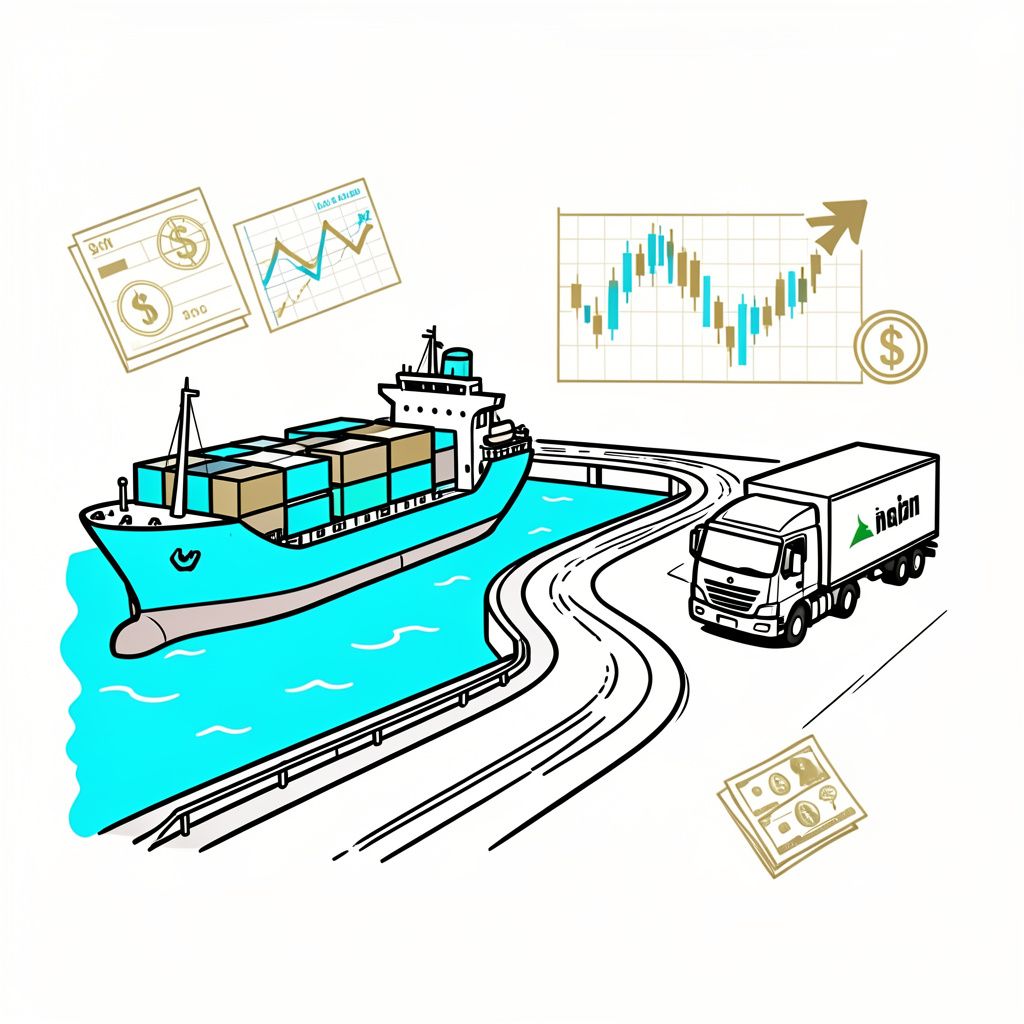
The new logistics model involves goods being unloaded at Aqaba and trucked approximately 760 km to Iraq, a route that was previously underutilized [1][3]. Transport operators serving the Aqaba-Iraq corridor reported an increase in orders from one or two per month to several orders each month due to the shift in supply chain reliance [3][5]. Moussa Abu Abdeh, a truck driver, noted the change in activity levels, stating that before the closure of the Strait of Hormuz, work was scarce, but now there are multiple transport orders available [1][3]. This land-bridge model has revitalized local transport sectors that had seen limited activity prior to the conflict escalation [3][5].
Strategic Future of the Aqaba Corridor
Stakeholders aim to establish the Aqaba-Iraq transit corridor as a permanent logistics route post-crisis, rather than retaining it as a temporary workaround for the Strait of Hormuz closure [1][3]. Mashhoor Al Jazy, spokesperson for the Jordan Shipping Association, emphasized the desire to prove that Aqaba’s location should strategically remain on this route after the crisis ends [1][3]. However, the long-term viability of the Aqaba route depends on future security conditions, as well as cost-competitiveness, reliability, and transit times compared to competing corridors [3][5]. Regional security remains volatile, with Iran having conducted repeated strikes against sites in Jordan, a U.S. ally, in retaliation for U.S. attacks [1][3].
Sources
- www.zawya.com
- www.tradingview.com
- www.logisticsmiddleeast.com
- x.com
- turkic.world
- www.marketscreener.com