Russia Plans Expansion of North Korean Forces to Bolster Military Capability
Kyiv, Sunday, 9 August 2026.
Ukrainian President Zelenskyy reported Russia intends to deploy up to 50,000 North Korean troops, enabling Pyongyang to gain modern warfare experience while deepening military cooperation between both nations.
Escalation of Troop Deployment
Ukrainian President Volodymyr Zelenskyy announced on 8 August 2026 that Russia plans to deploy between 30,000 and 50,000 North Korean soldiers on its territory [1][2]. This significant increase marks a shift from previous deployments which involved only hundreds or thousands of personnel [1]. The decision underscores a deepening military alliance between Moscow and Pyongyang, raising concerns about regional security dynamics and the potential for expanded conflict zones [2].
Contextual Background
This development follows earlier reports that North Korea had deployed a specialized missile unit to western Russia, sending personnel and up to 120 ballistic missiles [5]. Recent strikes near Kryvyi Rih have already confirmed the use of North Korean KN-23 ballistic missiles on Ukrainian territory [1]. The current mobilization effort appears to be a covert operation designed to avoid formal draft announcements within Russia [2].
Economic and Military Exchange
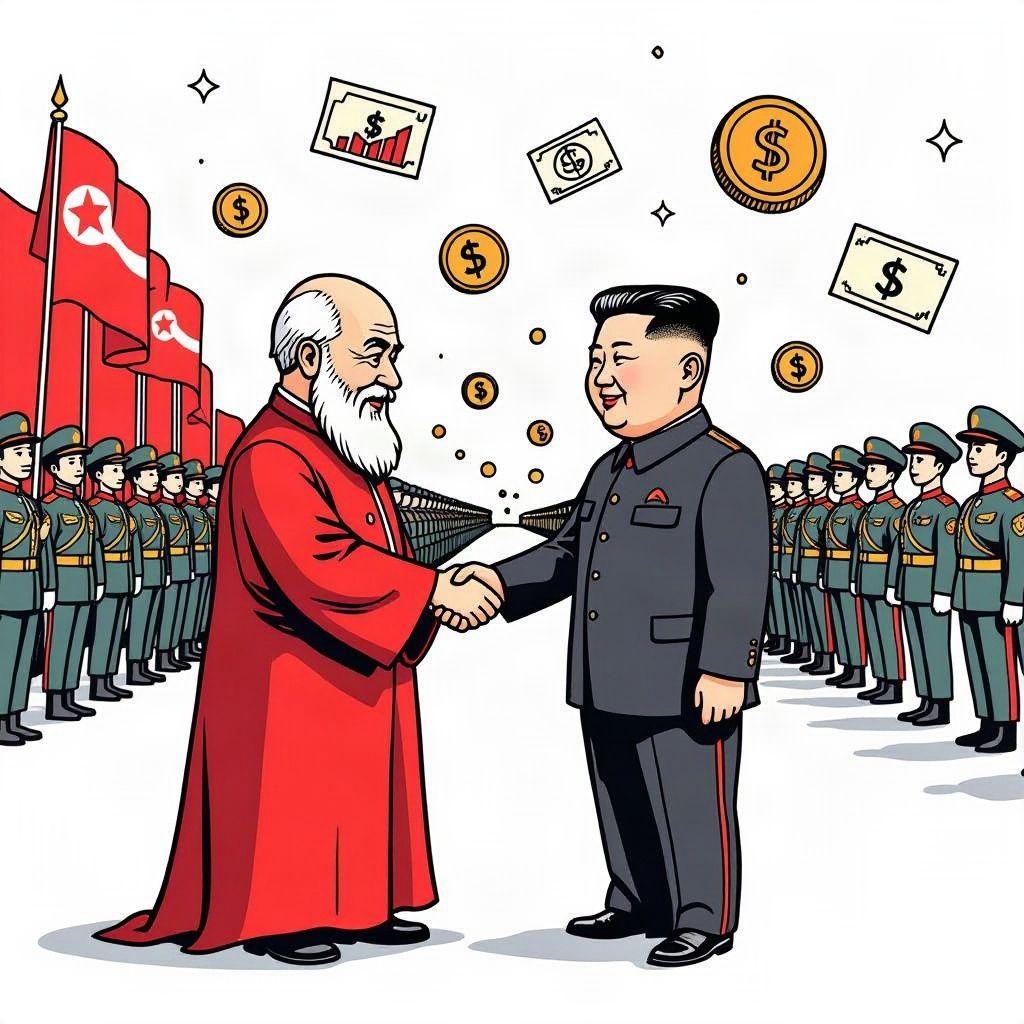
Financial incentives drive much of this cooperation, with North Korean leader Kim Jong-Un generating up to $22 billion in foreign revenue primarily through munitions and troop exports to Russia since 2022 [2]. Data indicates this revenue stream accumulated over the period from 2022 to 2025, averaging 5.5 billion annually [3]. By the end of 2025, Ukrainian intelligence estimated Pyongyang supplied up to 50% of Russia’s 122mm and 152mm artillery shell requirements [2].
Technology Transfer Risks
Beyond manpower, the agreement facilitates technology transfer, with North Korea set to receive licenses and military tools from Russia [2]. President Zelenskyy warned that North Korean forces are studying the war to gain experience in modern warfare, which could pose threats to other states in Asia [1]. This exchange includes access to advanced military capabilities that Pyongyang previously lacked [2].
Diplomatic Maneuvers
In response to these geopolitical shifts, President Zelenskyy visited Belgrade, Serbia, on 7 August 2026, to discuss humanitarian support and infrastructure projects [4]. Concurrently, Ukrainian diplomats are negotiating with South Korea for enhanced defense cooperation, specifically regarding air defense systems [2]. South Korea faces legal restrictions under its Constitution regarding direct military aid, but dialogue remains active [1].
International Sanctions
The European Union introduced new sanctions against five individuals linked to Russia’s defense-industrial complex in response to attacks on Ukrainian cities [3]. These measures aim to curb the flow of technology and resources facilitating the conflict [3]. Turkish authorities have also restricted commercial ship transit through the Dardanelles into the Black Sea amid rising tensions [2].
Strategic Implications
The deployment of up to 50,000 North Korean troops could destabilize regional security dynamics and heighten geopolitical risk for global defense markets [1]. If a North Korean missile unit is deployed in Russia to strike Ukraine, it will immediately become a legitimate military target for Ukrainian forces [1]. The situation remains fluid as both nations deepen their strategic partnership [2].
Conclusion
The integration of North Korean soldiers into Russian forces represents a significant escalation in the ongoing conflict, with implications extending beyond the immediate theater of war [2]. Observers note that Russia intends to integrate these soldiers into its forces while providing military tools in exchange [2]. The international community continues to monitor the situation for further developments in sanctions enforcement and defense cooperation [3].