Maritime Attack Near Key Shipping Channel Drives Up Global Oil Prices
Doha, Tuesday, 4 August 2026.
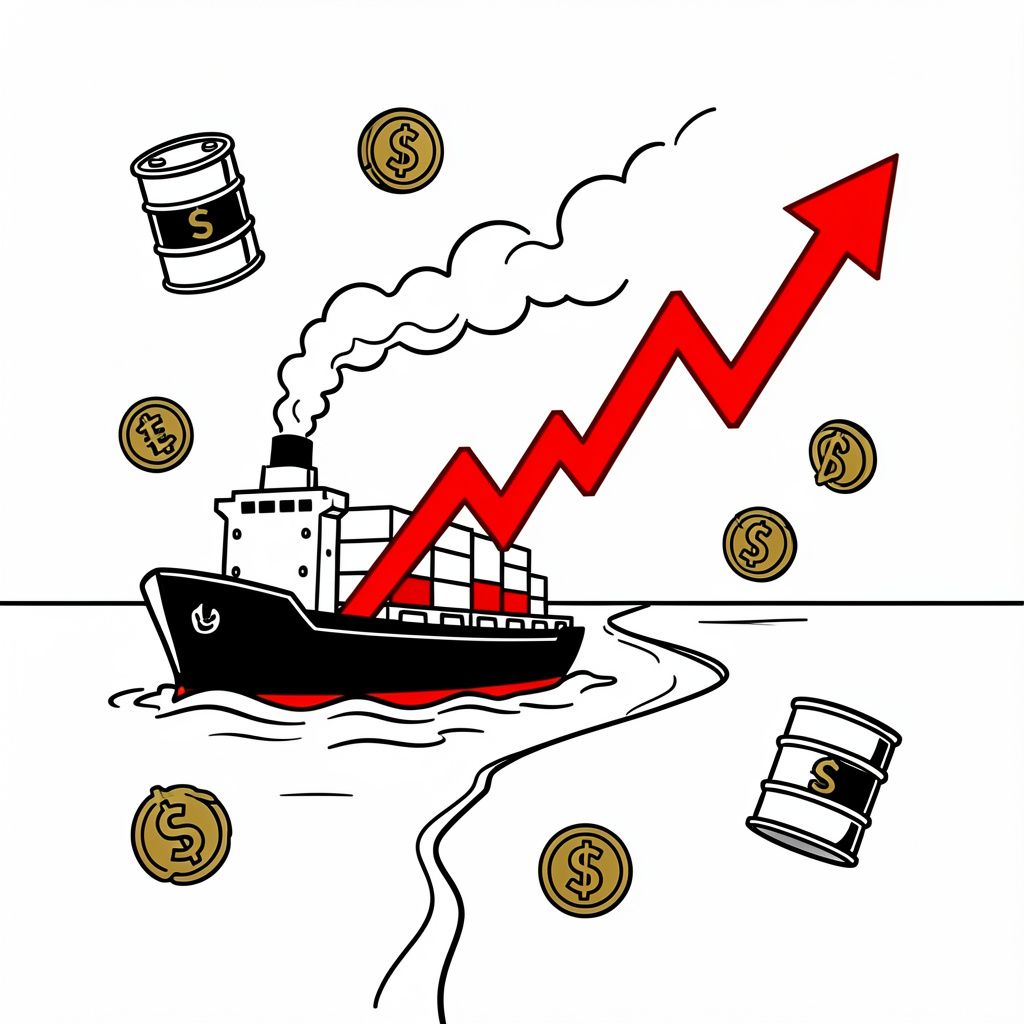
Global oil prices rose as a fresh attack on a cargo ship near the Strait of Hormuz cast severe doubt on reported diplomatic progress between the United States and Iran.
A Sudden Reversal in Global Energy Markets
Just a day after global energy markets experienced temporary relief, with crude oil prices dropping as U.S. officials signaled an imminent deal to reopen the critical shipping route [3], the geopolitical landscape has shifted dramatically. On Monday, August 3, 2026, Brent crude prices had fallen by more than 4% amid optimistic mediation reports from Qatari officials [1]. However, that brief market optimism was entirely erased on Tuesday, August 4, 2026, when Brent crude prices rebounded, rising by 2.7% [2] following a new maritime attack near the strategic Strait of Hormuz [1][2].
Geopolitical Skepticism and High Stakes
The sudden price hike reflects deep skepticism among traders regarding a swift diplomatic resolution to the ongoing conflict between the United States and Iran [1][2]. While U.S. Treasury Secretary Scott Bessent and President Donald Trump had optimistically projected that a deal to reopen the Strait of Hormuz could be finalized by August 4 or August 5, 2026 [1][2], a fresh assault on a commercial vessel has severely undermined those expectations [1]. The Strait of Hormuz remains a vital global artery, typically facilitating the transit of approximately 20% of the world’s oil and liquefied natural gas shipments [1].
Conflicting Diplomatic Signals and Denials
The escalating military tension is compounded by conflicting diplomatic narratives coming from Washington and Tehran. On Monday, August 3, 2026, President Trump claimed that active negotiations with Iran had commenced, describing the situation as a ‘last chance’ for a deal to completely reopen the strait [1][2]. However, Iranian officials immediately and flatly denied that any direct talks with the U.S. were taking place [1][2]. Iran’s Foreign Ministry spokesperson, Esmaeil Baghaei, clarified on Tuesday, August 4, 2026, that while Tehran is engaged in discussions with Oman to establish safe transit lanes, it is not negotiating with the United States [1][2].
Behind-the-Scenes Mediation Efforts
Despite Iran’s public pushback, international mediators from Qatar, Pakistan, and Oman have been actively working behind the scenes over the past two weeks to facilitate indirect communication [2]. Qatari Foreign Ministry spokesman Majed al-Ansari confirmed that mediators are coordinating closely, exchanging draft proposals between the two sides [2]. Yet, the disconnect between Washington’s public optimism and Tehran’s firm denials has left energy markets highly volatile, as corporate risk planners struggle to assess the true likelihood of a breakthrough [1][2].
Maritime Security and Truncated Shipping Volumes
The physical reality on the water remains highly perilous for civilian crews. On Monday, August 3, 2026, a dry bulk cargo vessel was struck by an unknown projectile off the coast of Oman near the Strait of Hormuz, forcing the crew to abandon the ship, with one seafarer reported missing [2]. This follows a series of hostile incidents, including the sinking of an Indian vessel near Yemeni waters on July 28, 2026, and heavy U.S. strikes against Iran earlier in the conflict [1]. These continuous threats have choked commercial shipping; MarineTraffic data revealed that only six vessels transited the Strait of Hormuz on August 3, 2026, compared to a peacetime average of approximately 100 ships per day [2], representing a traffic level of only 6% of normal volume.
An Uncertain Outlook for Global Supply Chains
This drastic reduction in transit volume highlights the severe bottleneck facing global energy supply chains [2]. While U.S. Secretary of State Marco Rubio noted that progress has been made in talks, he emphasized that finality has not yet been reached [1]. With Iran’s Foreign Ministry stating it has no plans to host foreign delegations or send negotiators abroad in the near future [2], the shipping industry remains caught in a high-stakes waiting game, balancing the hope of a diplomatic breakthrough against the immediate threat of military escalation [1][2].