US Military Aircraft Losses Near $3.3 Billion in Ongoing Middle East Conflict
Washington, Thursday, 8 October 2026.
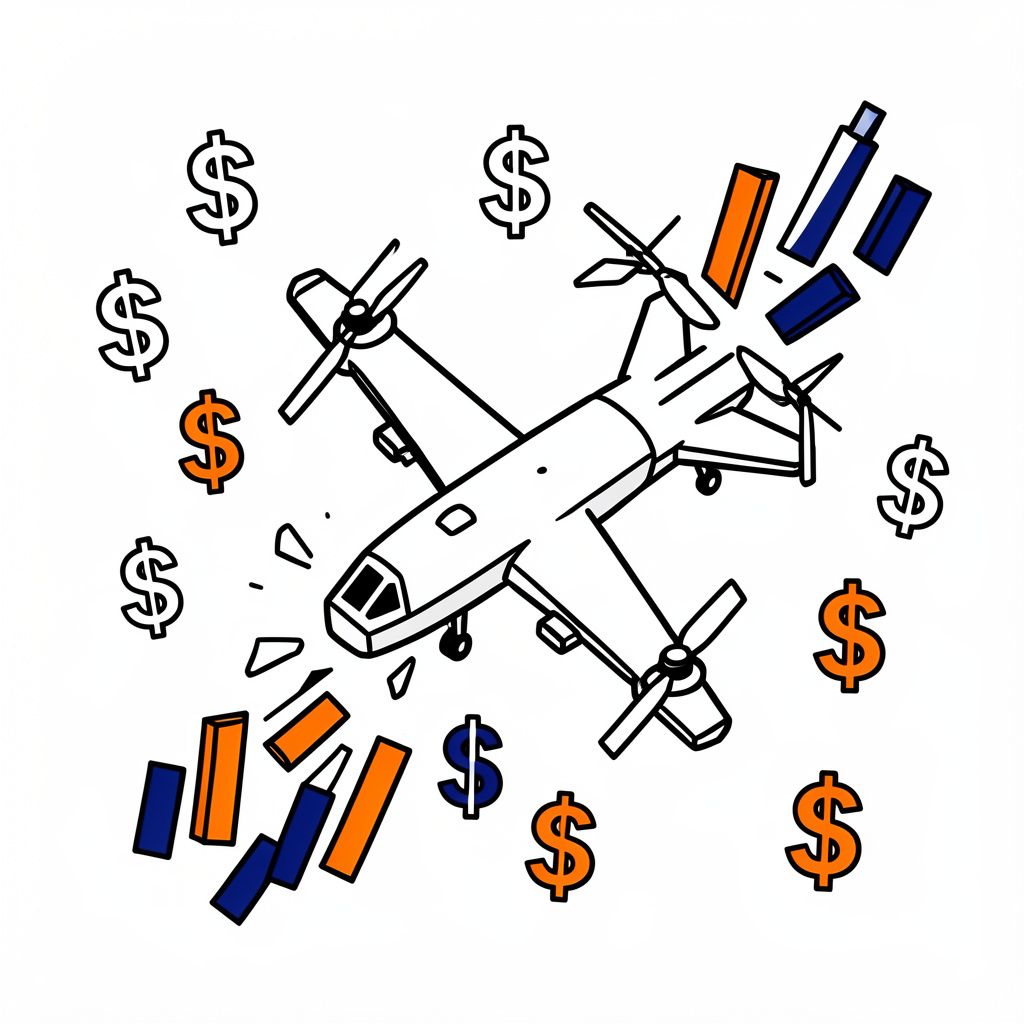
A new congressional report reveals 81 U.S. aircraft have been destroyed or damaged in the conflict with Iran, driven primarily by the loss of 45 high-value MQ-9 Reaper drones.
Escalating Hardware Losses
Building on previous geopolitical tensions where California leaders condemned federal war rhetoric impacting major economic cities [8], the scope of military degradation has become quantifiable. A Congressional Research Service (CRS) report released between October 4 and October 7, 2026, confirms that 81 United States aircraft have been destroyed or damaged during the conflict with Iran [1][2]. This figure represents a significant increase from the 42 aircraft counted in a report released six months ago, marking a 92.857 percent rise in documented asset degradation [1][2]. The operation, designated Operation Epic Fury, commenced on February 28, 2026, and has since strained military inventories [2][6]. MQ-9 Reaper drones account for more than 50% of total losses, with 45 units lost in the Middle East in 2026 alone [1][3].
Financial and Strategic Impact
The financial implications of these losses are substantial, with the Congressional Budget Office estimating replacement costs for lost aircraft between $1.9 billion and $3.3 billion [1][6]. Total war costs are estimated at a minimum of $45 billion as of September 18, 2026, excluding infrastructure damage, though Central Command estimated the price tag at $43.6 billion in mid-September [1][3]. This expenditure reflects a sharp increase from the $38 billion estimated through August 1, 2026 [2][8]. For defense contractors and macroeconomic strategists, these compounding hardware losses signal potential shifts in future defense spending priorities and supplemental funding requests from Capitol Hill [1]. The report identifies specific challenges for Congress, including funding requirements for repairs or replacements and industrial capacity constraints [1].
Human and Operational Cost
Beyond equipment, the conflict has incurred a human toll, with at least 18 U.S. service members dying since the war began [6]. The deadliest single incident occurred on March 12, 2026, involving a KC-135 Stratotanker crash in western Iraq that killed all six crew members [2][3]. Additionally, an MH-60S Sea Hawk from the USS George H.W. Bush went down in the Arabian Sea on July 1, 2026, resulting in the death of Cmdr. Gabriel Edwards after search operations were suspended [2][3]. Specific combat losses include one F-35A fighter jet damaged by Iranian ground fire over Iran on March 19, 2026, and three F-15E Strike Eagles destroyed in a friendly fire incident over Kuwait in March 2026 [2][8]. The CRS notes that the tally could continue to change because of classification, ongoing combat operations, and questions of attribution [6].
Strategic Outlook
Congress may assess whether losses in certain high-demand platforms that are aging and limited in number, such as the E-3 Sentry, create capability gaps or increase risk in other theaters [1]. A Pentagon inspector general report released in September 2026 warned of strategic inventory shortfalls after revealing the U.S. had expended an estimated $22.3 billion on munitions through June 2026 [6]. As of October 5, 2026, the updated count includes losses from an Iranian strike on a base in Jordan in September 2026 and increased Reaper drone losses [2]. The CRS report highlights that some damaged aircraft may have been returned to active service, but the data may remain subject to revision [2][6]. This evolving situation requires continuous monitoring of defense appropriations and supply chain resilience.
Sources
- www.cnn.com
- www.militarytimes.com
- thehill.com
- www.facebook.com
- www.aa.com.tr
- www.foxnews.com
- nypost.com
- wsnext.com