US Navy Commits Five Billion Dollars to Refuel Nuclear Aircraft Carrier
Washington, Sunday, 4 October 2026.
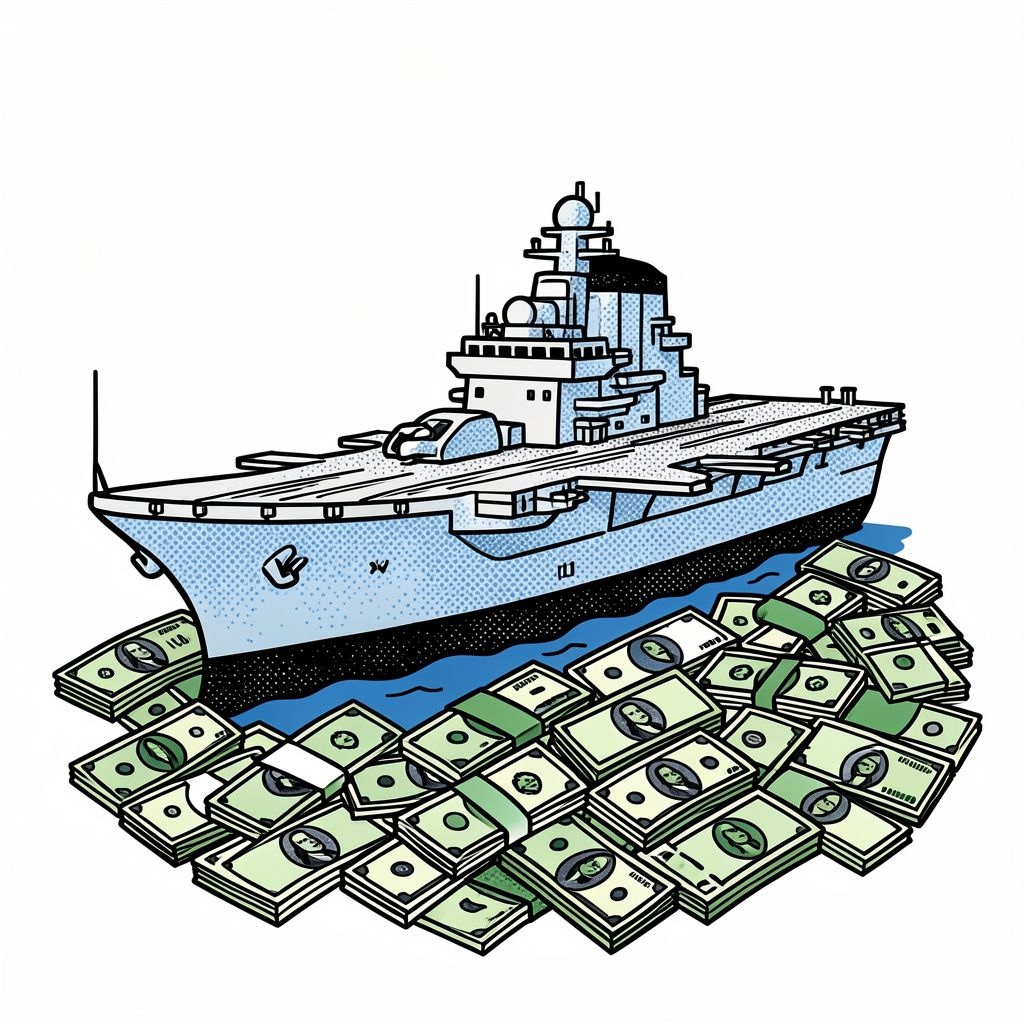
The US Navy has allocated 5.1 billion dollars to overhaul the USS Harry S. Truman, temporarily removing the warship from active service until 2031 to extend its operational lifespan.
Contract Award and Overhaul Initiation
The U.S. Navy has officially committed $5.1 billion to execute the refueling and complex overhaul (RCOH) of the USS Harry S. Truman, marking a significant capital expenditure within the defense industrial base [1][4]. The vessel departed Naval Station Norfolk on September 30, 2026, arriving at Huntington Ingalls Industries’ Newport News Shipbuilding to commence the multi-year maintenance procedure [2][5]. This Fixed Ceiling Incentive contract awards the project to the only facility capable of performing such complex overhauls for U.S. aircraft carriers [3][6]. The process involves refueling two nuclear reactors and upgrading propulsion, electronics, and combat systems to extend the vessel’s service life by 25 years [1][5].
Industrial and Economic Implications
This project represents the first RCOH under the Portfolio Acquisition Executive Maritime (PAE Maritime), a Department of the Navy office established in March 2026 to consolidate accountability for surface ships and aircraft carriers [1]. The overhaul accounts for approximately 35% of the ship’s total maintenance and modernization costs over its lifespan, highlighting the substantial recurring investment required to sustain nuclear-powered assets [1][5]. When analyzed against the service life extension, the cost equates to 0.204 billion per year of extended operational capability [4][5]. Newport News Shipbuilding has undertaken proactive measures, including ordering long lead-time materials and conducting thousands of inspections, to mitigate previous delays seen in the industrial base [1][6].
Fleet Readiness and Strategic Context
The temporary removal of the USS Harry S. Truman from active deployment reduces the number of available nuclear-powered aircraft carriers to six out of the Navy’s total fleet of 11 [3][5]. This reduction occurs during a period of active conflict with Iran, placing additional strain on the remaining deployable carriers [3]. The USS Harry S. Truman is the eighth of 10 Nimitz-class carriers to undergo this mid-life overhaul, following a deployment characterized as significantly stressful by Navy investigations [3][6]. Previous overhaul delays caused by supply chain constraints and labor shortages have impacted fleet readiness, with the USS John C. Stennis completing its overhaul 14 months behind schedule [3][5].
Timeline and Future Operations
The RCOH process is projected to take a minimum of three to four years, with completion scheduled for November 2031 [1][5]. Upon return, the warship will be the most technologically advanced Nimitz-class aircraft carrier, ready for the second half of its planned 50-year service life [5][6]. In the interim, the USS John F. Kennedy is expected to be delivered to the Navy in March 2027, partially offsetting the reduction in carrier availability [3][5]. The original Nimitz-class carrier, USS Nimitz, is scheduled for retirement upon the Kennedy’s commissioning, marking a transition period for the carrier strike group structure [5].
Sources
- www.forbes.com
- www.navy.mil
- www.19fortyfive.com
- www.washingtonexaminer.com
- www.stripes.com
- www.pilotonline.com