Trump Administration Moves Foreign Aid Money to Research White Minority Crime in South Africa
Washington, Friday, 7 August 2026.
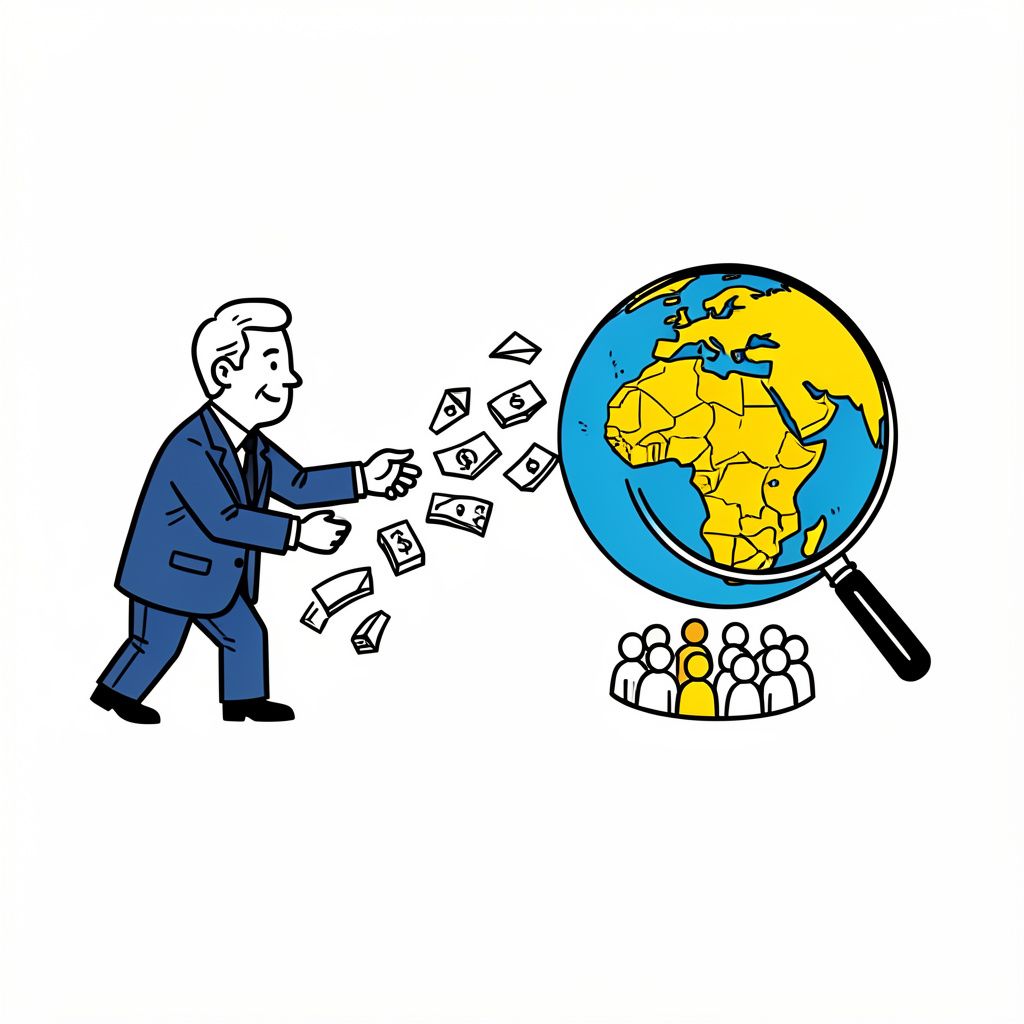
The U.S. State Department is redirecting federal foreign aid toward niche initiatives, including research on South Africa’s white minority, shifting traditional spending priorities away from broader humanitarian programs.
A Strategic Realignment of Executive Power
Since taking office in January 2025, the Republican administration under President Donald Trump has actively worked to redirect billions of dollars in congressionally mandated foreign assistance funds [1]. Rather than utilizing these resources for traditional, long-standing humanitarian and pro-democracy programs, the administration has routed funding toward specialized, right-wing initiatives [1]. This systemic shift is being managed by the State Department’s Bureau of Democracy, Human Rights and Labor (DRL) [1]. The policy represents an ongoing administrative effort to bypass traditional foreign aid paradigms, which has raised significant questions regarding congressional appropriations and the executive branch’s authority to alter spending mandates [1][GPT].
Targeted Funding for South African Research
Under this new spending strategy, the DRL has proposed a specific $1 million grant designed to fund research on crime against minority populations in South Africa, focusing primarily on the white Afrikaner ethnic group [1]. This proposal is part of a broader, ongoing narrative; between February 2025 and August 2026, the Trump administration has repeatedly connected allegations of a white South African ‘genocide’ to tangible policy adjustments [1]. These actions have included reducing HIV-related funding for the broader South African region and fast-tracking white South African refugees into the United States [1]. While the administration presents these moves as targeted human rights advocacy, critics argue they represent a dramatic departure from equitable aid distribution [1].
Bidding Procedures and Organizational Ties
The administrative mechanics behind these grants have drawn intense scrutiny from federal oversight advocates [GPT]. Initially, DRL staff received directives to initiate funding directly for Lex Libertas, an organization founded by Ernst Roets that advocates for Afrikaner self-governance and is actively fundraising to place 3,000 white crosses on the National Mall [1]. Although the State Department later expanded the $1 million grant process to allow a wider pool of invited applicants to compete, the core focus on Afrikaner victimization remains unchanged [1]. As of August 6, 2026, State Department officials have declined to confirm whether Lex Libertas is among the invited competitors, citing ongoing deliberations [1]. Critics allege that federal competitive bidding guidelines are being skirted to favor pre-selected groups, a claim the State Department has countered by stating that all programs remain under active deliberation and must meet federal grant standards [1].
Global Expansion of Civilizational Grants
The proposed South African initiative is not an isolated event but part of a wider international strategy [1]. State Department officials are also evaluating a separate $5 million grant for a British free-speech organization that opposes hate speech legislation and supports individuals facing ‘deplatforming’ [1]. Combined with the South African initiative, these two proposed grants alone represent a total of 6 million in specialized funding [1]. Furthermore, a separate DRL call for proposals seeks to fund projects that promote ‘civilizational self-confidence in Europe’ [1]. These efforts follow previous, controversial proposals—such as funding a British group opposing bans on gay conversion therapy—which demonstrate the administration’s broader intent to reshape international aid around cultural and ideological themes [1].