How a Single Canadian Canal Controls Billions in American Trade
St. Catharines, Sunday, 30 August 2026.
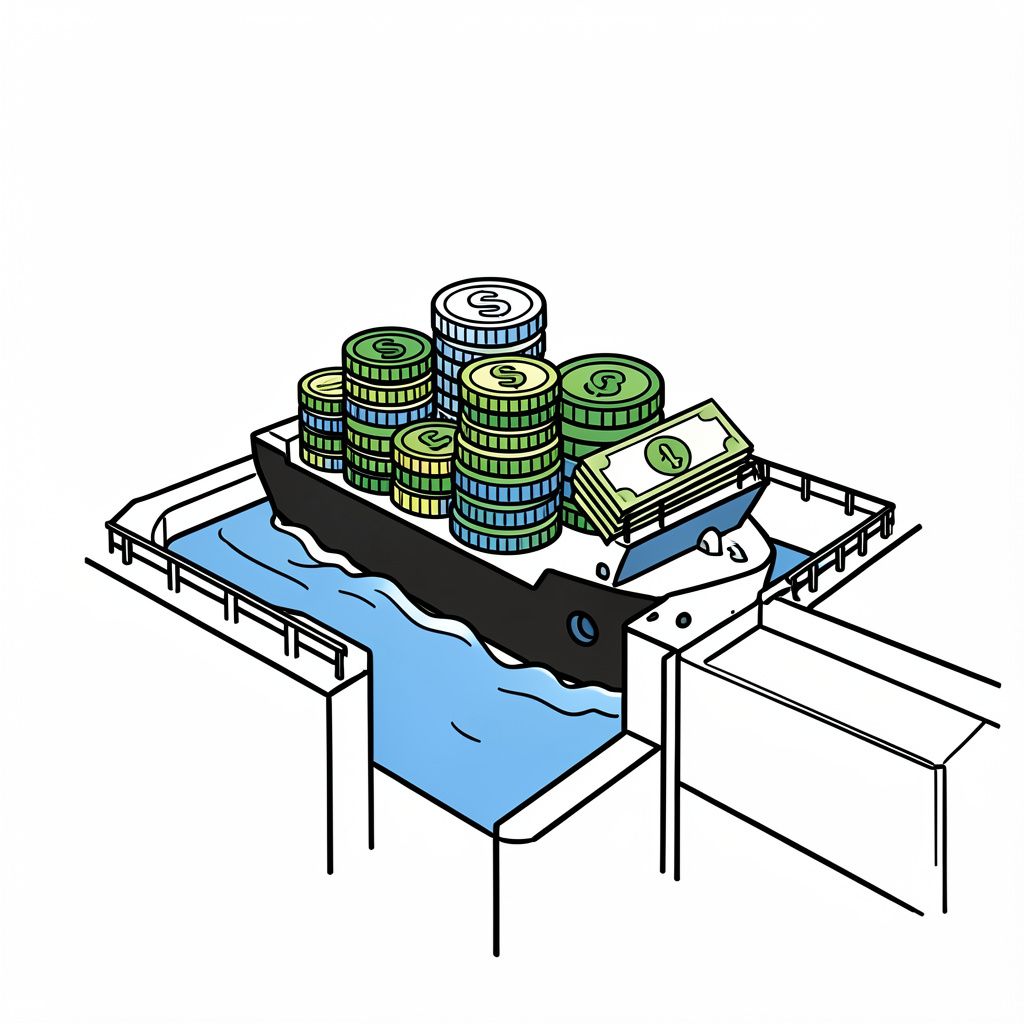
Canada’s 43.5-kilometer Welland Canal serves as a vital shipping bottleneck, carrying $26.3 billion in American trade and highlighting the vulnerability of Great Lakes supply chains.
Infrastructure Specifications and Geographic Context
As of August 2026, the Welland Canal remains a critical 43.5-kilometer waterway located entirely within Ontario, Canada [1][2]. Recent social media analysis circulating on August 28, 2026, highlights that the canal utilizes a system of eight locks to manage an elevation change of approximately 99.4 meters (326 feet) between Lake Erie and Lake Ontario [1][2]. This infrastructure allows commercial vessels to bypass Niagara Falls, serving as the only route for ocean-going ships to access the upper Great Lakes from the Atlantic Ocean [2][4]. Transit through the entire canal system typically requires between eight to 12 hours, depending on traffic conditions and lock operations [1].
Economic Stakes and Trade Dependency
The economic implications of this waterway are substantial, with recent commentary noting that roughly $26.3 billion USD in American trade relies on this passage [3][4]. Cargo ships regularly transport bulk commodities including grain, iron ore, steel, and coal through the canal on their way between American and Canadian ports [1]. This trade volume underscores the dependency of the industrial heartland of the United States and Canada on this single Canadian-controlled choke point [1][3]. Disruptions here could impact manufacturing and agriculture sectors across North America, supporting thousands of jobs on both sides of the border [1].
Strategic Vulnerabilities and Treaty Obligations
The canal operates as part of the binational St. Lawrence Seaway system, governed by treaties that guarantee transit for both countries [2]. Legal analysis shared on August 28, 2026, suggests that a blanket ban on U.S.-destined ships would breach these treaties and invite immediate retaliation at other choke points like the Soo Locks [2]. Despite these protections, the fact that the waterway is under exclusive Canadian jurisdiction presents a strategic vulnerability for U.S. supply chains [4]. Business leaders warn that infrastructure disruptions or transit bottlenecks along this route could significantly impact supply chains across North America in the current economic climate [1][3].