Expanding AI Data Centers Threaten Endangered Wildlife Across Several States
Washington, Friday, 31 July 2026.
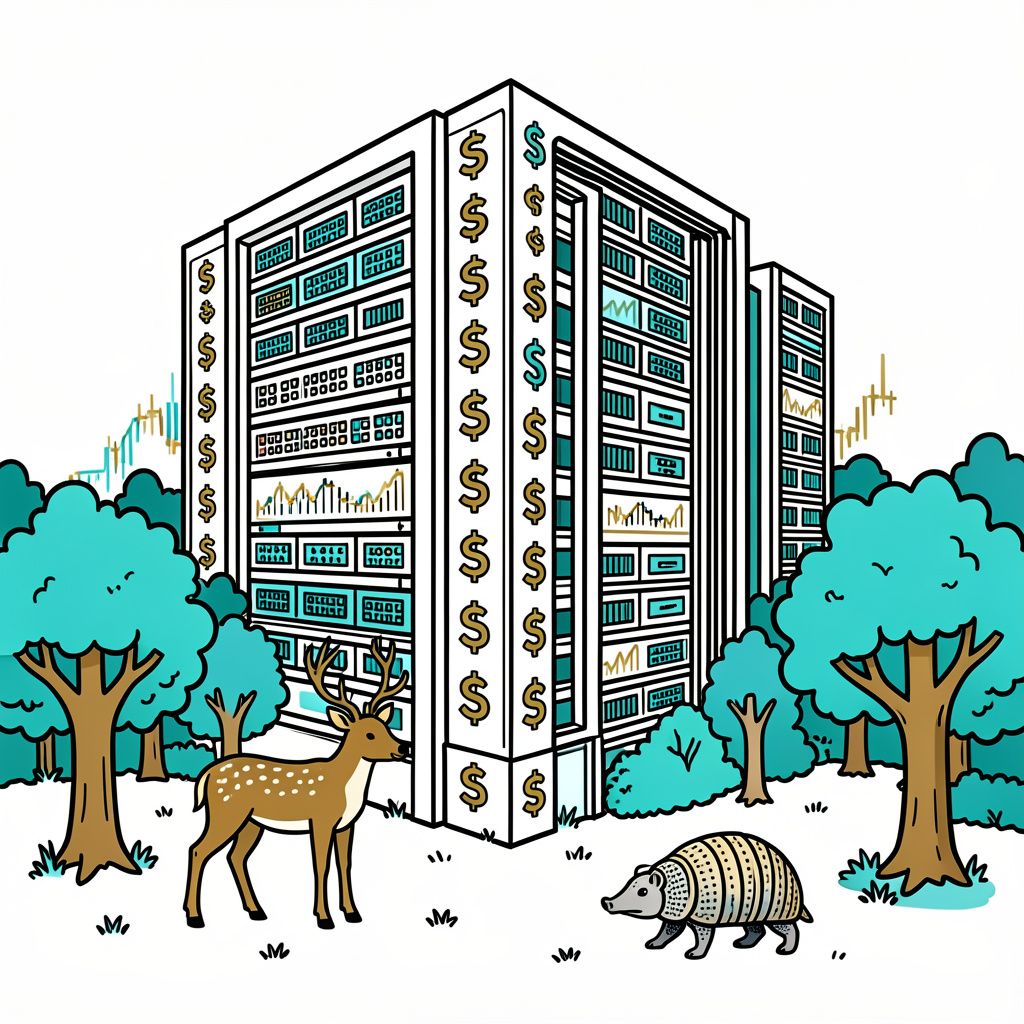
Rapid artificial intelligence growth is creating massive land and water demands, with data center expansion overlapping directly with endangered species habitats in key states like Virginia and Texas.
Environmental Overlap and Regulatory Risks
The rapid expansion of artificial intelligence infrastructure is creating significant spatial conflicts with protected wildlife habitats across the United States. A new environmental pressure index released by Outforia highlights that data center developments in Virginia, Texas, and Georgia increasingly overlap with endangered species habitats [1]. Virginia ranks first on the index with a score of 100, hosting 283 data center projects that intersect with 79 federally listed endangered species [1]. Georgia follows with a score of 65.46, where 134 existing projects and 128 planned facilities overlap with 77 endangered species [1]. Texas ranks fourth, with 202 projects overlapping 120 endangered species, indicating a widespread pattern of environmental pressure [1]. These facilities threaten habitats through habitat fragmentation from land clearing, water depletion from evaporative cooling, and PM2.5 air pollution from supporting power infrastructure [1]. Researchers at the University of Illinois have identified critical gaps in Virginia’s permitting process regarding the water impact of cooling technologies for facilities with similar IT loads [1].
State and Federal Regulatory Responses
Regulatory bodies are beginning to intervene as environmental concerns mount. New York became the first state to implement a one-year moratorium on new hyperscale data center permits to allow regulators to develop updated environmental and energy standards [1]. This pause was enacted via executive order by Governor Kathy Hochul in July 2025 [2]. At the federal level, the Federal Energy Regulatory Commission (FERC) issued six show cause orders to major grid operators on June 18, 2026, mandating reforms in transmission cost transparency and co-location agreements [2]. Furthermore, the Bipartisan Policy Center engaged over 150 participants between February 2026 and June 2026 to establish guidelines for responsible data center development [2]. Their report identifies five key considerations, including transparency, power and water utilization, and land use impacts, to ensure strong public support [2]. As of June 29, 2026, 54 data center development moratoria have been enacted across the U.S., including specific pauses in Manitowoc, Wisconsin, and Denver, Colorado [2].
Grid Strain and Economic Consequences
The economic implications of this infrastructure boom are substantial, particularly regarding energy costs and grid reliability. PJM wholesale power prices surged from $77.78 per MWh in Q1 2025 to $136.53 per MWh in Q1 2026, a increase calculated as 75.534 [2]. An independent market monitor analysis attributed $23.1 billion in total costs borne by PJM customers over the last three capacity auctions to the development of existing and forecasted data centers [2]. In January 2026, a bipartisan group of governors from 13 states pressured grid operator PJM to ensure data centers bear their own electricity generation costs [2]. The White House coordinated a Ratepayer Protection Pledge in March 2026, which expanded by July 2026 to include over 200 signatories aiming to ensure developers pay their share of infrastructure costs [2]. Despite these measures, there is a risk of stranded assets if AI-driven energy demand plateaus, potentially leaving ratepayers liable for oversized grid infrastructure [2].
Public Opposition and Future Outlook
Public sentiment is increasingly turning against local data center development due to environmental and economic concerns. Gallup polling in 2026 indicates that 71% of Americans oppose AI data centers in their local area, with 48% strongly opposed [3]. This opposition exceeds the 53% opposition rate for nuclear power plants, with respondents citing water, energy, land use, noise, and air pollution as primary drivers [3]. The Stop Data Centers Coalition now includes over 500 organizations across 47 U.S. states, reflecting a broad-based movement [3]. Globally, resistance is also mounting, with successful campaigns halting projects in locations such as Zeewolde, Netherlands, and New Brunswick, New Jersey [3]. As FERC requires grid operators to file proposals by October 15, 2026, to address cost allocation and transmission services, the intersection of regulatory oversight and public pressure will likely define the next phase of AI infrastructure growth [2].