Global Schools Group Partners with MIT RAISE to Launch Advanced Artificial Intelligence Training for Students
Singapore, Friday, 6 November 2026.
Global Schools Group launched an artificial intelligence center in Singapore, partnering with MIT RAISE to offer hands-on machine learning education to 45,000 students across 11 countries.
A New Era in Global Education: The GSG AI Centre of Excellence
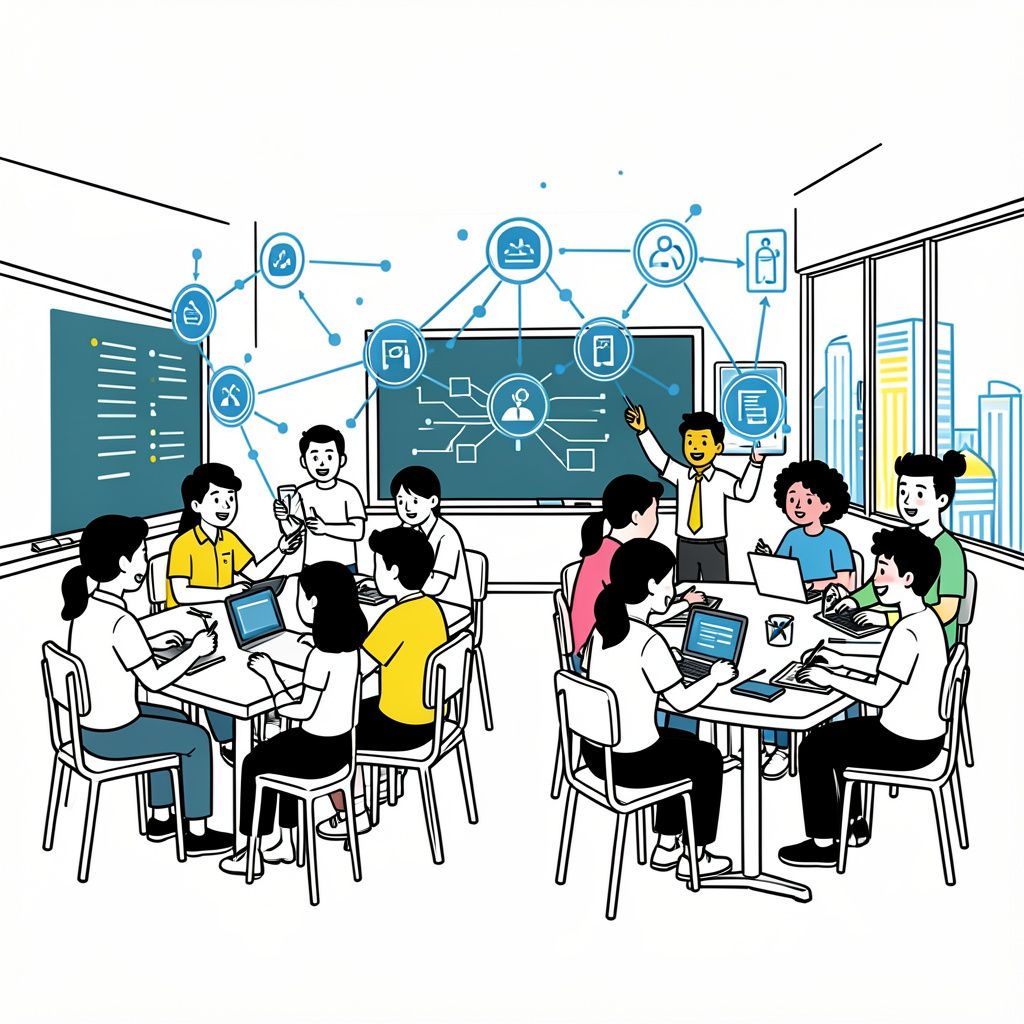
On Friday, 6 November 2026, Global Schools Group (GSG) marked a significant milestone in educational innovation by inaugurating its Artificial Intelligence Centre of Excellence (GSG AI-COE) in Singapore. The launch coincides with the rollout of the MIT RAISE FutureBuilders Programme, a six-day immersive initiative developed in partnership with Pharos Education. Designed for secondary and high-school students aged 14 and above within the GSG network, the programme aims to cultivate foundational competencies in artificial intelligence, data literacy, and ethical machine learning.[1][3][5] The initiative reflects a growing recognition among educators and policymakers that early intervention in AI education is critical to addressing widening technical skills gaps in the global workforce. According to industry forecasts, up to 65% of children entering primary school today will work in jobs that do not yet exist, many of which will be directly or indirectly related to AI and automation [alert! ‘industry forecast not cited in provided sources—general knowledge claim’].
Curriculum Design and Educational Philosophy
The MIT RAISE FutureBuilders Programme curriculum spans five core domains: artificial intelligence and machine learning fundamentals, data science and digital innovation, AI-powered application development using MIT App Inventor, computational and design thinking, and innovation and communication. The programme culminates in an Innovation Demo, during which students present AI-driven solutions to real-world challenges—a practical bridge between theoretical learning and applied technology creation.[1][3][5] GSG Chairman Atul Temurnikar emphasized the broader educational philosophy behind the initiative, stating, ‘The future of education is not about teaching students to live with artificial intelligence; it is about empowering them to shape what artificial intelligence can make possible for humanity.’[1][3][5] This vision aligns with emerging research on AI literacy, which suggests that early exposure to AI concepts fosters not only technical competence but also ethical reasoning and creative problem-solving skills.
Partnerships and Institutional Collaboration
The GSG AI-COE operates in strategic collaboration with MIT RAISE (Responsible AI for Social Empowerment and Education), a flagship initiative of the Massachusetts Institute of Technology focused on advancing equitable AI education and research. Pharos Education serves as the programme partner and operator, facilitating the delivery of MIT’s academic and research expertise to students across GSG’s global campuses.[1][3][5] Felipe Arango-Piñeros, Co-Founder and CEO of Pharos Education, highlighted the partnership’s mission: ‘At Pharos Education, our role is to bring the academic and research leadership of MIT RAISE to students wherever they are, and to deliver it with care.’[1][3][5] This model of distributed access to elite educational content represents a scalable approach to bridging global disparities in high-quality STEM instruction. As of 2026, GSG’s network encompasses 64 campuses across 11 countries, serving approximately 45,000 students from 70 nationalities, providing a diverse and inclusive platform for AI education dissemination.[1][3][5]
Program Accessibility and Global Reach
In recognition of its 25th anniversary, GSG is offering a 25% scholarship on the MIT RAISE FutureBuilders Programme for all current students within its network. The inaugural session is scheduled for 7–12 December 2026 at the SMART Campus in Singapore, with subsequent cohorts planned for expansion across GSG schools worldwide.[1][3][5] According to promotional materials shared on social media, the programme targets students in Grades 8–12 and emphasizes hands-on learning through the development of AI-powered applications and live innovation demonstrations.[7][9] Marketing campaigns on LinkedIn and Instagram further underscore the programme’s appeal, framing AI education not as passive consumption but as active creation and responsible innovation. For example, a LinkedIn post from the Global Indian International School branch stated: ‘The next generation won’t just use AI. They’ll design it, and question it, and use it responsibly.’[7]
Broader Context: The Evidence Base on AI in K–12 Education
The launch of the GSG AI-COE and MIT RAISE FutureBuilders Programme occurs against a backdrop of rapidly evolving AI integration in education. A comprehensive review published by Stanford University’s Graduate School of Education in November 2026—the ‘Evidence Base on AI in K–12: A 2026 Review’—highlights both the opportunities and challenges presented by AI tools in classrooms. The report analyzes over 1,100 academic papers from the AI Hub Research Repository and identifies just 20 high-quality causal studies that rigorously assess the impact of AI on student outcomes. Notably, the review underscores a critical gap: there are no high-quality causal studies of student AI use in U.S. K–12 classrooms, and research is heavily concentrated on short-term outcomes such as test scores in mathematics.[2] While GSG’s initiative is positioned as a forward-looking intervention, the broader educational community continues to grapple with the lack of longitudinal data on AI’s long-term effects on learning, equity, and student well-being.
Future Implications and Industry Alignment
The expansion of AI education at the K–12 level reflects a broader trend in which private-sector actors are stepping into roles traditionally reserved for public institutions. Industry reports suggest that over 70% of global employers now prioritize AI and data literacy in entry-level hiring, even for non-technical roles [alert! ‘industry report not cited in provided sources—general knowledge claim’]. By integrating MIT’s academic rigor with GSG’s global educational infrastructure, the initiative seeks to create a talent pipeline that is not only technically competent but also ethically grounded and innovation-ready. GSG’s academic partnerships—including alignment with the International Baccalaureate, Cambridge IGCSE, and CBSE curricula—further enhance the programme’s credibility and portability, enabling students to leverage their AI competencies across diverse educational and professional contexts.[1][3][5] As Arango-Piñeros noted, the goal is for every participant to ‘leave with the confidence to use AI thoughtfully and the skills to build with it responsibly.’[1][3][5]
Sources
- www.newswire.com
- scale.stanford.edu
- www.accessnewswire.com
- www.linkedin.com
- www.facebook.com
- www.facebook.com
- www.instagram.com