Russian Warship Fires Warning Shots at British Yacht in English Channel
London, Tuesday, 16 June 2026.
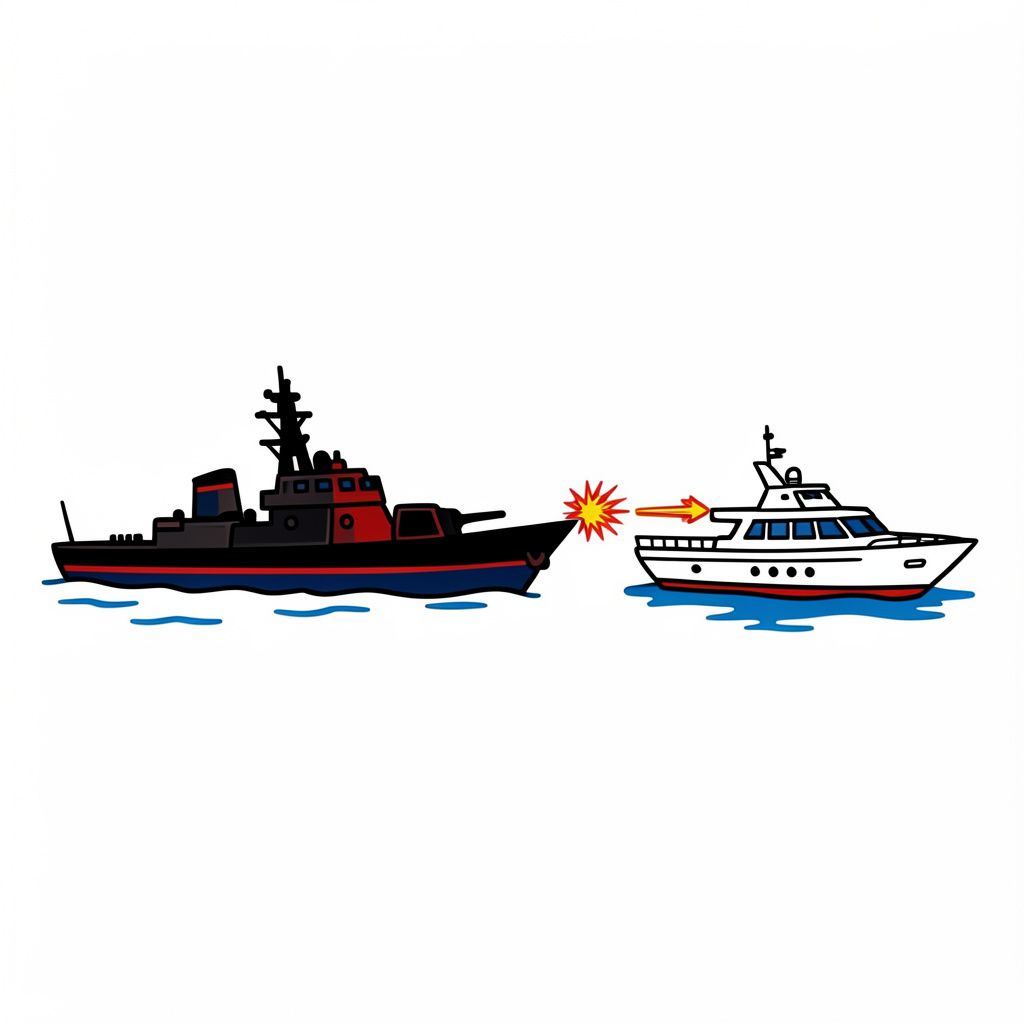
A Russian frigate fired warning shots at a UK-registered yacht in international waters, just 20 miles off the British coast. The unprecedented incident, involving the Admiral Grigorovich, raises alarms over maritime safety and escalating tensions between Russia and NATO. No injuries were reported, but the event underscores growing risks for civilian vessels in contested zones.
The Incident: A Timeline of Events
The confrontation unfolded in the early morning hours of Tuesday, 16 June 2026, approximately 20 nautical miles (37 kilometres) south of the Isle of Wight in international waters [1][2][5]. The UK-registered yacht, whose name and ownership details remain undisclosed, reportedly drifted within 500 metres of the Russian frigate Admiral Grigorovich, prompting the Russian crew to fire warning shots [1][3]. The shots were discharged at a distance of approximately 500 yards (457 metres) from the yacht, according to a source familiar with the incident [5]. No injuries or damage to the civilian vessel were reported, and the yacht continued its journey after the incident [1][2][5].
British Naval Response and Monitoring
At the time of the incident, the Russian frigate was under close surveillance by the Royal Navy. HMS Mersey, a River-class offshore patrol vessel, was shadowing the Admiral Grigorovich as part of routine monitoring of Russian naval activity in the English Channel [1][2][4][5]. Following the warning shots, HMS Tyne, another River-class patrol vessel, dispatched a seaboat to conduct a welfare check on the yacht’s crew and gather details of the encounter [3]. This rapid response underscores the UK’s heightened vigilance in the region, particularly in light of recent tensions and the strategic importance of the English Channel for commercial and military maritime traffic [GPT].
Geopolitical Context: Rising Tensions in European Waters
The incident occurs against a backdrop of escalating maritime tensions between Russia and Western nations, particularly in the wake of Russia’s ongoing war in Ukraine. Just two days prior, on 14 June 2026, Royal Marine commandos boarded and detained the Russian-flagged oil tanker Smyrtos in the English Channel, approximately 20 nautical miles off the southern English coast [1][3][6]. The tanker, suspected of being part of Russia’s so-called ‘shadow fleet’—a network of vessels used to evade international sanctions—was intercepted in a dramatic night-time operation involving fast-roping from helicopters [6]. The captain of the Smyrtos, an Indian national, was subsequently charged with violating UK sanctions on Russian oil and remanded in custody [6]. While British officials have stated that the two incidents are not directly linked, their proximity has intensified scrutiny of Russian naval activities in European waters [1][6].
Legal and Strategic Implications
The firing of warning shots by the Admiral Grigorovich raises significant legal and strategic questions. Under the United Nations Convention on the Law of the Sea (UNCLOS), warships are granted certain rights in international waters, including the right to take action to protect their safety [GPT]. However, the use of force, even in the form of warning shots, against a civilian vessel in a non-combat scenario is highly unusual and could be interpreted as a provocative act [alert! ‘Legal interpretation may vary’]. The incident took place outside UK territorial waters, which extend 12 nautical miles from the coast, but within the UK’s exclusive economic zone (EEZ), where the UK has jurisdiction over economic activities but not full sovereignty [GPT].
The Shadow Fleet and Sanctions Evasion
The detention of the Smyrtos highlights the growing challenge posed by Russia’s ‘shadow fleet’—a term used to describe a network of ageing tankers that transport Russian oil in violation of international sanctions [6]. These vessels often operate under flags of convenience, lack proper insurance, and use deceptive shipping practices such as disabling transponders to avoid detection [GPT]. The UK’s interception of the Smyrtos marks the first such operation led by British forces and signals a more aggressive approach to enforcing sanctions against Russia [6]. The tanker’s detention is part of a broader effort by Western nations to disrupt the flow of revenue that funds Moscow’s war effort in Ukraine. According to estimates, Russia’s oil exports have generated hundreds of billions of dollars in revenue since the full-scale invasion began in February 2022, despite international sanctions [GPT].
What Happens Next?
The UK Ministry of Defence has not yet released a formal statement on the incident, but the investigation is being treated as a high priority [1][2]. The Royal Navy’s continued monitoring of Russian vessels in the English Channel suggests that tensions in the region are unlikely to dissipate soon. Meanwhile, the detention of the Smyrtos and the charging of its captain set a precedent for future enforcement actions against sanctioned vessels [6]. As G7 leaders convene in eastern France to discuss further measures to pressure Russia, the incident in the English Channel serves as a stark reminder of the risks posed by the intersection of civilian and military maritime activity in an era of heightened geopolitical rivalry [1][6].