EU Slashes Hidden Fees: Free Seating for Families and Faster Refunds in 2026
Brussels, Tuesday, 16 June 2026.
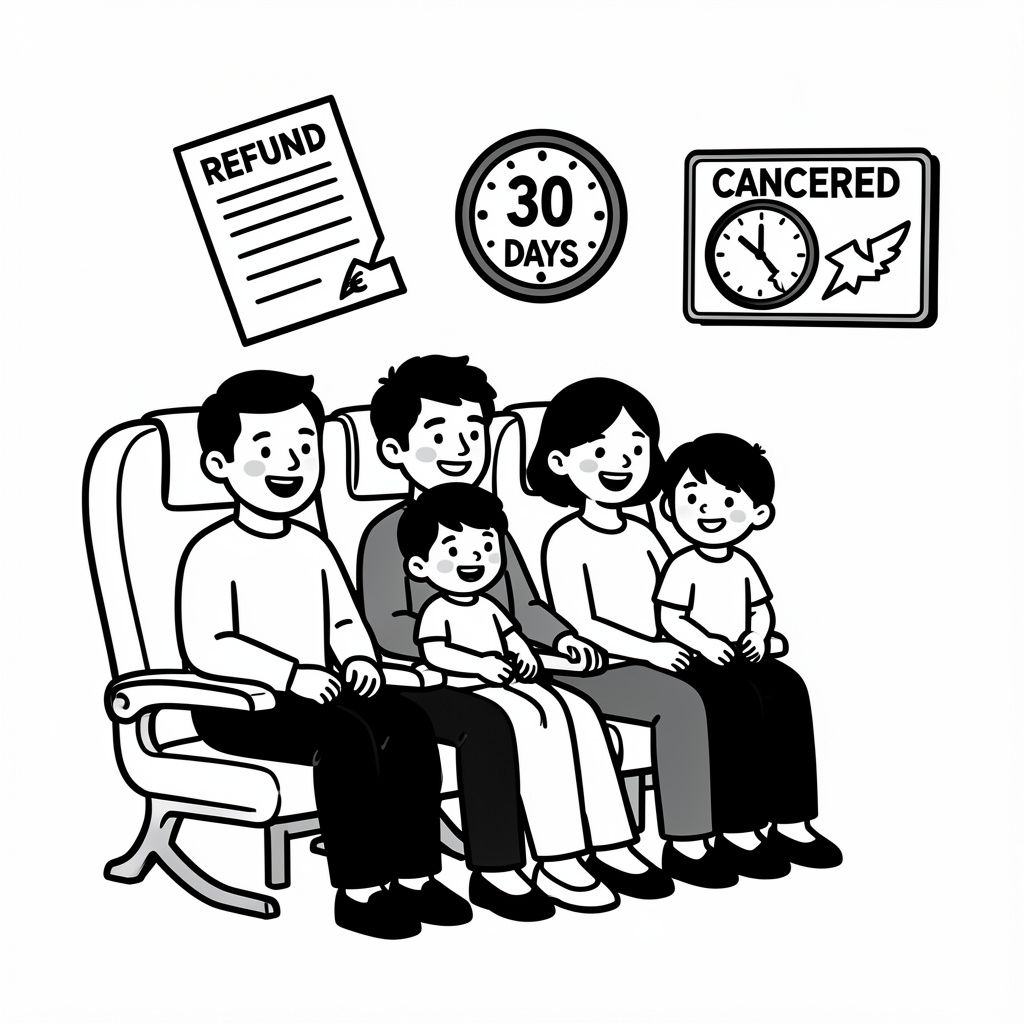
The EU just approved its biggest air passenger rights overhaul in 22 years—banning fees for parents to sit with children, mandating free cabin bags, and keeping €250–€600 compensation for delays. Airlines must now process refunds in 30 days, not months.
A Historic Overhaul After 13 Years of Deadlock
On 15 June 2026, the European Parliament and Council negotiators reached a provisional agreement to revise the EU’s air passenger rights regulation (EU261/2004), marking the first major update since its inception in 2004 [1][2][3]. The reform, which had been stalled for over a decade, introduces sweeping changes designed to enhance transparency, fairness, and efficiency in air travel. The agreement was unanimously backed by the European Parliament’s delegation to the Conciliation Committee, signaling broad political support for stronger passenger protections [1].
Compensation Rules Remain Unchanged, But Enforcement Tightens
One of the most contentious aspects of the reform was the retention of compensation thresholds for flight delays and cancellations. Passengers will continue to receive €250 for journeys up to 1,500 km, €400 for journeys between 1,500 km and 3,500 km, and €600 for journeys exceeding 3,500 km, provided the delay exceeds three hours or the cancellation occurs less than 14 days before departure [1][4]. Compensation can be reduced by 50% if passengers are re-routed and arrive within four hours of their original scheduled time [1]. Airlines must now provide electronic instructions for compensation requests within four days of the journey’s termination, and passengers have nine months to file claims, while airlines have 30 days to pay or invoke extraordinary circumstances [1][3]. This marks a significant improvement from the previous system, where refunds could take months or even years to process [5].
Hidden Fees Slashed: Free Seating for Families and Mandatory Cabin Bags
The reform introduces several measures aimed at eliminating hidden fees and improving transparency. Airlines are now prohibited from charging parents or guardians extra to sit next to their children under 14, a practice that had drawn widespread criticism from consumer groups [1][4][6]. Additionally, airlines must include a standard hand luggage item in the basic fare, ending the practice of advertising low base fares and then adding mandatory fees for cabin baggage during the booking process [1][4]. The agreement also bans excessive charges for correcting minor name errors on bookings, which had previously cost passengers between €8 and €15 per segment [6].
Stronger Protections for Vulnerable Passengers
The updated regulation introduces enhanced protections for passengers with disabilities or reduced mobility, children, unaccompanied minors, and pregnant passengers. Airlines must now provide free adjacent seating for passengers with disabilities and their assistants, as well as for families traveling with children [1][6]. If a flight is missed due to inadequate airport support, such as delayed assistance for passengers with reduced mobility, airlines are required to provide compensation, rerouting, or assistance [1]. Additionally, passengers have the right to disembark after two hours on the tarmac, addressing a long-standing complaint about extended ground delays [3].
Industry Pushback and Potential Impact on Ticket Prices
While consumer advocates have welcomed the reform, the airline industry has expressed concerns about the potential impact on operational costs and ticket prices. The International Air Transport Association (IATA) issued a statement on 14 June 2026, arguing that the reform “stopped short of the meaningful reform needed to address the regulation’s deep flaws” [2]. Willie Walsh, IATA Director General, warned that the result “will not reduce delays… [and] add costs which will ultimately be borne by passengers” [2]. The European Regions Airline Association (ERA) echoed these concerns, stating that the reform “adds new burdens on regional carriers and introduces creative, last-minute options lacking any real-world operational analysis” [2].
Next Steps: Formal Adoption and Implementation Timeline
The provisional agreement reached on 15 June 2026 must now undergo formal adoption by the European Parliament and Council. The legal-linguistic revision is currently underway, with a final vote expected in the European Parliament’s plenary session by 27 July 2026 [2][6]. If adopted, the updated regulations are anticipated to enter into force in the second half of 2027, giving airlines a grace period to adapt their systems and pricing models [4][6].
Sources
- www.europarl.europa.eu
- www.businesstravelnewseurope.com
- www.reneweuropegroup.eu
- www.argophilia.com
- knews.kathimerini.com.cy
- www.travelextra.ie