How a Quiet Fix Saved British Supermarket Fridges from Crippling Cyberattacks
London, Friday, 20 November 2026.
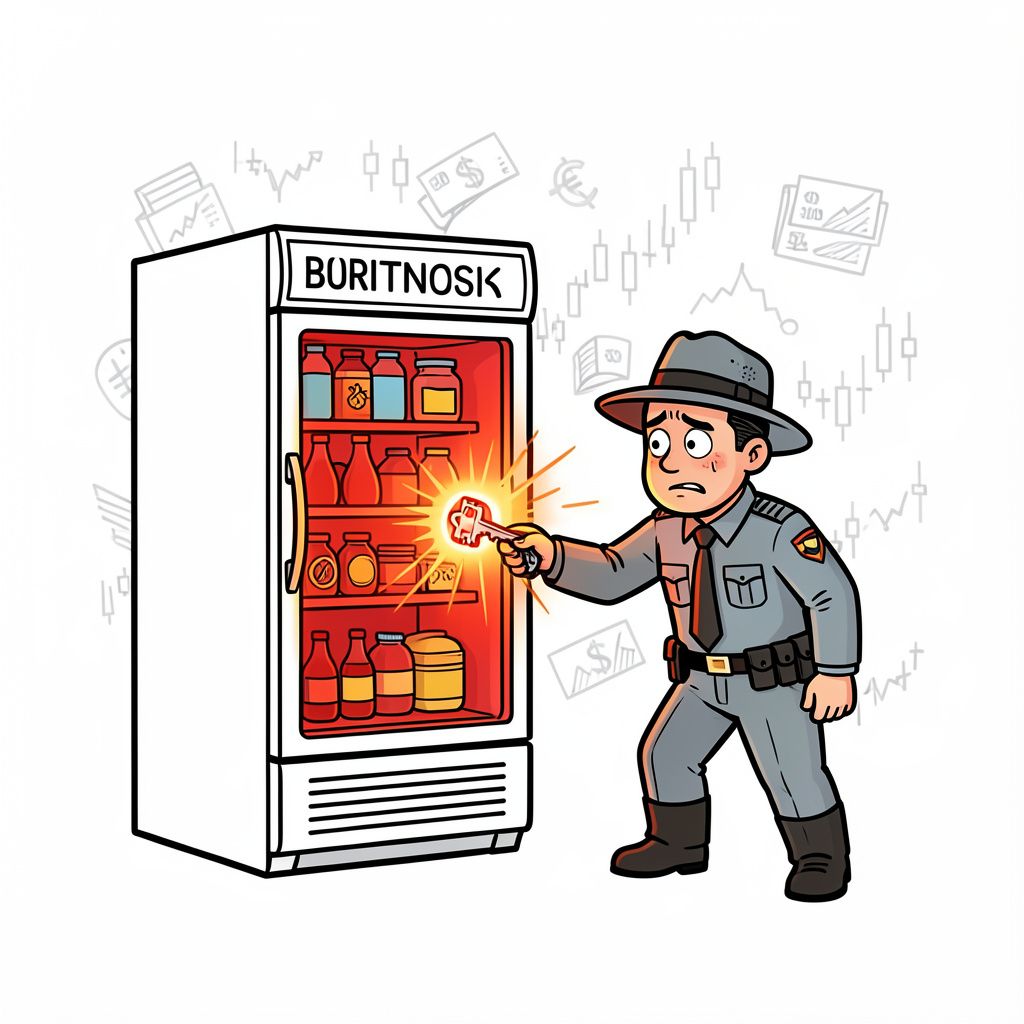
A covert UK operation safeguarded thousands of commercial cooling systems after European supermarket freezers were maliciously forced to reach 80°C, averting catastrophic food supply disruptions.
The European Refrigerator Hacking Spree
The cyberattack wave began on 11 October 2026, when hackers compromised up to 700 French supermarkets by exploiting Danfoss AK-SM 800A series temperature control systems, forcing refrigeration units into defrost mode and driving internal temperatures to between 50°C and 80°C [2][3]. The attacks caused over €10 million in spoiled food and infrastructure damage [2]. Subsequent incidents on 1–2 November 2026 targeted dozens of supermarkets across seven European countries, with Belgium and Luxembourg hit hardest, alongside attacks on three French blood bank sites [2][3]. These events triggered immediate warnings from cybersecurity agencies across the continent.
UK’s Proactive Response and Hidden Vulnerabilities
Following the French attacks, UK cybersecurity experts at Omega Solutions and Pen Test Partners discovered identical weak password vulnerabilities in Resource Data Management (RDM) refrigeration controllers used across British supermarkets, warehouses, and hospitality venues [1]. The flaws mirrored those exploited in the Danfoss systems, where default credentials—admin and the current date—were hardcoded into thousands of internet-facing units [1][2]. Ken Munro of Pen Test Partners warned that criminal groups or state actors could identify and weaponize these flaws within days, describing the situation as a ‘race against time’ [1]. Ged Evans, CEO of RDM, confirmed the vulnerability was uncovered during hardware dismantling in a test environment and that patches had already been deployed to customers [1].
The Covert Operation to Secure UK Infrastructure
A secretive remediation campaign coordinated by the UK’s National Cyber Security Centre (NCSC), Defra, and the Food Standards Agency (FSA) moved rapidly to neutralize the threat [1]. Thousands of vulnerable RDM-controlled refrigeration units were either physically disconnected from the open internet or patched remotely, preventing potential botnet exploitation or malicious tampering [1]. Insiders at a major UK supermarket chain revealed the operation felt like a ‘race against time,’ with businesses fearing a second wave of attacks that could disrupt supply chains and spoil millions of pounds’ worth of food stored in warehouses [1]. The intervention underscored the systemic risks posed by IoT devices in critical infrastructure, where a single exploited flaw could cascade into nationwide disruptions.
Broader Cyber Threat Landscape and Geopolitical Implications
The refrigerator cyberattacks are part of a growing trend of AI-enabled threats targeting legacy systems, with experts warning that such incidents represent only the beginning [4][5]. On 4 November 2026, Richard Horne of the NCSC cautioned that AI-driven attacks on outdated technology would escalate, while US agencies including CISA and the FBI issued joint alerts about vulnerabilities in cold-chain systems [4][5]. Geopolitical tensions further complicated the picture, with France blaming Iran’s Islamic Revolutionary Guard Corps (IRGC) for the October attacks, a claim Tehran denied [2][3]. Italian Defense Minister Guido Crosetto noted the difficulty of attributing such attacks but acknowledged the involvement of specialized groups from Iran, China, and Russia [2]. These incidents have prompted calls for stricter regulations, including bans on universal default passwords in jurisdictions like California, Oregon, Britain, and Australia [3].
Lessons for Businesses and the Future of IoT Security
The refrigerator hacking spree highlights the urgent need for businesses to prioritize IoT security, particularly as AI accelerates the discovery of vulnerabilities [5][6]. Finite State’s AI-driven analysis of refrigeration controller firmware demonstrated how quickly flaws can be identified—two of three known vulnerabilities were rediscovered within hours using automated tools [4]. However, targeted units often remained unpatched due to outdated firmware, leaving critical infrastructure exposed [4]. Samsung and other smart device manufacturers have committed to providing swift security updates, but experts stress the importance of separating smart devices from private data networks to mitigate risks [3]. The UK’s covert operation serves as a case study in proactive cybersecurity, illustrating how coordinated action can avert potential catastrophes in an era where digital and physical systems are increasingly intertwined.