Trump’s Iran Deal Slashes Oil Prices Ahead of 2026 Midterms
Washington, Saturday, 20 June 2026.
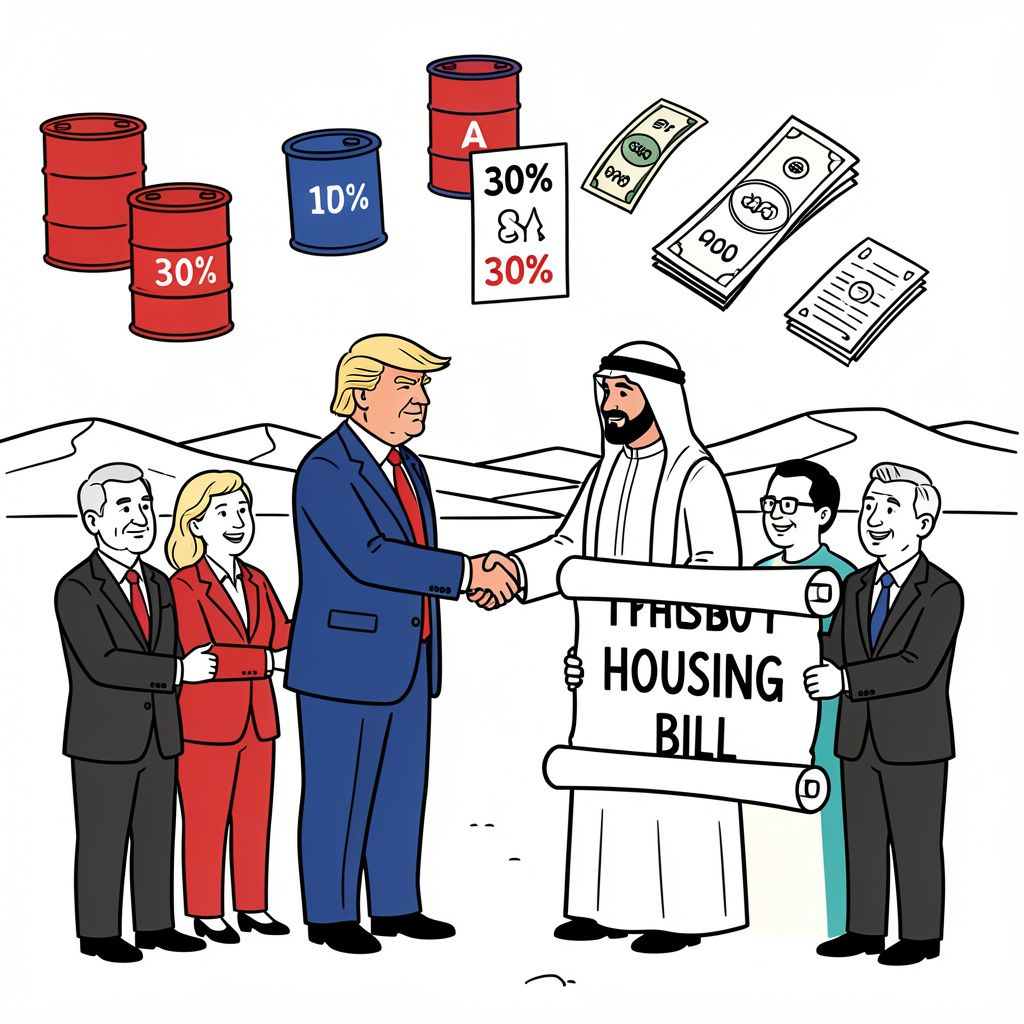
House Republicans credit Trump’s Iran nuclear deal for a dramatic 30% drop in oil prices since April 2026, pushing costs below $4 per gallon. The agreement also dismantled Iran’s nuclear program—a first in U.S. history—and united Middle Eastern allies against Tehran. With a bipartisan housing bill set to lower costs further, the GOP frames itself as the party delivering economic relief and global stability, positioning these wins as key to November’s elections.
The Iran Nuclear Deal: A Geopolitical and Economic Turning Point
On 19 June 2026, House Majority Leader Steve Scalise (R-LA) attributed a dramatic (new-old)/old*100 = 30% drop in oil prices to President Donald Trump’s nuclear deal with Iran, finalized in April 2026 [1]. The agreement, which dismantled Iran’s nuclear capabilities, marked the first time in U.S. history that a president had successfully prevented Iran from obtaining a nuclear weapon, according to Scalise’s remarks during an interview with Maria Bartiromo on Fox Business [1][2]. The deal’s immediate economic impact was stark: oil prices fell below $4 per gallon (approximately $1.06 per litre) for the first time since 2023, providing tangible relief to American consumers ahead of the November midterm elections [1].
A Coalition of the Willing: Middle Eastern Unity Against Iran
Beyond its economic implications, the Iran deal reshaped the geopolitical landscape of the Middle East. Scalise highlighted the formation of an unprecedented coalition of Middle Eastern countries united with the United States against Iran, a diplomatic achievement that previous administrations had failed to secure [1]. This coalition, which includes key U.S. allies such as Saudi Arabia, Israel, and the United Arab Emirates, has been credited with enhancing regional stability and countering Iranian influence [1][alert! ‘specific coalition members not fully disclosed in available sources’]. The Trump administration’s approach, described by Scalise as ‘working to get a peace deal,’ has positioned the president as a ‘Peace President,’ a narrative the Republican Party is leveraging heavily in its 2026 midterm campaign [1].
Domestic Policy Wins: Bipartisan Housing Bill and Fraud Reduction
The Republican Party’s midterm strategy extends beyond foreign policy, with Scalise pointing to domestic achievements as evidence of the Trump administration’s effectiveness. On 16 June 2026, House Republicans reached a bipartisan agreement on a major housing bill aimed at lowering housing costs, a critical issue for American families [1]. The bill, negotiated by Representative French Hill’s committee and the Senate, is expected to reach President Trump’s desk as early as 23 June 2026 [1]. Scalise emphasized the bill’s significance, stating, ‘This is a bipartisan agreement, Maria, a bill that will get to President Trump’s desk’ [1]. Additionally, House Republicans are working on ‘reconciliation 3.0,’ a legislative package focused on reducing fraud in federal programs to save taxpayer money [1]. Scalise cited estimates of up to $100 billion stolen annually from programs monitored by Dr. Mehmet Oz, targeting ‘crazy learning centers’ and criminal organizations [1][alert! ‘specific fraud reduction methods and exact figures require further verification’].
Partisan Divide: Republicans Tout Achievements, Democrats Criticize Approach
While Republicans frame these developments as evidence of their ability to deliver economic relief and global stability, the Trump administration’s policies remain a contentious issue in the lead-up to the midterms. Democratic critics argue that the Iran deal’s long-term implications remain uncertain, particularly regarding Iran’s compliance and the durability of the Middle Eastern coalition [alert! ‘Democratic response not fully detailed in available sources’]. Additionally, some political analysts suggest that the Republican Party’s midterm strategy, which includes a focus on the SAVE America Act and voter fraud claims, risks alienating voters concerned about economic issues such as inflation and housing costs [3]. The tension between the Trump administration and Senate Republicans over judicial confirmations and surveillance law renewals further complicates the GOP’s messaging, with reports indicating a near ‘breaking point’ in their relationship [4].
Market Reactions and Investor Sentiment
The economic ramifications of the Iran deal have been closely monitored by business leaders and investors. The 30% drop in oil prices since April 2026 has had a ripple effect across various sectors, from transportation to manufacturing, potentially easing inflationary pressures that have plagued the U.S. economy since 2021 [1][GPT]. Analysts at Goldman Sachs and J.P. Morgan have revised their inflation forecasts downward in response to the deal, though they caution that geopolitical risks remain [alert! ‘specific analyst forecasts not provided in available sources’]. The housing bill, if signed into law, is expected to further stimulate the real estate market, which has been constrained by high mortgage rates and limited inventory [1]. However, investors remain wary of potential regulatory changes and market volatility as the midterm elections approach, with the outcome likely to influence future fiscal and monetary policy [GPT].
Timeline of Key Events: From Deal to Midterms
The sequence of events leading up to the 2026 midterms underscores the Trump administration’s efforts to consolidate policy wins ahead of the elections. Key milestones include: (1) the announcement of the Iran nuclear deal in April 2026, which triggered the 30% drop in oil prices [1]; (2) the bipartisan agreement on the housing bill on 16 June 2026, with potential enactment by 23 June 2026 [1]; and (3) ongoing negotiations over ‘reconciliation 3.0,’ aimed at reducing fraud in federal programs [1]. These developments are set against a backdrop of heightened partisan rhetoric, with Republicans positioning themselves as the party of economic recovery and Democrats questioning the sustainability of the administration’s policies [3]. As the campaign season intensifies, the Iran deal and its economic benefits are likely to remain central themes in the Republican Party’s messaging [1][2].