Factory Job Cuts Trigger Election Concerns in Industrial States
Washington, Sunday, 11 October 2026.
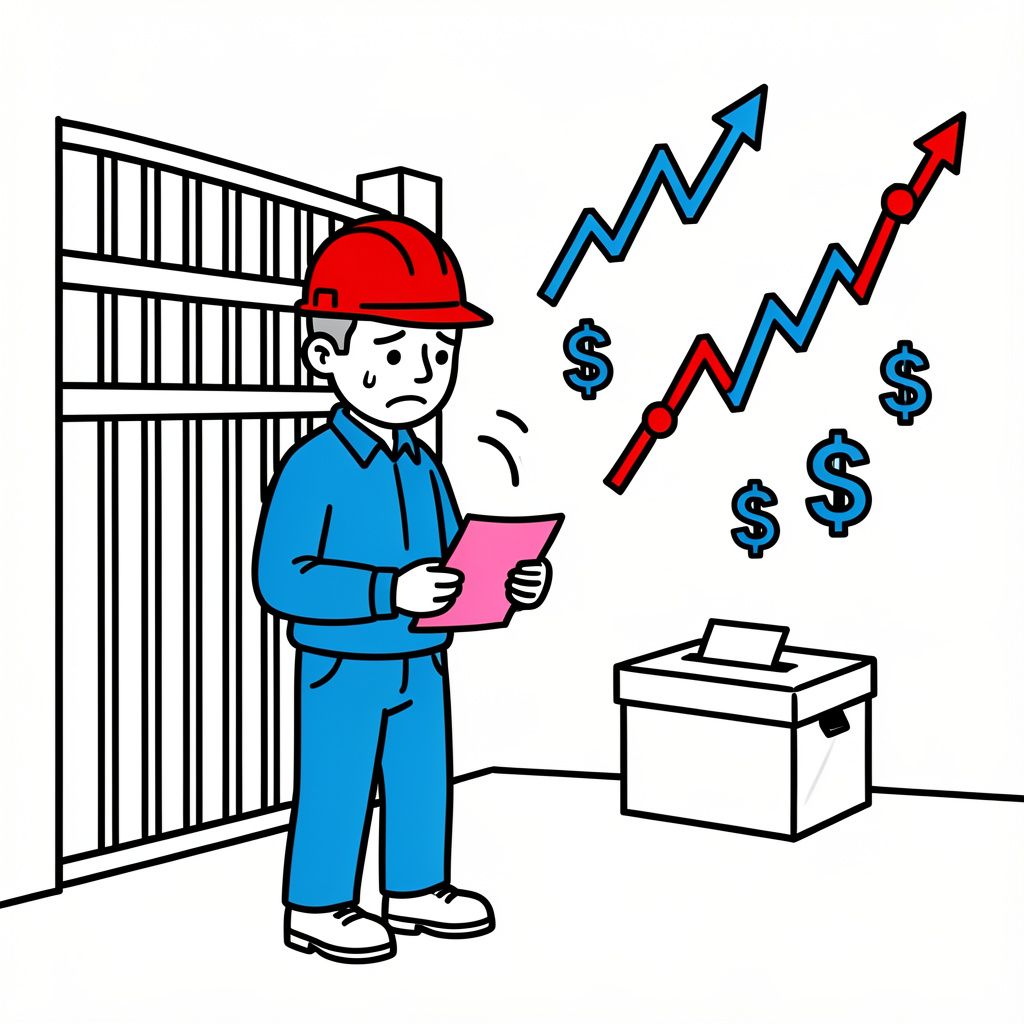
Rising import costs from recent trade tariffs have caused unexpected manufacturing job losses, creating significant political pushback in key industrial states ahead of the November 2026 midterm elections.
Manufacturing Sector Contraction and Factory Closures
Across key industrial states, the economic reality of implemented trade tariffs is reshaping the manufacturing landscape just weeks before the midterm elections. In Zeeland, Michigan, clock manufacturer Howard Miller closed its factory and laid off nearly 200 workers due to tariff-induced supply chain issues, a move that has become a focal point for voter dissatisfaction [1][4]. Similar patterns emerged in Iowa, where RV manufacturer Winnebago Industries cut 200 jobs last year after costs for importing aluminum, steel, and electronics rose by tens of millions of dollars [4][5]. In February 2026, home appliance manufacturer Vornado Air laid off more than 70 factory workers in Wichita, Kansas, citing higher prices for imported components as a primary driver [1][4]. These closures are not isolated incidents but part of a broader trend where employment research firm Challenger, Gray & Christmas documented 7,908 tariff-related layoffs in 2025 alone [5]. While the White House maintains that factory construction jobs of today mean more manufacturing jobs down the road once those factories come online, current workers face immediate uncertainty [1][8].
Shifting Voter Sentiment and Polling Data
The political ramifications of these economic shifts are becoming evident in polling data and voter interviews across the Midwest and Pennsylvania. An AP-NORC poll conducted in September 2026 showed only 3 in 10 U.S. adults approve of Trump’s handling of trade negotiations, down from 4 in 10 in March 2026 [1][4]. This represents a relative decline in approval ratings of -25 percent between March and September 2026 [1]. Furthermore, current disapproval of Donald Trump’s tariff policies stands at over 64% among surveyed U.S. adults as economic anxieties rise ahead of the upcoming elections [7][8]. Nelson Vandermeer, a former Howard Miller product designer who voted for the Republican Party for decades, stated he would vote “straight Democrat in the midterms” following his job loss [1][5]. In Pennsylvania, union president Wendell Young reported a shift in sentiment among members who previously supported Donald Trump but are now expressing shock over the lack of expected job growth [1][5].
Policy Context and Legal Challenges
The tariff policies driving these changes have faced significant legal and economic scrutiny throughout 2026. In February 2026, the Supreme Court ruled against Trump’s declaration of an emergency used to implement his “Liberation Day” tariffs, creating instability in foreign trade policy [1][8]. Consequently, the administration shifted to using Section 301 of the Trade Act of 1974 to impose new tariffs ranging from 10% to 12.5% on imports from 60 economies [8]. Despite the U.S. remaining the world’s second-largest exporter with $3.4 trillion in exports in 2025, economic studies from the New York Fed and Harvard indicate that U.S. businesses and consumers are primarily bearing the cost of tariffs rather than overseas companies [8]. With the U.S. midterm elections scheduled for Nov. 3, 2026, Republican prospects in battleground states like Michigan, Iowa, Kansas, and Ohio face potential headwinds as constituents grapple with factory layoffs and inflation [1][7].
Sources
- apnews.com
- www.facebook.com
- www.facebook.com
- ua.news
- www.rawstory.com
- www.facebook.com
- www.instagram.com
- m.economictimes.com