Supreme Court Permits Construction of White House Ballroom Project to Proceed
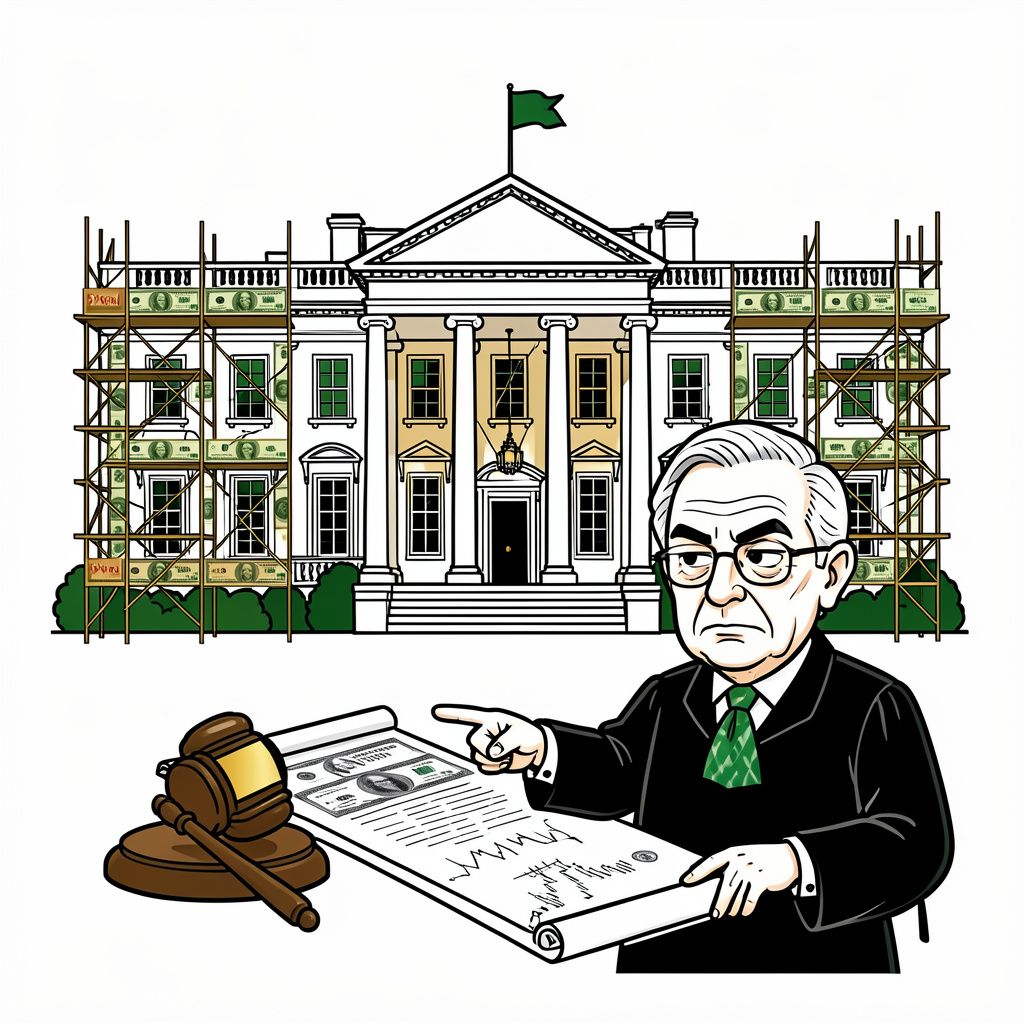
Washington, Monday, 31 August 2026.
On August 31, 2026, the Supreme Court allowed construction of the $400 million, 8,361-square-meter White House ballroom to proceed, despite Chief Justice John Roberts calling the project likely unlawful.
Supreme Court Permits Construction of White House Ballroom Project to Proceed
On August 31, 2026, the Supreme Court allowed construction of the $400 million, 8,361-square-meter White House ballroom to proceed, despite Chief Justice John Roberts calling the project likely unlawful [1][3][4]. In a 5-4 decision, the high court ruled that the National Trust for Historic Preservation likely lacks the legal standing to challenge the project in federal court [1][4]. This emergency order permits work to continue indefinitely while lower court challenges regarding executive authority and historic preservation laws remain unresolved [1][3]. The decision underscores ongoing debates over presidential executive authority, historic preservation laws, and federal expenditure oversight [1][4].
Legal Standing and Judicial Dissent
Chief Justice John Roberts joined the three liberal justices in dissent, arguing that Congress never authorized the project and that construction is likely unlawful [3][4]. Roberts wrote that the White House is an iconic American building and emphasized the need to ensure those responsible follow the rules in deciding what to tear down and what to build up at the People’s House [3]. The majority opinion, however, stated that mere offense, disagreement, or distaste does not qualify as a concrete and particularized injury required for standing [1][4]. Solicitor General D. John Sauer argued the project is vitally required by national security, citing sworn declarations from the Director of National Intelligence and the Secret Service [4][7].
Project Scope and Funding Disputes
The project involves demolishing the White House’s East Wing to build a 90,000-square-foot ballroom and related facilities [4][7]. While the White House claims the project is funded by private donations, this is disputed, and Secret Service funds have already been allocated for security enhancements [1][4]. As of August 24, 2026, the project was reported to be 65% complete, utilizing a 250-person crew operating 20 hours daily, seven days a week [1][4]. President Trump has said the ballroom and related facilities will cost $400 million, with private donors footing that bill, though Congress never appropriated funds for the project [3][4].
Timeline and Future Implications
The White House anticipates substantial completion of the structure by November 2026, with the full project slated for completion by August 2028 [4][7]. The Court’s decision means it is likely that the ballroom will be fully built before the question of legality is definitively resolved [3][6]. Lower court orders remain in effect that explicitly authorize construction work on the subterranean bunker facilities to proceed [4]. This ruling all but guarantees the building will be substantially completed before any final judgments and appeals are resolved [4][8].
Sources
- www.nbcnews.com
- www.facebook.com
- www.politico.com
- www.cbsnews.com
- www.facebook.com
- news.bloomberglaw.com
- www.11alive.com
- abcnews.com