Trump Challenges Central Bank Independence in Unprecedented Legal Push to Remove Federal Reserve Governor
Washington, Wednesday, 26 August 2026.
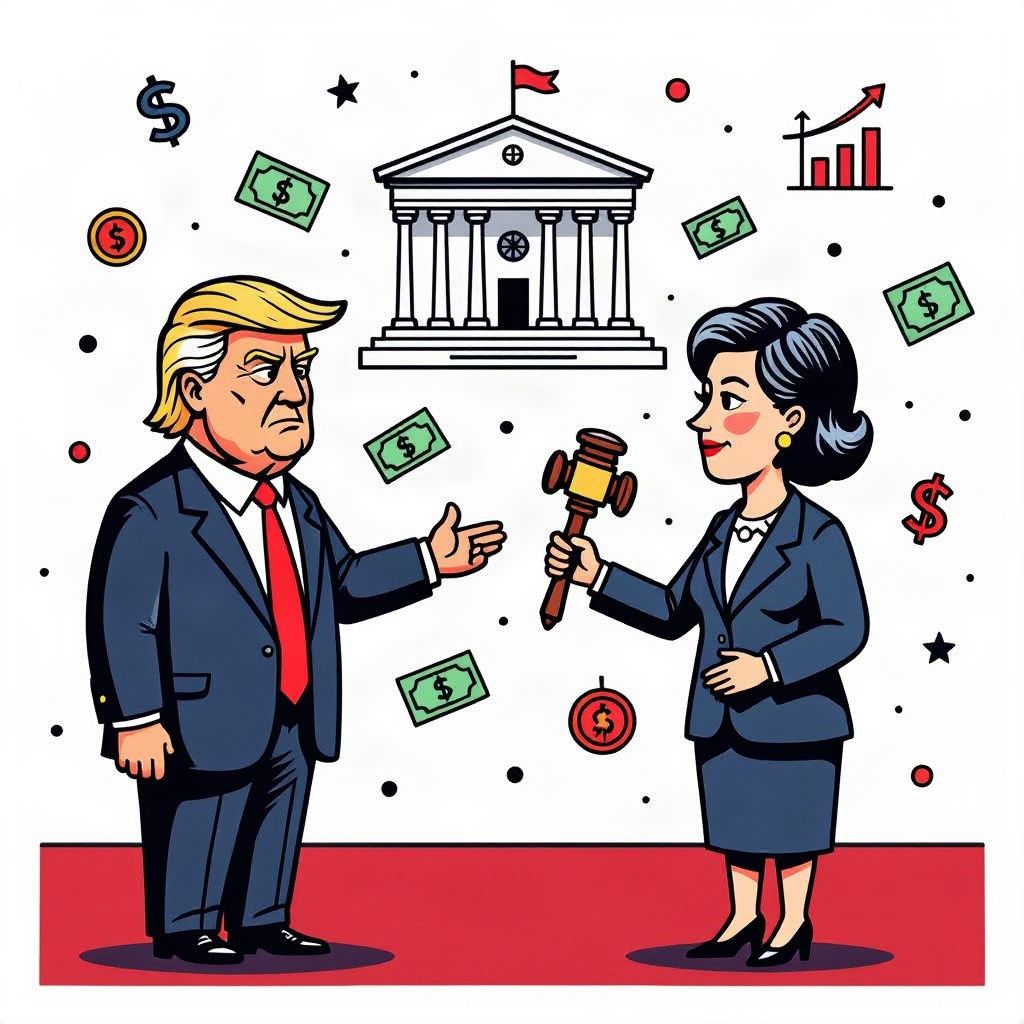
Donald Trump faces a key legal deadline today in his effort to remove Federal Reserve Governor Lisa Cook, escalating a high-stakes battle over executive power and central bank independence.
Legal Maneuvers and Executive Authority
The current confrontation centers on a deadline set for Wednesday, 26 August 2026, by which Federal Reserve Governor Lisa Cook must respond to allegations of mortgage fraud sent by President Trump in early August 2026 [1]. This legal maneuver follows a Supreme Court ruling earlier in 2026, case number 25a312, which determined that Cook is entitled to notice and an opportunity to respond prior to any termination [1]. Chief Justice John Roberts emphasized that only after such a response can courts assess the validity and sufficiency of charges against a governor [1]. However, the status of Cook’s response remains unknown as of today [alert! ‘status unknown’]. The legal ambiguity stems from conflicting Supreme Court precedents, specifically Trump v. Cook and Trump v. Slaughter, the latter of which asserted presidential authority to fire heads of federal agencies under the unitary executive theory [1].
Market Credibility and Inflation Targets
Parallel to the legal battle, the Federal Reserve faces significant scrutiny regarding its monetary discipline, with inflation exceeding the 2% target for five consecutive years [2]. Kevin Warsh, who assumed the role of Fed Chair in July 2026, is scheduled to deliver a critical speech at the Jackson Hole symposium on Friday, 28 August 2026 [3]. Investors are anticipating guidance on interest rates, though Warsh has indicated a potential shift toward broader topics such as demographics and productivity [3]. The time remaining until this pivotal address is 2 days, a period marked by heightened volatility in the bond market [3]. Market analysts warn that failing to address rate expectations could inject further volatility into an already febrile environment [3].
Treasury Intervention and Debt Dynamics
Compounding the economic uncertainty, the US national debt has surpassed $40tn, creating persistent selling pressure in the $30tn government debt market [3]. In response to rising yields not seen since 2007, Treasury Secretary Scott Bessent committed on 19 August 2026 to plans for the Treasury to buy back tens of billions of dollars in long-dated government debt [4]. Despite this intervention, yields briefly declined before rising again, leading some economists to question the efficacy of the strategy [4]. Secretary Bessent has described his role as America’s top bond salesman, aiming for falling yields as a metric of success [4]. However, critics note that purchasing one’s own wares risks spoiling the brand if yields continue to climb [4].
Structural Reform and Governance
The ongoing tension highlights deeper questions about central bank governance and the trade-off between power and independence. The Hoover Institution has published analyses examining how institutional dynamics influence policy decisions more than commonly appreciated [5]. Scholars John H. Cochrane and John B. Taylor have edited volumes discussing legislative proposals such as the Federal Reserve Accountability and Transparency Act, which seek to require the Fed to explain deviations from monetary policy rules [5]. These discussions underscore the friction between legislative oversight and the operational independence required for effective monetary policy [5]. As the judiciary and executive branches clash over authority, the institutional setting in which policymakers deliberate remains a focal point for reform efforts [5].