Trump Administration Asks Supreme Court to Enforce Transgender Military Ban
Washington, D.C., Saturday, 29 August 2026.
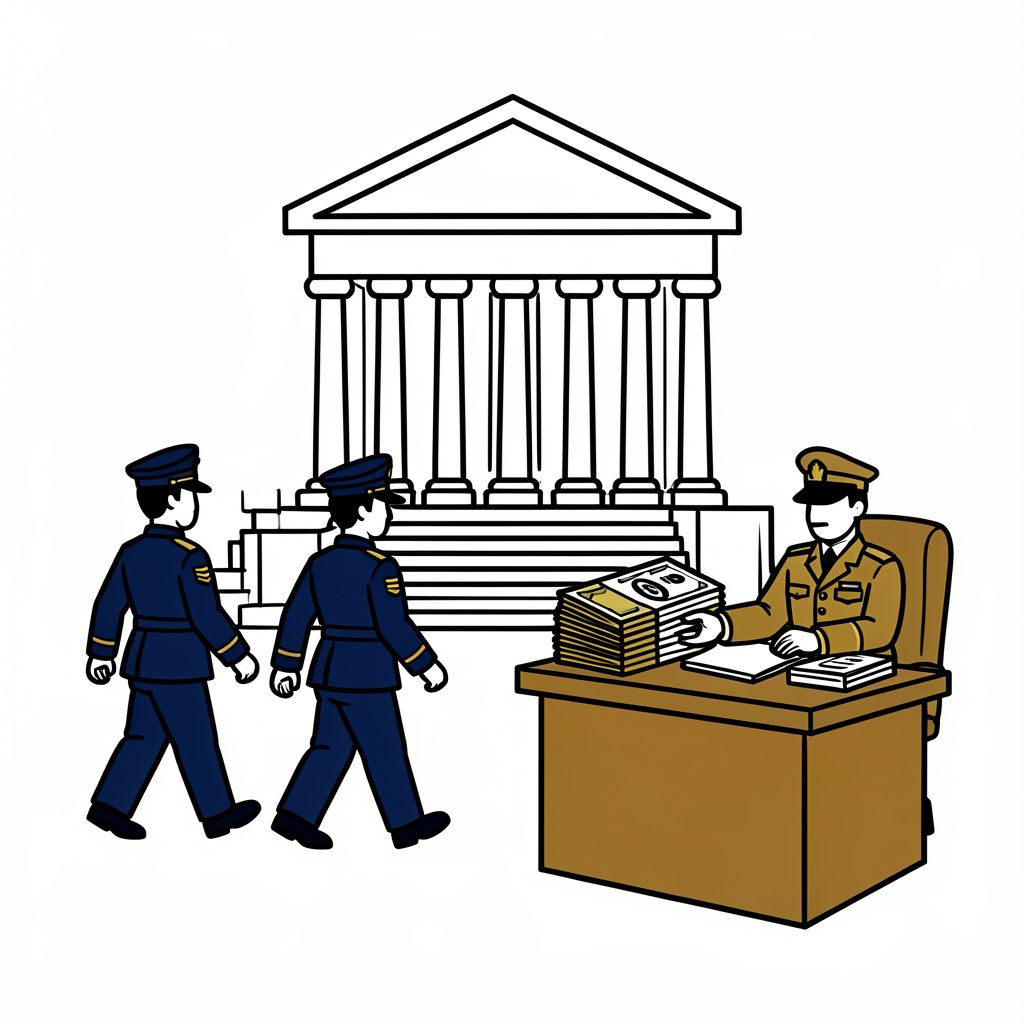
The Trump administration petitioned the Supreme Court to permit the military to discharge transgender personnel, challenging lower court rulings that blocked the policy’s enforcement for currently serving members.
Trump Administration Asks Supreme Court to Enforce Transgender Military Ban
The Trump administration petitioned the Supreme Court to permit the military to discharge transgender personnel, challenging lower court rulings that blocked the policy’s enforcement for currently serving members [4][5]. This emergency application seeks to bypass injunctions currently preventing the policy’s implementation, bringing renewed legal uncertainty to Pentagon personnel policies and defense administration frameworks [1][3]. The move marks a significant escalation in the legal battle surrounding transgender rights within the armed forces, following a series of executive actions taken since President Trump’s return to office in January 2025 [1][4]. Solicitor General D. John Sauer argued that allowing lower court rulings to stand would represent an unprecedented intervention into military affairs, contradicting precedents that require deference to the political branches regarding military judgments [4][6].
Timeline of Policy Implementation and Legal Challenges
The policy in question originated from an executive order signed by President Trump days after he assumed office in January 2025, directing the Department of Defense to restrict service by individuals with gender dysphoria [1][4]. By February 2025, the Department of Defense had issued the official policy, disqualifying individuals with a diagnosis, history, or symptoms of gender dysphoria, citing incompatibility with the high mental and physical standards necessary for military service [4][6]. Defense Secretary Pete Hegseth signed a directive mandating the removal of transgender service members within 60 days unless a waiver for warfighting capabilities was granted [6]. However, legal challenges arose quickly, with U.S. District Judge Ana Reyes issuing an order in March 2025 temporarily blocking the ban, stating the policy was soaked in animus and stigmatized transgender persons [4]. Despite this, the Supreme Court issued a temporary freeze on a separate federal judge’s order from Washington state in May 2025, allowing the administration to enforce the policy temporarily while litigation remained pending in the 9th Circuit [4][6].
Recent Court Rulings and Administration Arguments
In June 2026, a divided three-judge panel of the U.S. Court of Appeals for the D.C. Circuit upheld a stay on the military ban policy specifically for 28 service members who filed a lawsuit [1][4]. The appeals court ruling, described by the administration as gravely erroneous, prevented the government from enforcing the ban against military service members who were already serving at that time [4][6]. U.S. Circuit Judge Robert Wilkins noted that the policy appeared driven by the bare desire to harm a politically unpopular group rather than military necessity, contrasting it with previous policies that allowed transgender servicemembers to remain in the military [6]. In response, Solicitor General Sauer told the justices that the military has determined the policy is necessary to maintain rigorous standards and deliver a ready, deployable force [4]. The administration argues the policy classifies based on a medical condition and serves legitimate interests in maintaining military readiness, cohesion, and good order and discipline [4].
Implications for Service Members and Future Proceedings
The Department of Defense estimates there are 4,240 members in active duty, reserve, and National Guard with a diagnosis of gender dysphoria who could be affected by the policy [1]. Prior to the 2025 ban, government court filings indicated approximately 4,200 openly transgender individuals served in the military, representing roughly 0.1% of the total armed forces [7]. Legal representatives for the challengers, including the National Center for Lesbian Rights and GLAD Law, argue that expelling these individuals constitutes a waste of millions of dollars of taxpayer money and causes irreparable harm [2][6]. The Supreme Court is expected to decide this fall whether to review the legality of the ban, with oral arguments potentially scheduled for the term beginning in October 2026 [4][7]. If the Court accepts the case, a final sentence could be issued by early summer 2027, while the main trial on the prohibition is currently scheduled for January 2027 in the federal district court of the District of Columbia [1][2].
Sources
- cnnespanol.cnn.com
- www.gladlaw.org
- www.univision.com
- www.scotusblog.com
- www.washingtonpost.com
- thehill.com
- www.nytimes.com