Iranian Strikes Wipe Out 17% of Qatar's Natural Gas Export Capacity
Doha, Thursday, 14 May 2026.
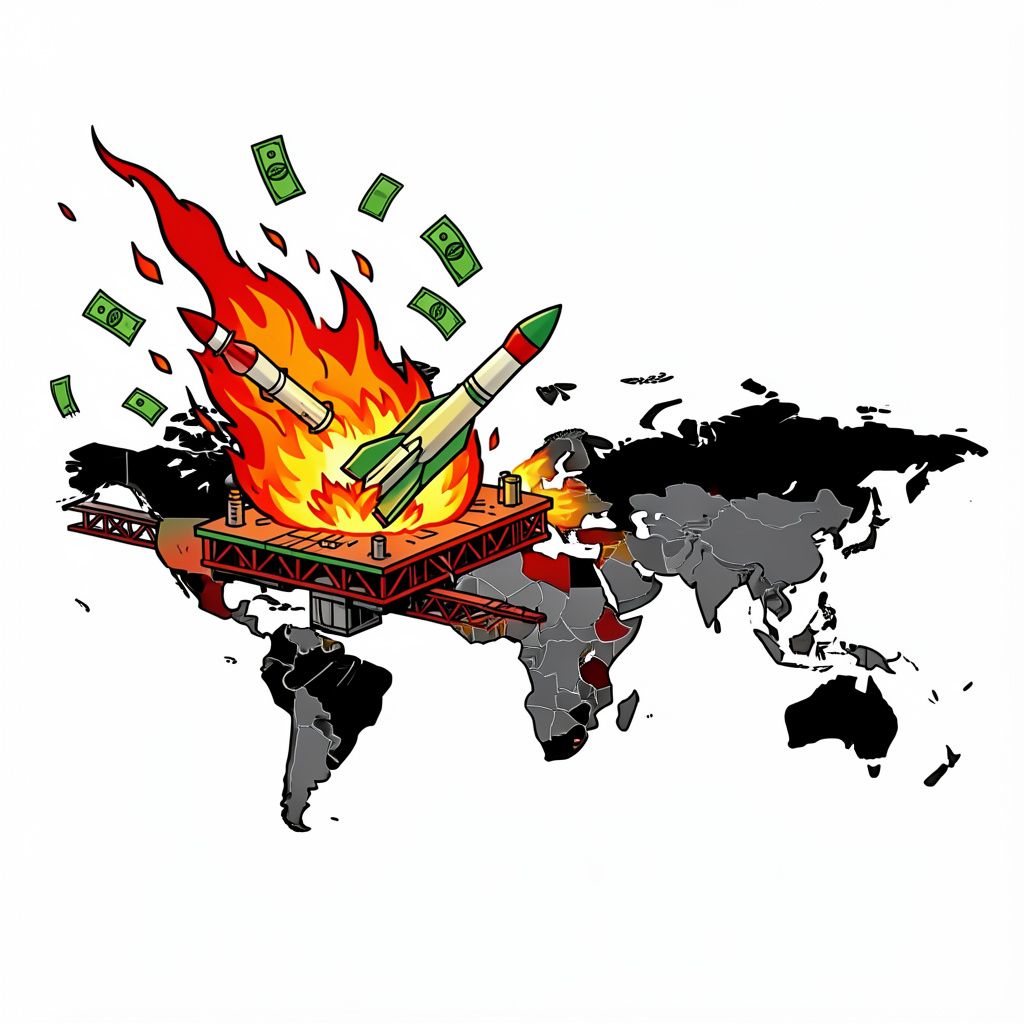
Iranian strikes have destroyed 17% of Qatar’s natural gas export capacity, sidelining production for up to five years. This disruption costs $20 billion annually, triggering massive global energy volatility.
Security Blackouts and the Maritime Standstill
Beyond the physical destruction of processing facilities, the ongoing hostilities have transformed the Persian Gulf into a high-risk maritime zone [GPT]. Since the broader Middle Eastern war erupted around March 4, 2026, the Strait of Hormuz has been effectively closed to standard commercial transit [2][7]. In response to a recent drone strike on a cargo ship in Qatari waters, officials issued a directive requiring vessels operating near the Ras Laffan port to deactivate their Automatic Identification System (AIS) transponders [7]. By May 11, 2026, tracking data indicated that at least nine LNG tankers anchored near Qatar had gone dark to avoid targeting [7]. While diplomatic maneuvers, such as flying Pakistani flags, have allowed isolated vessels to navigate the strait, others, like the Qatari LNG-loaded vessel Mihzem, were forced to turn back after initially approaching the waterway [2][7].
The Logistics Bottleneck in the Strait
The maritime congestion surrounding the Strait of Hormuz presents a staggering logistical hurdle. Industry data from May 13, 2026, reveals that ten fully loaded LNG tankers are trapped inside the strait, while 118 empty vessels are idling outside, waiting for safe passage [3]. One vessel, the gas tanker Rasheeda, has been drifting in circles near the strait for over two months [2]. The U.S. Department of Energy highlighted the stark decline in transit volumes: during the first quarter of 2025, an average of 331 million cubic meters of liquid gas moved through the strait daily [6]. By the end of March 2026, that figure had plummeted to 207 million cubic meters per day [6], representing a 37.462 percent decrease in flow. Al-Kaabi has warned that even if the Strait of Hormuz were to reopen entirely on May 14, 2026, it would require a minimum of two to three months to normalize vessel traffic and clear the backlog [3] [alert! ‘The exact timeline for reopening remains highly uncertain due to ongoing military hostilities in the region’].
United States Producers Fill the Void
With Qatari exports crippled, global buyers are increasingly turning to the United States, the world’s largest LNG exporter, to bridge the supply gap [4]. American export volumes have surged in response to the crisis. Preliminary data from financial firm LSEG showed that in February 2026, the U.S. exported 9.94 million metric tons of superchilled gas, an increase of 21.22 percent compared to the 8.2 million tons exported during the same month in 2025 [4]. This growth was heavily supported by Venture Global’s Plaquemines plant in Louisiana, which exported 2 million tons, and Cheniere’s Corpus Christi facility, which contributed 1.8 million tons [4]. Europe remains the primary destination for this American energy, absorbing 7.66 million tons—or 77%—of total U.S. sales in February to offset the Middle Eastern shortfalls [4].
Sources
- wsnext.com
- www.nytimes.com
- www.linkedin.com
- energynow.com
- energynow.com
- www.industrialinfo.com
- www.oilandgasmiddleeast.com